
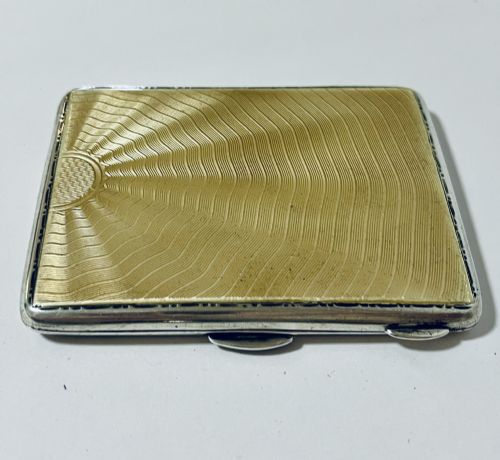
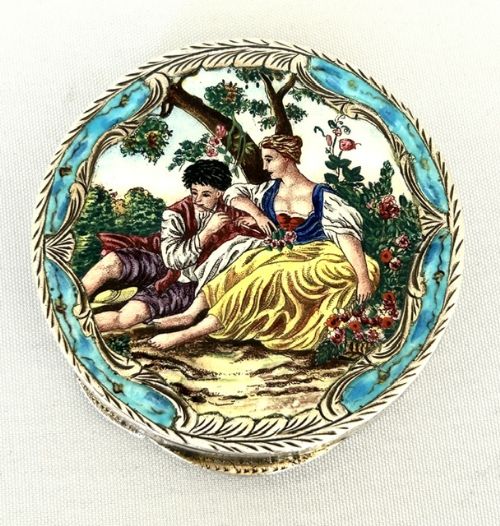


Vintage Enamel Compact
A vintage enamel compact brings together gleaming metalwork and brilliant coloured glass surfaces, offering a portable piece of functional design.
Vintage Enamel Compact
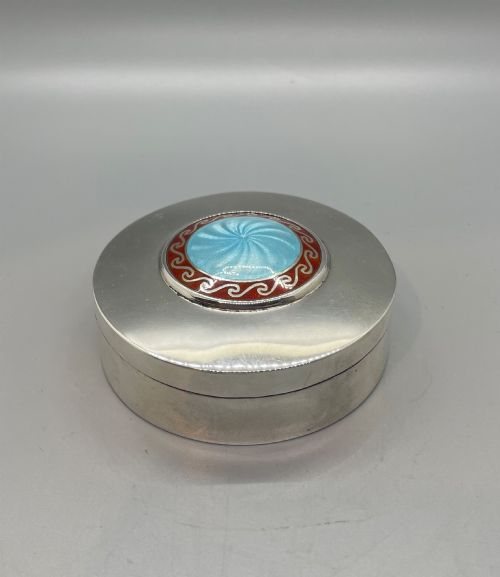
A vintage enamel compact is a small lidded container designed for powder, cosmetics, or cigarettes, frequently shaped by the geometric lines of the Art Deco style. These accessories originate from periods spanning the early twentieth century, including the Edwardian era and the nineteen-thirties.
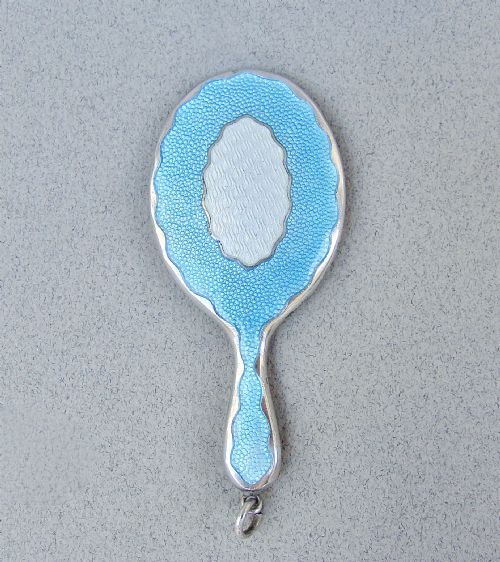
The version most commonly encountered on this page is the silver or chrome powder compact featuring patterned guilloche enamel. Alongside powder containers, related forms such as cigarette cases, rouge pots, pill boxes, and fob watch cases appear frequently.
Origins stretch across British workshops in Birmingham and London, alongside continental European makers from France and Italy. These objects reflect the changing social habits of women during the twentieth century, shifting from delicate Edwardian trinkets to bold interwar accessories.
How they were made
Craftsmen built these pieces using sterling silver, silver-gilt, brass, chrome, or white metal as a foundational structure. Vitreous enamel or painted decoration was then applied to the metal body, often combined with delicate mother-of-pearl accents or interior suede linings.
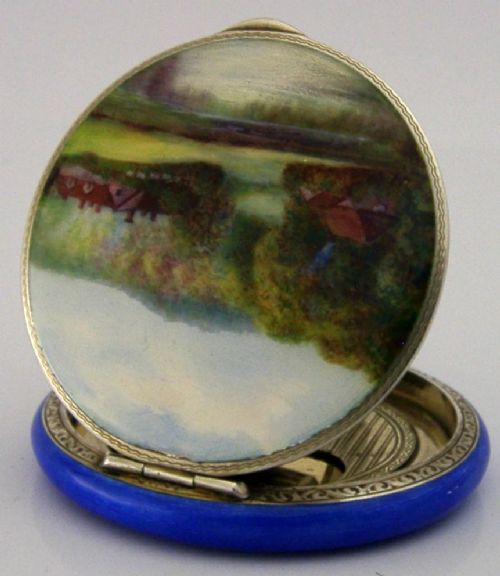
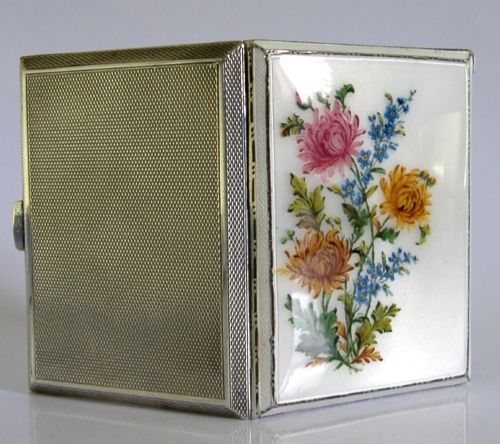
Engine turning, known as guilloche, created precise geometric patterns cut directly into the metal substrate before translucent enamel layers were fused by heat. Hand-painted floral or scenic motifs appear across specific lids, demonstrating skilled brushwork beneath the protective glaze.
The selection includes powder compacts, cigarette cases, rouge pots, opera glasses, and fob watch cases from the early twentieth century.
What varies in quality
The refinement of the engine-turned engraving beneath the translucent glaze dictates much of the visual depth in these items. Crisp machinery work creates intricate light reflections that flat or untextured surfaces simply cannot match.
Makers' marks stamped into the metal distinguish standard production from documented pieces by known silversmiths and luxury houses. Additionally, the complexity of hand-painted details or multi-coloured enamel application separates ordinary utility objects from superior decorative work.
Henry Williamson·Henry Matthews·Henry Perkins and Sons·Richard Hudnut·Houbigant·Giuliano Spinelli·Evans
The Vintage Enamel Compact Glossary
- Guilloche
- A decorative technique where a mechanical lathe engraves precise geometric patterns into a metal surface. Translucent enamel is then layered over the engraving to catch the light.
- Vitreous enamel
- Glass powder fused to a metal base at high temperatures to create a smooth, durable coloured coating. It provides a glossy finish that resists fading over decades of handling.
- Silver-gilt
- Sterling silver that has been coated with a thin layer of gold through chemical or electrochemical processes. This technique yields a warm golden sheen across the metal components.
- Combination compact
- A multi-functional accessory designed to hold powder alongside compartments for cigarettes, lipstick, or mirrors. These items reflect the versatile demands of mid-twentieth-century vanity accessories.
Vintage Enamel Compact: Frequently Asked Questions
How do I date a compact?
Dating relies on hallmarks stamped into the metal, maker marks, and stylistic indicators such as Art Deco geometry or Edwardian motifs. Birmingham and London assay offices recorded official assay letters on British silver pieces.
French and Italian items often rely on maker signatures or alternative purity marks like 800 silver. Comparing the closure style and interior mirror framing also helps establish the era of manufacture.
Can I use an antique powder compact?
Many vintage compacts remain structurally sound enough for daily handbag use or display on a dressing table. The interior spring latches and mirrors often survive in working condition.
Collectors frequently clean out residual cosmetic powder from the wells to preserve the original metal linings. Care should be taken to protect the exterior enamel from sharp objects.
What materials are used in these pieces?
The primary structural materials include sterling silver, silver-gilt, brass, chrome, and base white metals. Vitreous enamel provides the colourful exterior decoration, sometimes accented with mother-of-pearl.
Interiors may feature fitted glass mirrors, fabric powder sifts, or delicate suede linings. Continental pieces frequently utilise specific silver standards such as 800 grade.