


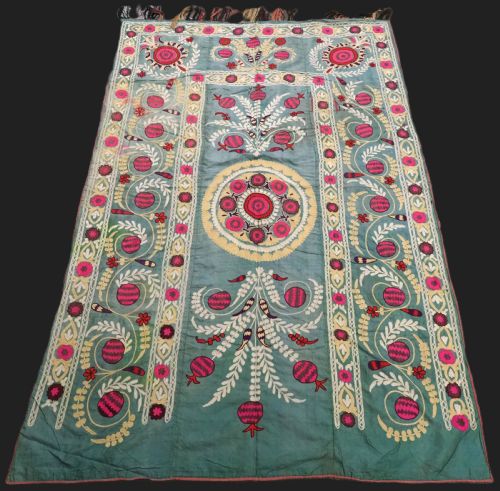


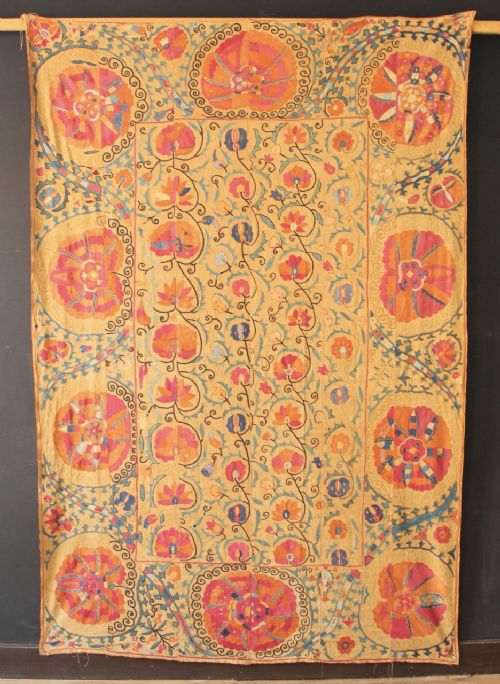


Vintage Embroidered Suzani
A vintage embroidered suzani brings Central Asian textile artistry into domestic spaces through rich needlework and traditional motifs.
Vintage Embroidered Suzani
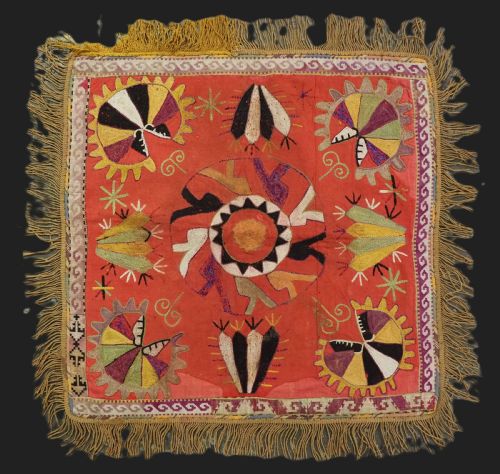
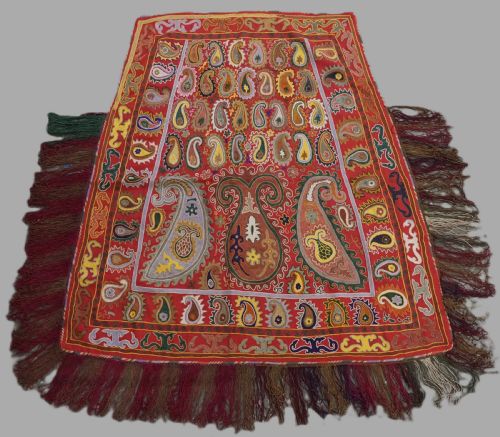
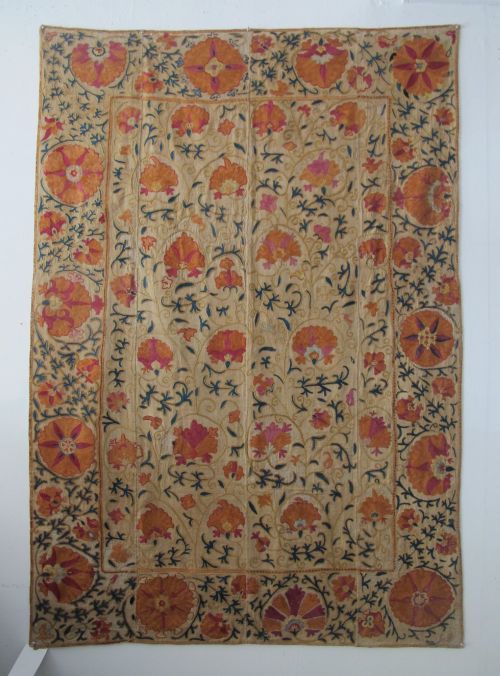
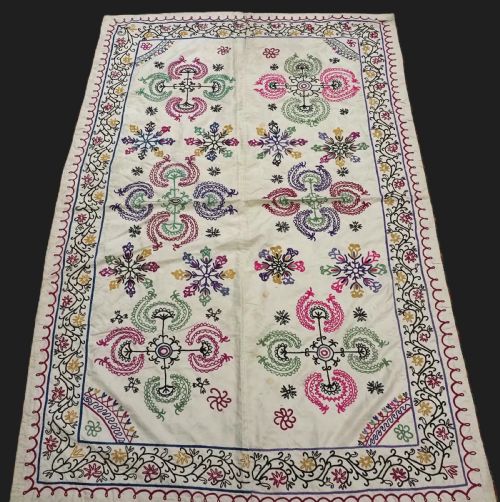
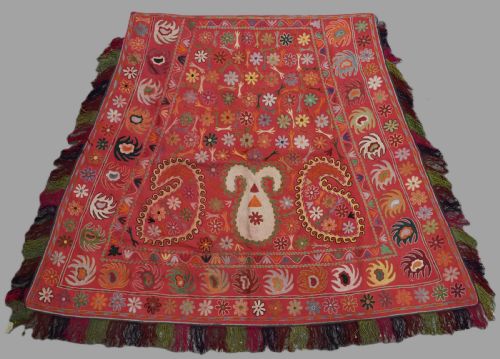
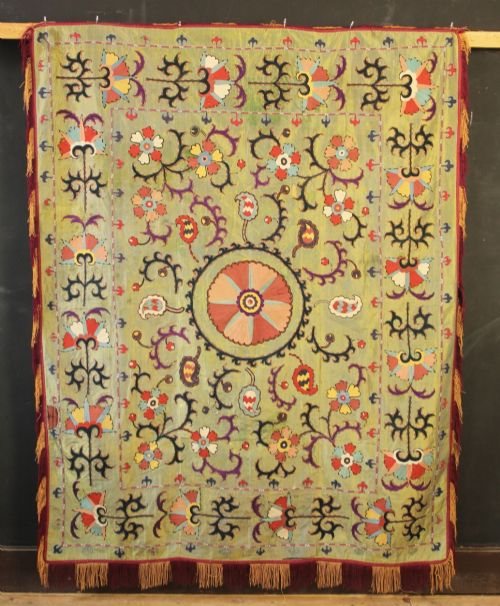
When searching for a vintage embroidered suzani, buyers encounter ceremonial textiles and domestic furnishings originating from Central Asian regions including Uzbekistan. These pieces span from the mid nineteenth century through the early twentieth century and include regional forms such as large medallion panels, bed covers, and prayer formats.
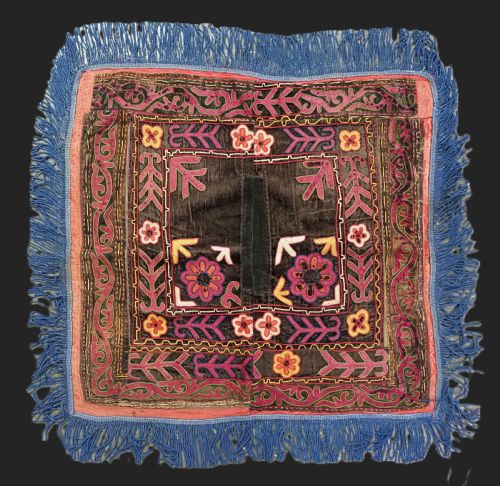
Makers utilised various textile forms for specific domestic and ceremonial functions, ranging from yurt wall hangings to specialised storage bag faces. These objects reflect the folk art traditions and nomadic heritage of Central Asian makers from Bokhara, Tashkent, Samarkand, and Shakrisabz.
How they were made
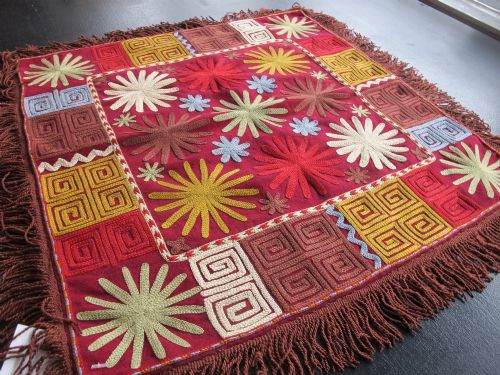
Artisans worked silk thread onto various foundation materials, employing grounds constructed from woven cotton, red wool, black cotton, yellow cotton, and mixed adras silk and cotton fabrics. Embroidery techniques cover surfaces either partially or fully to build up intricate floral and geometric designs.
Needlework styles incorporate distinct regional patterns, with specific tribes and urban centres utilising dedicated colour palettes on grounds of varying weights and textures. Finished textiles often incorporate wool fringe or border elements to complete the edges of wall hangings and covers.
Vintage Embroidered Suzani Retail Price Guide 2026
Typical asking prices for vintage embroidered suzani among the pieces listed under this phrase on Sellingantiques today, from the lower quarter to the upper quarter. They describe what is for sale here now, not the wider market.
Listings feature suzanis created on cotton, wool, velvet, and adras silk grounds.
What varies in quality
The density of the needlework distinguishes different tiers of execution, ranging from full work embroidery covering the entire ground to lighter compositional layouts. The complexity of the design, such as central medallion variants or architectural layouts, dictates the visual impact of the piece.
The preservation of the ground fabric and the vibrancy of the silk thread contribute significantly to the overall standing of an individual textile. Regional distinction and specific tribal attributions, such as Lakai work from Shakrisabz or Tashkent palaks, add contextual depth to the piece.
The Vintage Embroidered Suzani Glossary
- Ilgich
- A smaller Central Asian hanging or dowry embroidery piece used for domestic decoration. They frequently display tribal patterns unique to specific maker groups.
- Nim Suzani
- A half size embroidered panel measuring smaller than standard full scale suzanis. These compact textiles were utilised for various domestic settings.
- Palak
- A fully embroidered Tashkent suzani style dominated by large central star motifs and dense needlework. The entire ground fabric is typically covered in stitchery.
- Adras
- A traditional Central Asian mixed fabric woven from silk and cotton warps and wefts. This material frequently serves as the foundation ground for regional embroidery.
- Torba
- A small bag face or hanging panel produced by nomadic and tribal groups. These items display traditional regional patterns.
Vintage Embroidered Suzani: Frequently Asked Questions
What is a suzani used for?
Traditional suzanis served multiple domestic functions including wall hangings, bed covers, and ceremonial dowry items. They brought colour and texture into nomadic yurts and urban homes alike.
Today, collectors primarily display these textiles as wall art or decorative wall hangings to preserve the historic needlework and highlight the central medallion designs.
How do I identify a Lakai suzani?
Lakai suzanis and ilgich panels are distinguished by their bold, geometric tribal aesthetics and distinctive small scale formats. They frequently incorporate expressive embroidery on wool or cotton grounds.
These pieces often originate from regions such as Shakrisabz and reflect the nomadic heritage of the Lakai people through specific motifs distinct from urban workshop pieces.
How should I care for a vintage suzani?
Display these historic textiles away from direct sunlight to protect the natural silk threads and dyed cotton or wool grounds from fading. Gentle handling preserves the structural integrity of the fabric.
Professional textile conservation methods should be consulted for cleaning or mounting older wall hangings to ensure the historic materials remain undamaged.