




Vintage Elephant Sculpture
These vintage elephant sculpture pieces range from leather footstools to bronze studies, offering character and craftsmanship for your interior.
Vintage Elephant Sculpture
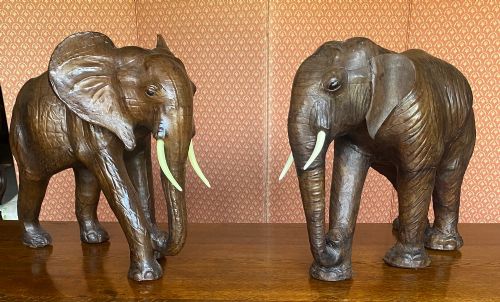
When you search for vintage elephant sculpture, you encounter a diverse array of forms spanning the Victorian era through the Art Deco period. These objects include functional items like leather footstools and doorstops alongside purely decorative figures and clock sets.
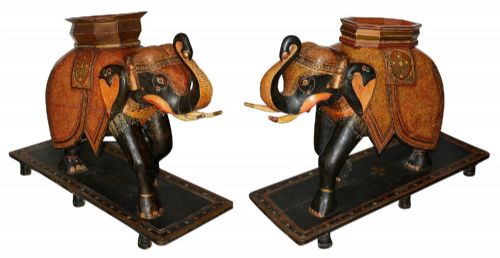
The most common examples you meet on this page originate from the Indian Raj period or English workshops influenced by colonial design. Artisans utilised materials ranging from carved hardwood and ebony to moulded leather over a metal or wooden frame.
Regional styles vary significantly, encompassing Japanese Meiji bronzes, Chinese hardwood figures on stands, and French porcelain or ceramic pieces. Each creation reflects the distinct aesthetic priorities of its era and origin.
How they were made
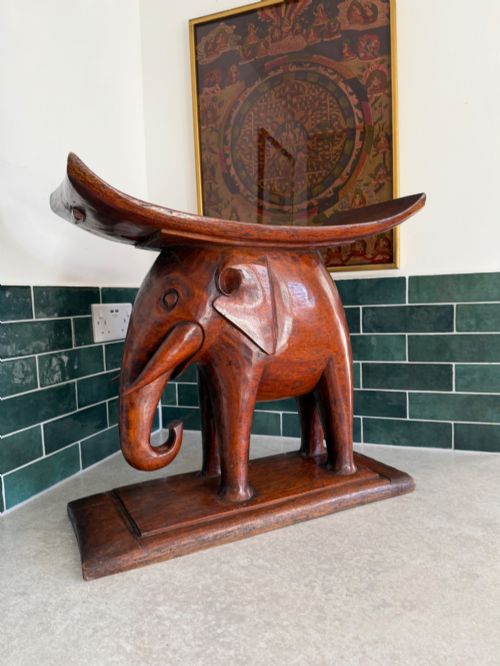
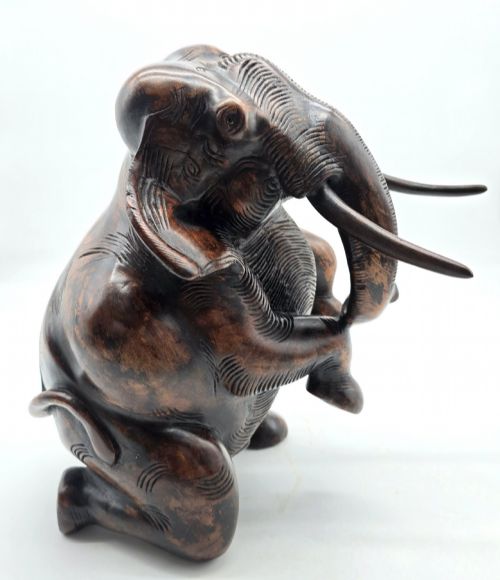
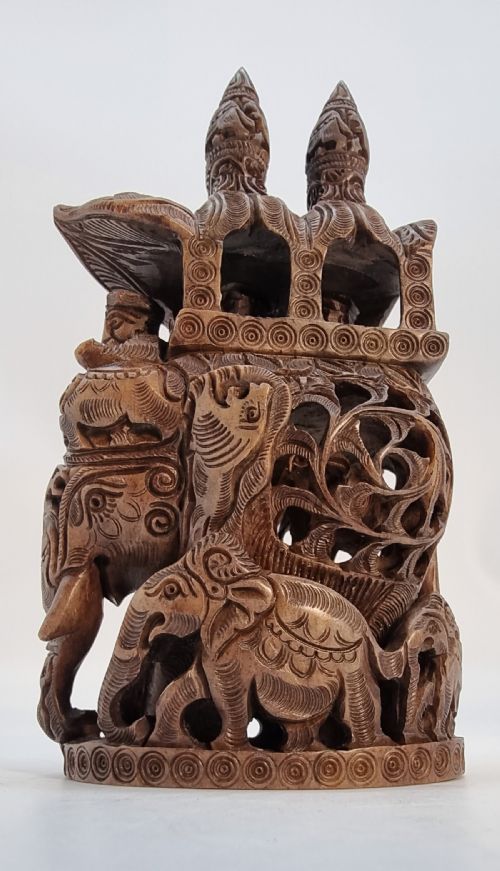
Carved wooden pieces rely on dense timbers such as teak, ebony, and assorted hardwoods, shaped by hand with intricate detail to capture the texture of skin and harness. Lacquer and paint occasionally accent these wooden surfaces, particularly in Kashmiri and Asian folk art traditions.
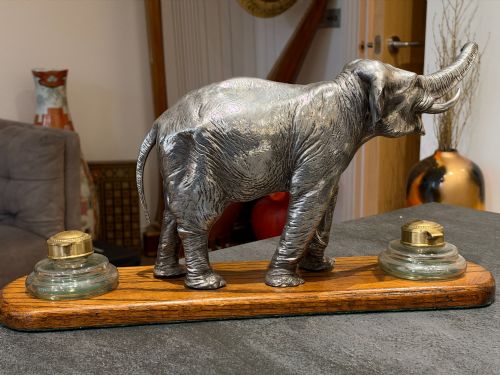
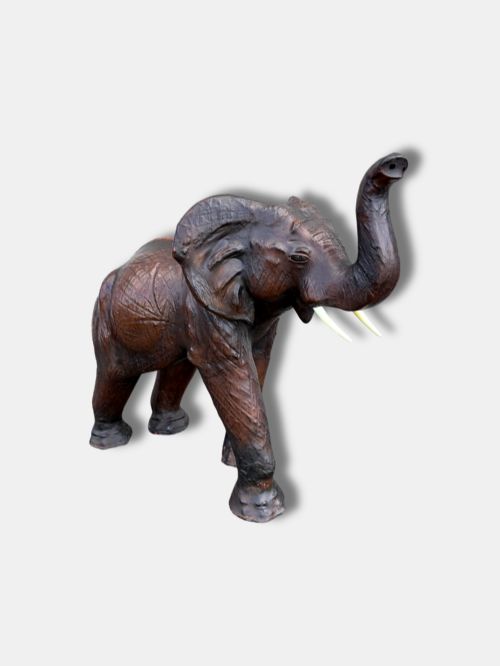
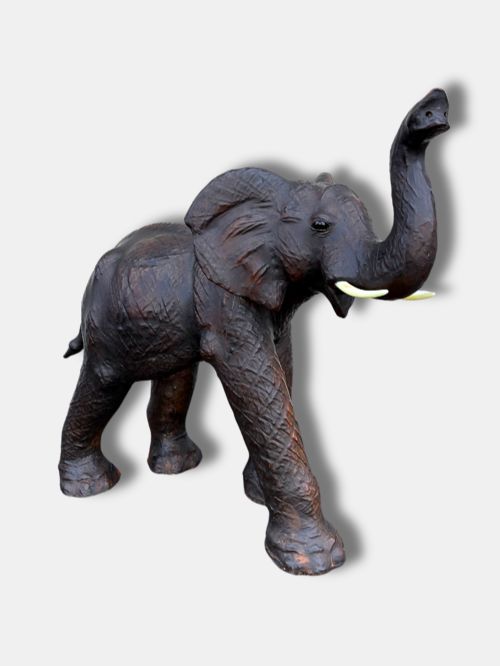
Leather models utilise stretched hides worked over internal frames, often associated with English makers like Liberty during the early twentieth century. Metal castings in bronze employ traditional methods to produce statues, inkwells, and clock components with lasting durability.
Vintage Elephant Sculpture Retail Price Guide 2026
Typical asking prices for vintage elephant sculpture among the pieces listed under this phrase on Sellingantiques today, from the lower quarter to the upper quarter. They describe what is for sale here now, not the wider market.
Several leather examples carry affectionate contemporary names like Old Bill, reflecting the personal character bestowed upon them by their original makers.
What varies in quality
The degree of anatomical realism and proportion distinguishes superior carvings from simpler folk art interpretations. Master carvers capture the subtle tension in the muscles and the accurate articulation of the trunk and ears.
Material selection and surface finish determine the standing of each piece, whether through the deep patina of aged ebony and bronze or the meticulous stitching on leather examples. Age-related wear should enhance the surface without obscuring the original sculptural intent.
Liberty·Argilor Paris·Carl Thieme Dresden·Ernest Louis Adnin
The Vintage Elephant Sculpture Glossary
- Raj period
- An era of British administration in India spanning the nineteenth and early twentieth centuries. Pieces from this time often feature local hardwoods and traditional ceremonial motifs.
- Meiji Period
- A Japanese historical epoch noted for high-level metalwork and bronze casting. Objects from this era display precise finishing and sculptural refinement.
- Footstool
- A low upholstered or leather-covered seat designed for resting feet. In this context, these items take the form of sturdy animal figures.
- Art Deco
- A design style dominant in the 1920s and 1930s characterised by streamlined geometric forms and stylised depictions of animals. French porcelain and clocks frequently exhibit these traits.
- Ebony
- A dense, dark hardwood prized by carvers for its fine grain and ability to take a high polish. It appears frequently in detailed studies from colonial workshops.
Vintage Elephant Sculpture: Frequently Asked Questions
How were leather elephant footstools used?
These large leather models served as functional seating or footrests in nineteenth and early twentieth century domestic interiors. Their sturdy internal construction allowed them to withstand everyday domestic use.
Over time, these pieces transitioned from functional furnishings to decorative focal points in studies and living rooms, valued for their distinct presence.
What distinguishes Raj period carvings?
Raj period carvings originate from nineteenth century India under British administration, frequently utilising dense native timbers like teak and ebony. Artisans rendered ceremonial trappings, howdahs, and realistic skin textures with notable depth.
These sculptures often reflect a blend of local craftsmanship and British decorative demand, resulting in substantial decorative studies.
How do I care for bronze inkwells?
Bronze pieces require minimal intervention to preserve their natural surface development over decades of handling. Dust them gently with a soft brush and avoid harsh chemical cleaners that strip the finish.
Keep them away from direct moisture sources to protect any integrated inkwells or mechanical components associated with the desk accessories.
Where were porcelain perfume lamps made?
Ceramic and porcelain novelty items, such as perfume lamps and decorative figures, frequently emerged from European kilns in France and Germany during the early twentieth century. Makers utilised glazed finishes to render stylised forms.
These pieces often incorporated functional elements like internal reservoirs for scented oils, reflecting the domestic luxuries of the Art Deco period.