




Vintage Dutch Chest Drawers
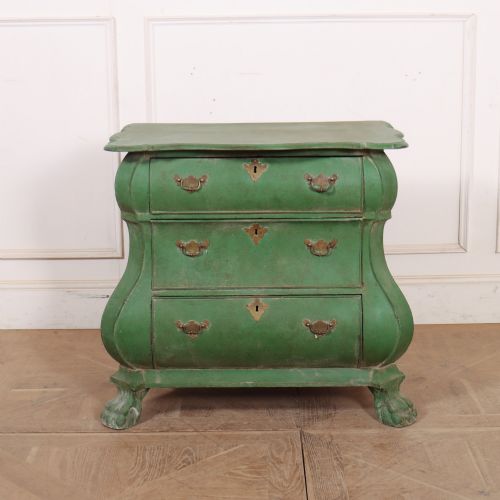
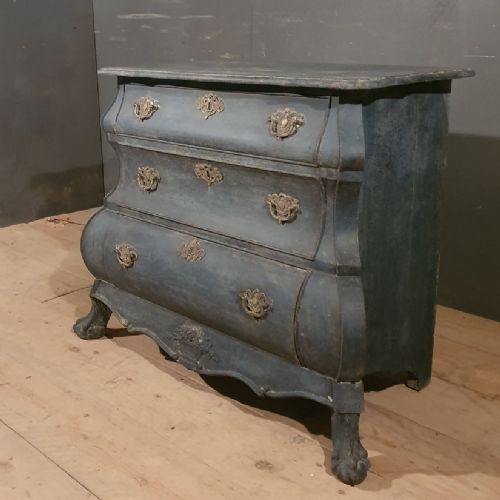
These vintage dutch chest drawers bring robust provincial character and sweeping serpentine lines into a room, offering both substantial storage and striking historical presence.
Vintage Dutch Chest Drawers
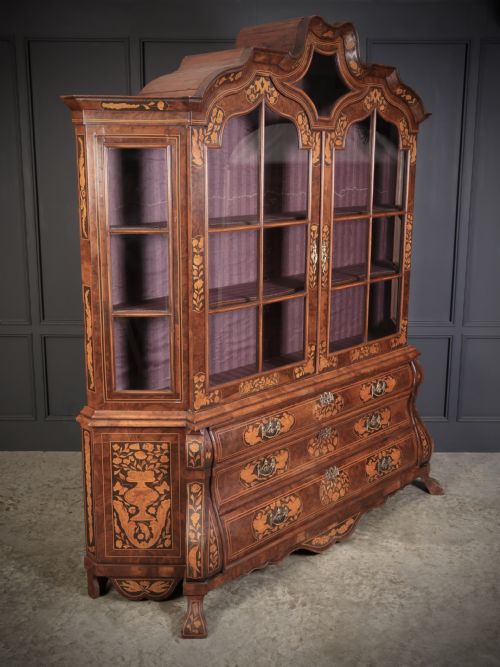
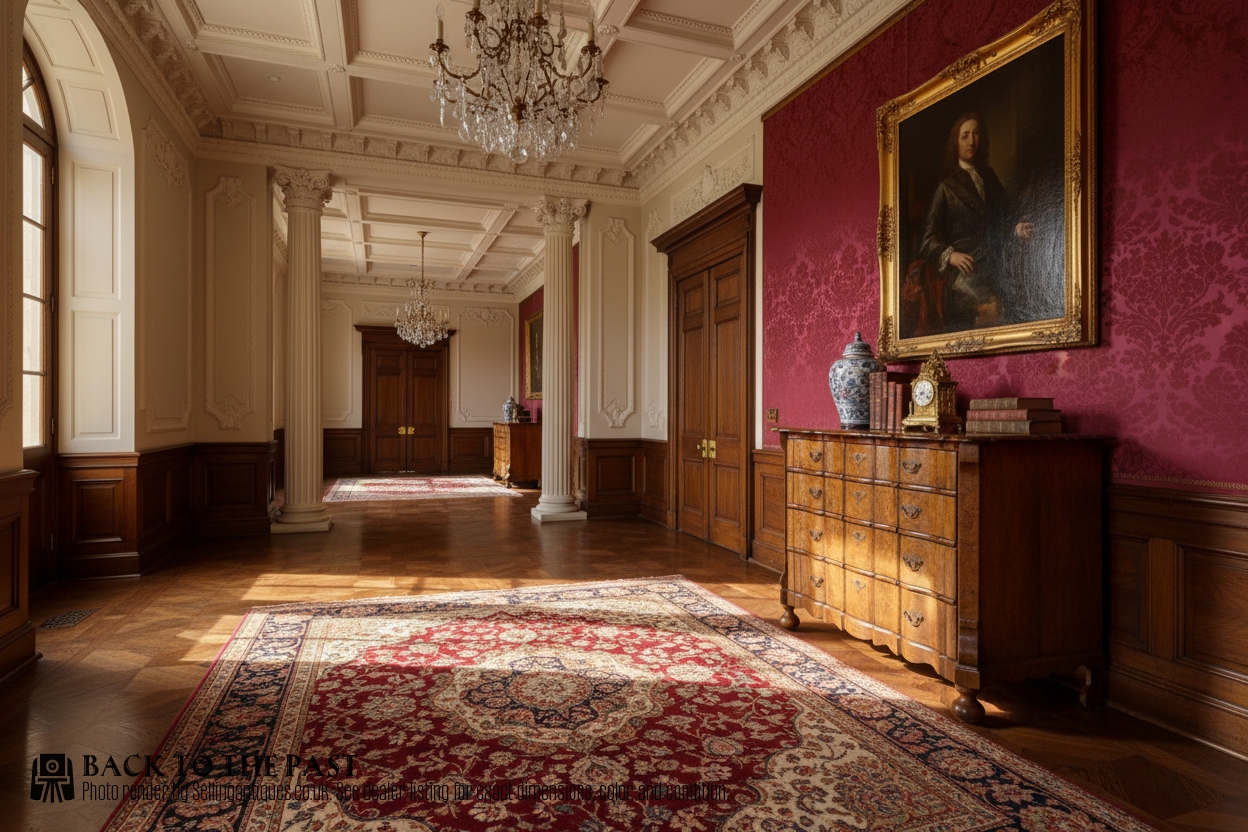
Vintage dutch chest drawers span several centuries of cabinet-making, encompassing grand marquetry commodes, bombe silhouettes, and simpler country forms. The selection frequently includes pieces defined by their swelling fronts, curved sides, and pronounced proportions.
Most examples found on this page lean towards the nineteenth and eighteenth centuries, reflecting regional styles from Dutch Baroque to Dutch Country. Alongside standard drawer configurations, variations such as bureaux, linen presses, and dressing tables appear across the inventory.
Makers and workshops across these periods utilised substantial timber carcasses, often shaping them into distinctive serpentine or block front profiles. The resulting furniture serves both functional bedroom storage and prominent decorative display within domestic interiors.
What varies in quality
The sophistication of the marquetry inlay and the precision of the curved bombe shaping dictate the upper tiers of the range. Master craftsmen achieved seamless alignment between the veneer patterns and the complex contours of the timber carcase.
Several chests feature secret compartments hidden behind decorative marquetry panels, designed to guard small fortunes or love letters.
The Vintage Dutch Chest Drawers Glossary
- Bombe
- A term describing furniture with a bulging or swelling front and sides, characteristic of eighteenth and nineteenth-century commodes. This pronounced curvature required exceptional woodworking skill to execute properly.
- Marquetry
- The art of applying decorative pieces of veneer to a structure to form intricate pictorial or geometric designs. Craftsmen utilised various stained and natural woods to create contrasting floral motifs.
- Commode
- A low chest of drawers, often highly ornamented and standing on short legs. In continental usage, these pieces frequently featured serpentine or bombe profiles.
- Escutcheon
- A flat plate of brass or other metal placed around a keyhole to protect the surrounding wood. These fittings often display chased or engraved detail matching the handles.
- Veneer
- A thin layer of superior wood glued to a base timber of lesser quality to provide a decorative surface. Burr walnut and figured hardwoods were commonly applied in this manner.
Vintage Dutch Chest Drawers: Frequently Asked Questions
What is a bombe commode?
A bombe commode is a chest of drawers defined by its swelling, convex front and curved sides. These pieces originated in continental workshops and provide a dramatic silhouette.
The form gained prominence during the baroque and rococo periods, relying on skilled carpentry to shape thick timber without losing structural integrity.
How do I care for marquetry furniture?
Marquetry furniture requires stable indoor humidity and protection from direct sunlight to prevent the delicate veneer from lifting or fading. Regular dusting with a soft, dry cloth preserves the polished surface.
Avoid placing these items near direct heat sources, which can dry out the historic timbers and cause the intricate wood inlays to warp.
What woods were used in these chests?
Cabinet-makers utilised a variety of native and imported timbers, including walnut, oak, mahogany, fruitwood, and pine. Burr elm and figured walnut were frequently selected for decorative veneer work.
Secondary woods like oak or deal often form the interior drawer linings and structural framing hidden beneath the exterior decorative surfaces.
Are these drawers suitable for daily use?
These chests offer practical storage, though historic drawer mechanisms operate differently from modern equivalents. Careful handling ensures the traditional wooden runners and joints remain undamaged over time.
Lining the drawers with acid-free tissue protects both the interior timber and modern garments stored within these antique pieces.