

Vintage Drop Chandelier
A vintage drop chandelier brings suspended illumination and refractive brilliance to a room, drawing the eye upward with cascades of glass and crystal.
Vintage Drop Chandelier
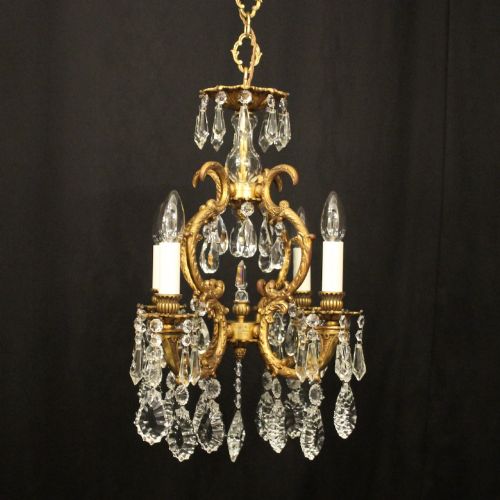
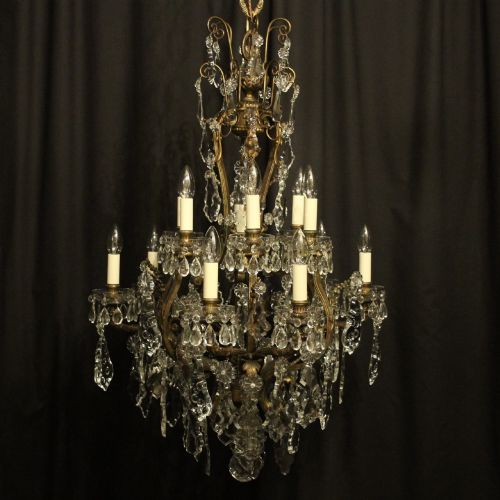
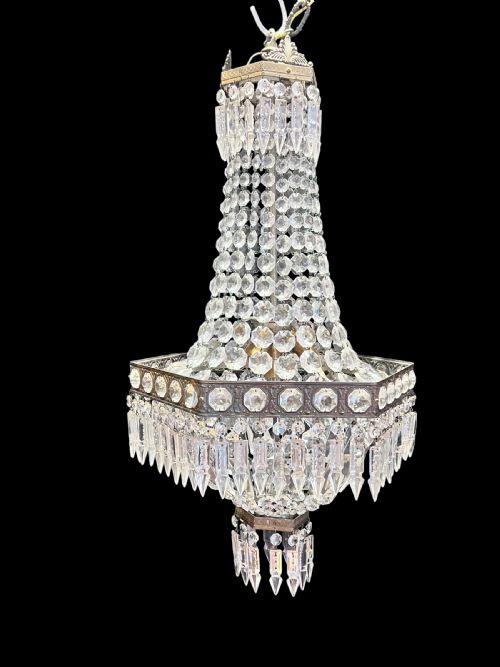
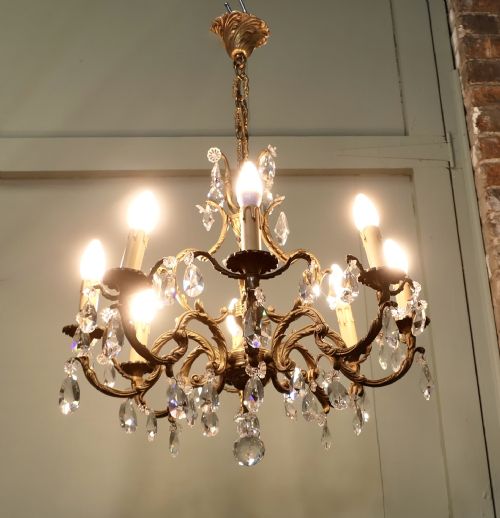
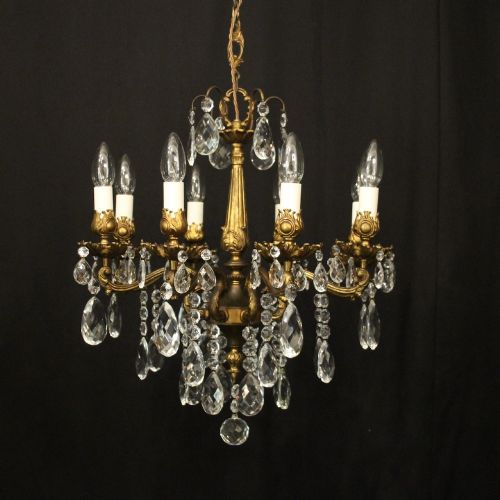
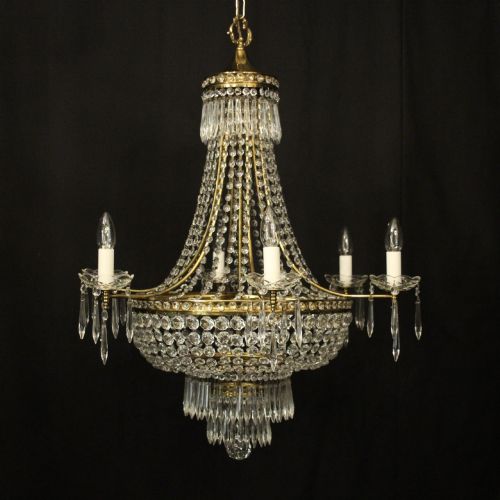
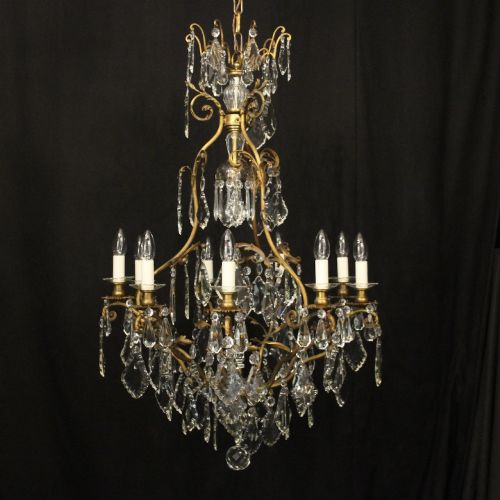
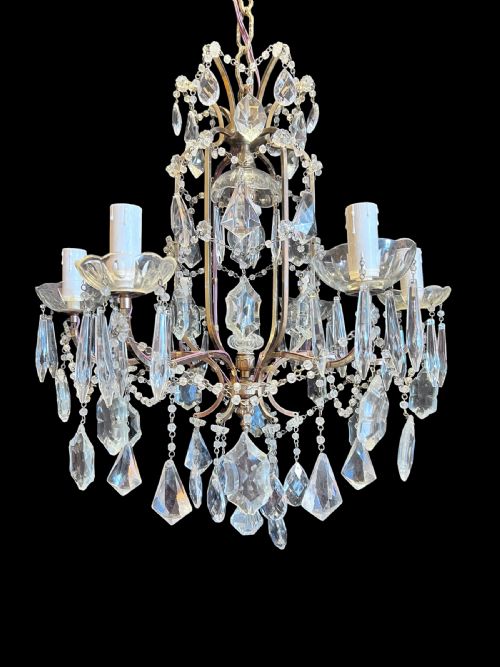
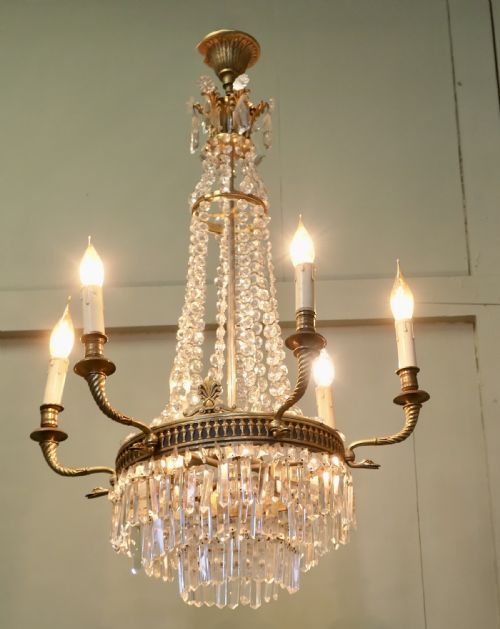
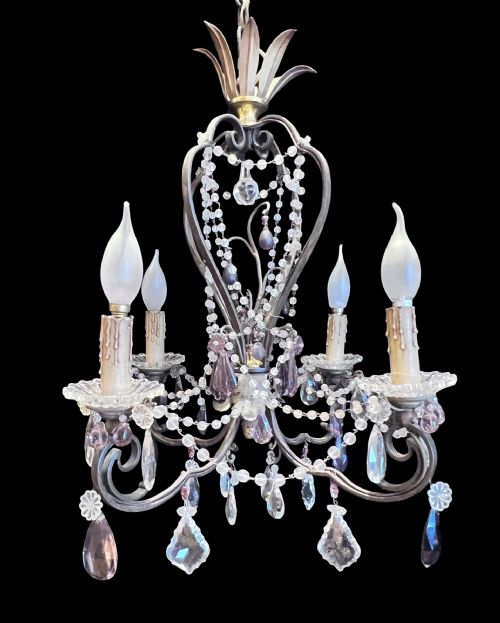
When searching for a vintage drop chandelier, buyers encounter a diverse selection of lighting fixtures originating predominantly from French and Italian workshops across the late nineteenth and early twentieth centuries. The inventory reflects distinct regional forms, including French basket shapes, multi-armed Empire tent and waterfall designs, and Italian Marie Theresa styles.
The pieces on this page span several decades, reaching from late Victorian and Edwardian examples through to Art Deco creations from the nineteen-thirties. Alongside large multi-light ceiling fixtures, the selection incorporates smaller pendant lights, wall sconces, and occasionally drop earrings sharing similar decorative vocabularies.
Materials and Construction
Makers constructed the primary framework of these chandeliers using cast and forged metals such as brass, gilt metal, bronze, and silver-gilded brass, sometimes incorporating toleware or spelter elements. These structural skeletons support an array of glass and crystal components, fixed securely to the arms and crowns.
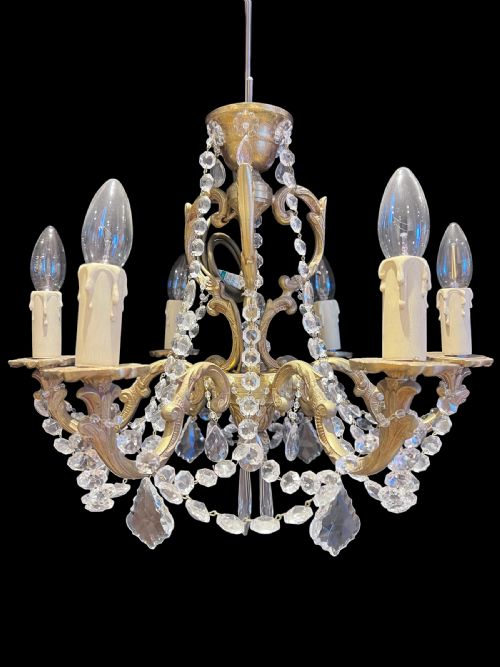
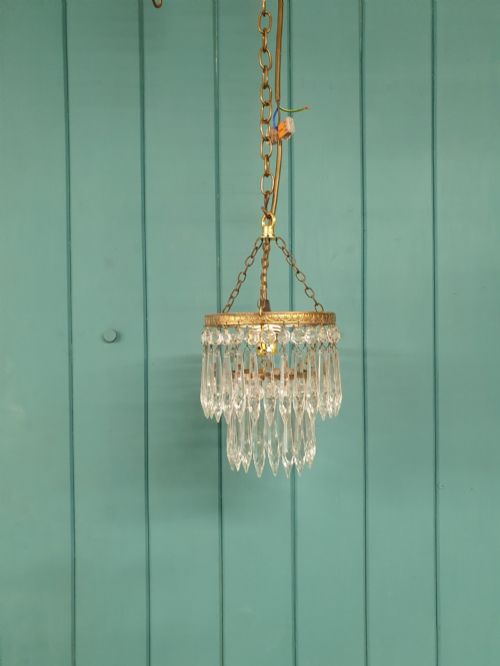
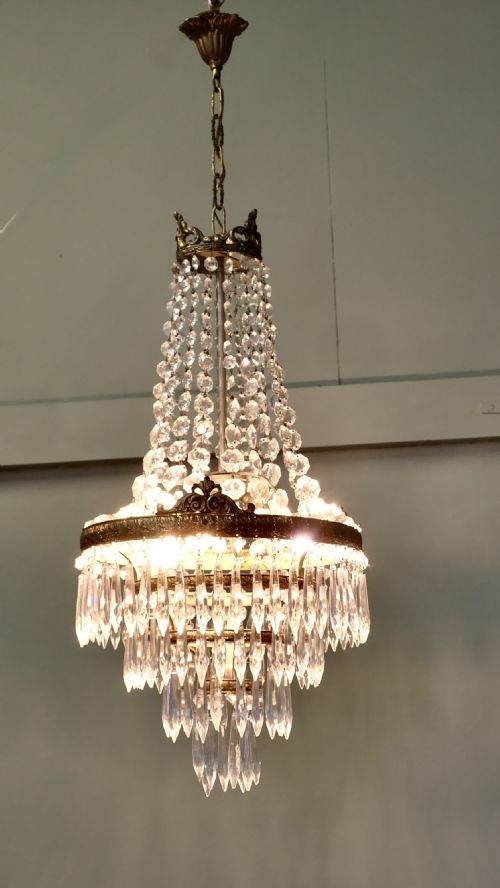
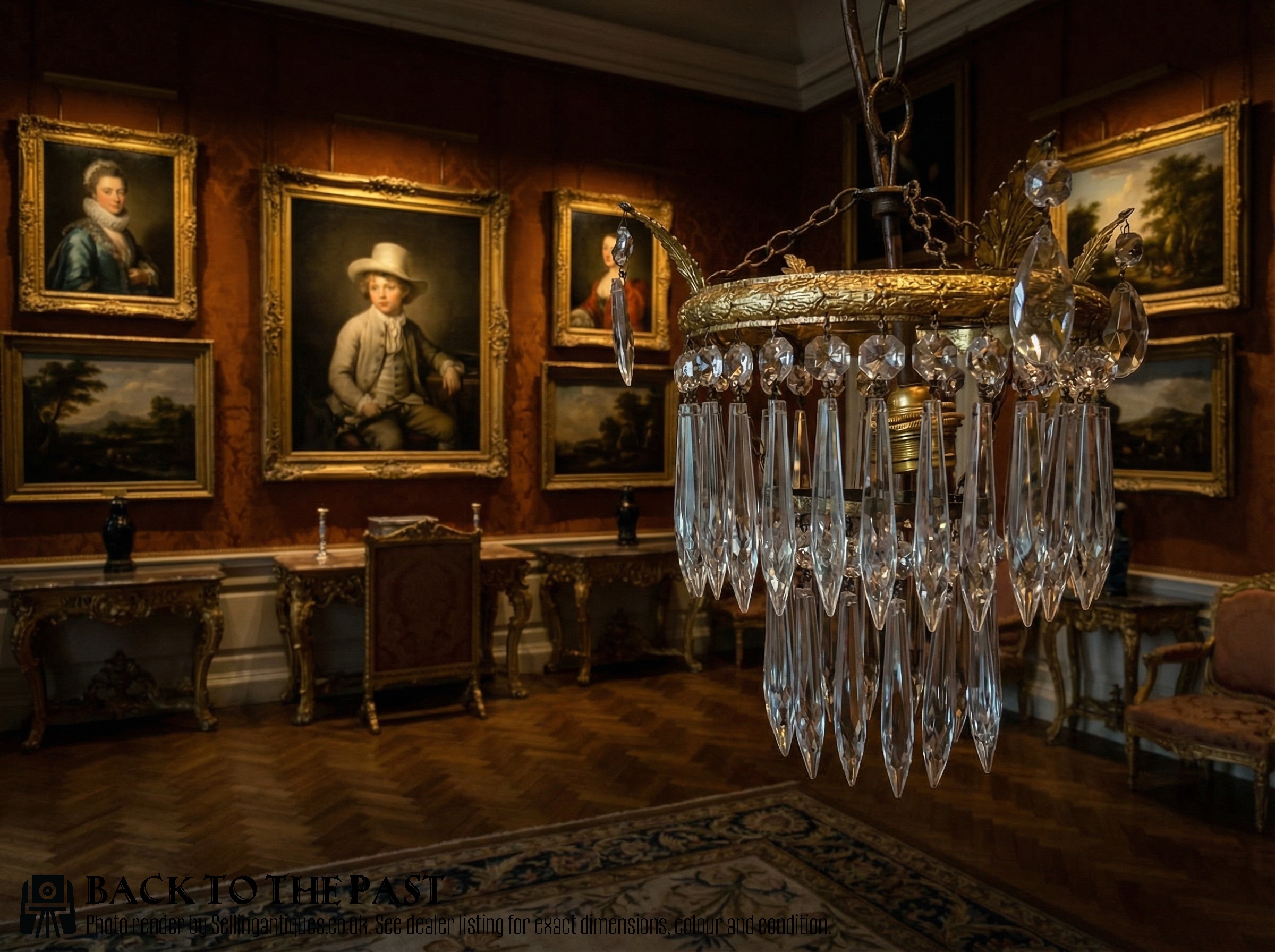
Hanging elements are shaped into specific optical forms, including cut glass, crystal spikes, coffin prisms, and lustres that catch and disperse light. Many designs feature complex configurations like tents and waterfalls, where numerous glass drops link together in precise geometric arrangements.
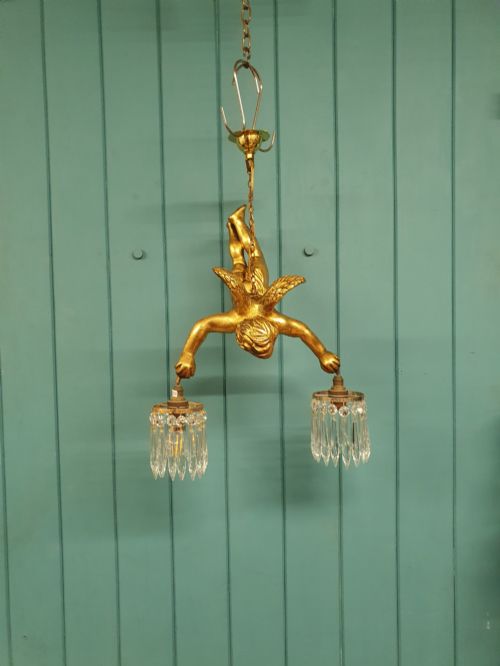
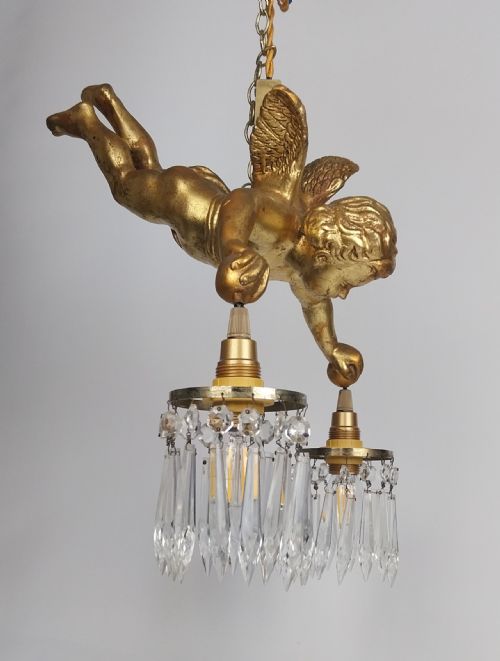
Several chandeliers feature gilded cherubs keeping a watchful eye over the room from amidst the crystal spikes.
Assessing the Workmanship
Quality in these chandeliers rests primarily on the depth of the metalwork and the clarity of the glass or crystal components. Finer examples display crisper casting in the bronze or brass frames, with intricate detailing on elements like leaf decorations, winged cherubs, or gilded mounts.
The brilliance of the piece depends on the cut and purity of the hanging drops, where superior crystal exhibits sharper facets and greater light refraction. Original matching components and integrated colour schemes, such as pink Venetian glass or turquoise crystal accents, also elevate the standing of a fixture.
The Vintage Drop Chandelier Glossary
- Crystal
- A high-purity glass containing lead oxide, which increases weight, refractive index, and brilliance when cut into facets.
- Lustre
- A glass pendant or drop suspended from the arms or crown of a chandelier to reflect light.
- Tent and waterfall
- A chandelier style featuring an upper conical tent of strung beads cascading down into a wider bowl-like waterfall of crystal drops.
- Coffin prism
- A flat, elongated pendant glass drop with bevelled edges, commonly found on early twentieth-century fixtures.
- Spelter
- A zinc alloy frequently used as a base metal for cast decorative figures, often painted or gilded to resemble bronze.
Vintage Drop Chandelier: Frequently Asked Questions
What is a vintage drop chandelier?
A vintage drop chandelier is a ceiling-mounted light fixture adorned with hanging glass or crystal prisms, beads, and lustres that refract illumination across a space. These pieces date predominantly from the late nineteenth century through the mid-twentieth century.
Such fixtures combine structural metal frames in brass, bronze, or gilt metal with cascading formations of cut glass. They serve as both functional overhead lighting and decorative focal points within a room.
How were these chandeliers used historically?
Historically, these chandeliers hung in principal reception rooms, salons, and dining spaces to provide ambient illumination while signalling the status of the household. The reflective glass pendants maximised the candlelight or early electric light available in the room.
Positioned centrally above a dining table or seating area, they created a theatrical play of light across the walls and ceiling. Their scale ranged from modest single-light fixtures to large multi-armed displays intended for grander architectural settings.
How do I live with a vintage chandelier?
Living with a vintage chandelier involves matching the scale and drop length of the fixture to your ceiling height and room proportions. Consideration should be given to clearance beneath the lowest crystal drops, particularly in spaces used for dining or walking.
Integration into modern interiors works well by pairing ornate French or Italian designs with either traditional period rooms or minimalist spaces for contrast. Regular gentle dusting and careful cleaning of the individual crystal drops help maintain their optical brilliance over time.
How do I tell periods apart?
Differentiating periods relies on observing stylistic markers in the metalwork and the cut of the glass elements. Nineteenth-century examples often exhibit heavier bronze casting and classical French Empire or Rococo revival motifs.
Early twentieth-century and Edwardian pieces frequently feature lighter brass frames, crystal spikes, and coffin prisms, while nineteen-thirties items can incorporate distinct Art Deco lines or coloured Venetian glass. Examining the assembly methods and wiring remnants also provides clues to the manufacturing era.