

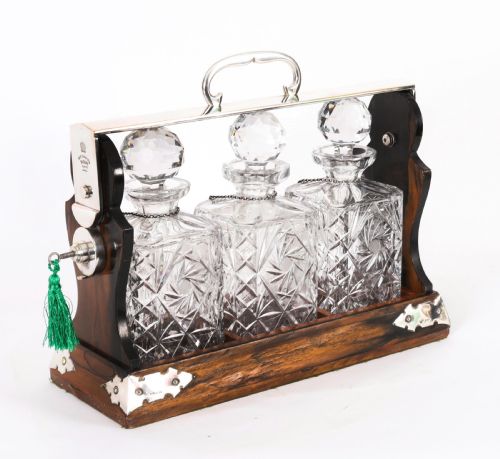


Vintage Drinks Bar Standing
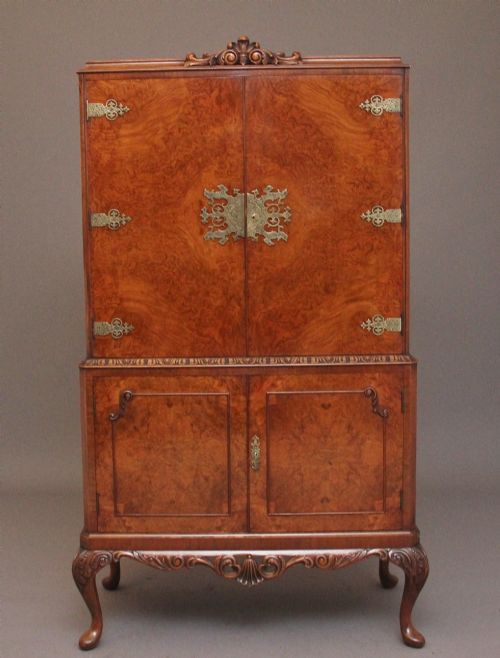
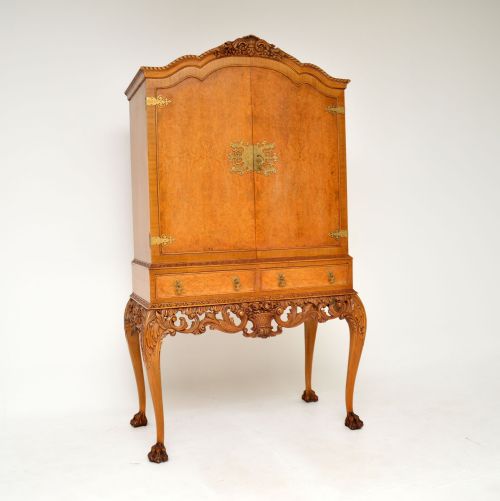
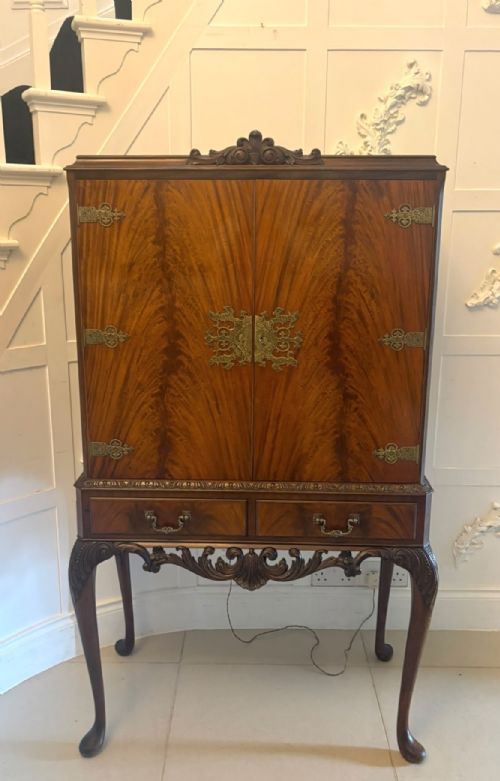
A vintage drinks bar standing brings together practical hosting and period craftsmanship, offering fitted storage for bottles and glassware in classic timbers.
Vintage Drinks Bar Standing
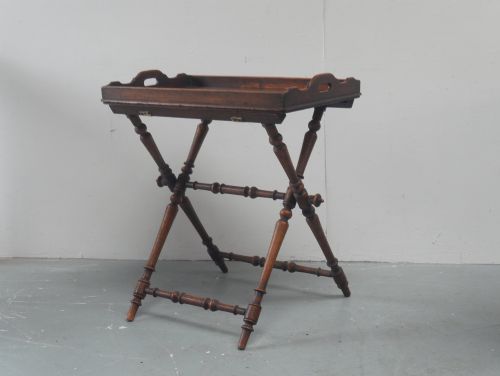
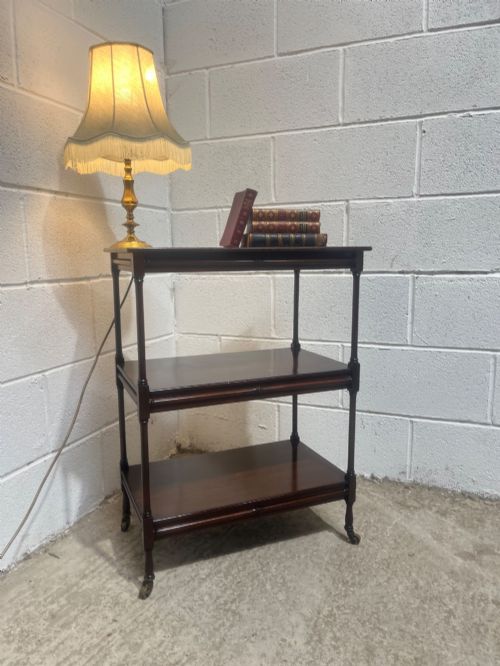
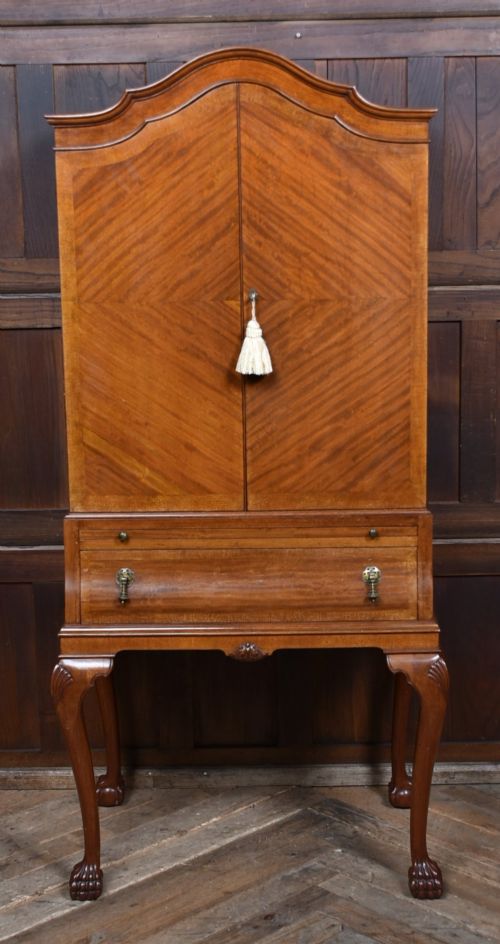
When buyers search for a vintage drinks bar standing, they encounter cocktail cabinets, butlers trays on stands, and tiered trolleys spanning the Victorian, Edwardian, and Art Deco periods. These pieces range from upright burr walnut cabinets to folding oak or mahogany trays raised on dedicated stands.
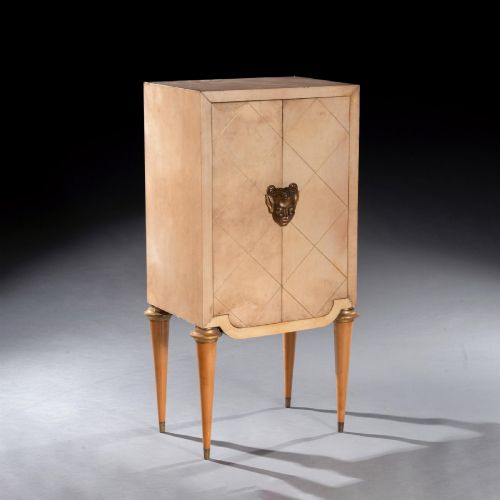
The version most commonly met on this page is the 1930s burr walnut cocktail cabinet, often designed with fitted interior shelving and drop-down preparation surfaces. Alongside these, buyers find earlier nineteenth-century mahogany cellarets and butlers trays that served a similar entertaining purpose in domestic settings.
Origins stretch from English workshops like Waring & Gillows and Epstein to French makers and department stores such as Harrods and Liberty's. Styles draw heavily on Queen Anne Revival, Chinoiserie, and streamlined Art Deco geometries, creating varied silhouettes for modern interiors.
Materials and construction
Makers utilised rich decorative veneers such as burr walnut, figured mahogany, and coromandel, often laid over sturdy secondary pine or oak carcases. Lacquer and parchment inlay also appear on select French and English cabinets of the early twentieth century.
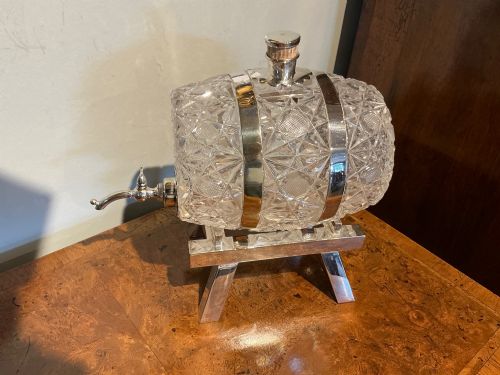
Metal and glass components provide structural and decorative contrast, utilising brass galleries, silver plating, bakelite, and cut crystal decanters. Stands and trolleys rely on solid turnings and stable joinery to support heavy bottles and glassware safely.
Listings feature 1930s burr walnut cocktail cabinets alongside 19th-century mahogany butlers trays and stands.
Assessing quality in stands and cabinets
Quality rests primarily on the choice of timber veneers and the precision of the cabinetwork, where matched burr walnut figure and tight joinery elevate a piece. The presence of original internal fittings, such as sliding shelves, mirrored backs, and dedicated glass holders, distinguishes higher-grade examples.
Maurice Jallot·Betjemann·Sudre·Hille·Epstein and Co·Waring & Gillows·Liberty's of London
The Vintage Drinks Bar Standing Glossary
- Tantalus
- A locking wooden frame holding decanters securely without concealing the contents. It prevents unauthorized access to spirits while displaying the crystal bottles.
- Cellaret
- A fitted box or cabinet used for storing wine bottles near the dining table. They frequently date from the Georgian and Victorian eras.
- Burr walnut
- Timber taken from a tree growth that produces intricate, swirling grain patterns. It is sliced into decorative veneers for high-end cabinet doors.
- Butlers tray
- A portable wooden tray with hinged or fixed sides, designed to sit upon a folding X-frame stand. It was historically used for serving and clearing drinks.
- Chinoiserie
- European decorative style reflecting Chinese artistic motifs. It involves hand-painted lacquerwork depicting figures, landscapes, and floral designs.
Vintage Drinks Bar Standing: Frequently Asked Questions
What is a vintage drinks bar standing?
A vintage drinks bar standing refers to freestanding furniture designed for entertaining, including cocktail cabinets, cellarets, and trolleys.
These pieces provide dedicated storage for bottles, glassware, and barware while serving as decorative furniture in a room.
How were cocktail cabinets used?
Cocktail cabinets were designed for home entertaining, holding spirits, mixers, and glassware behind lockable doors.
Many feature drop-down flaps that serve as preparation surfaces for mixing drinks before guests.
How do I date a butlers tray on stand?
Dating relies on timber types, construction methods, and hardware such as brass hinges and handles.
Nineteenth-century examples typically feature solid mahogany or oak with hand-turned stands, while later versions adopt different proportions.
Where should I place a drinks cabinet?
These cabinets suit living rooms, dining spaces, or home bars where glassware and bottles are easily accessed.
Position them away from direct sunlight and heat sources to protect wood veneers and interior finishes.