





Vintage Dresden Porcelain Figures
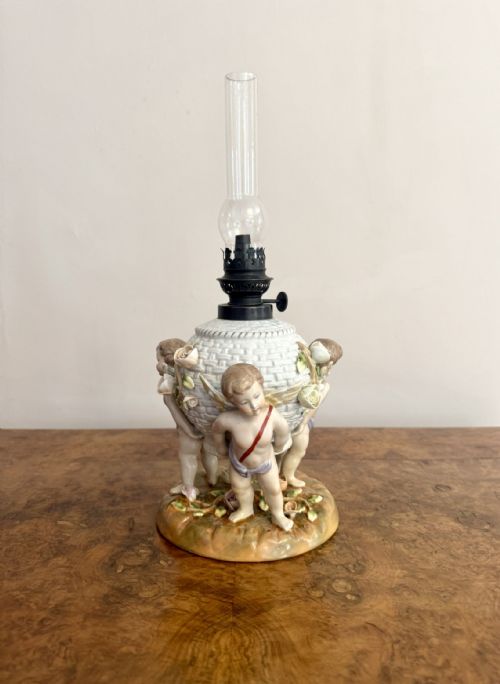
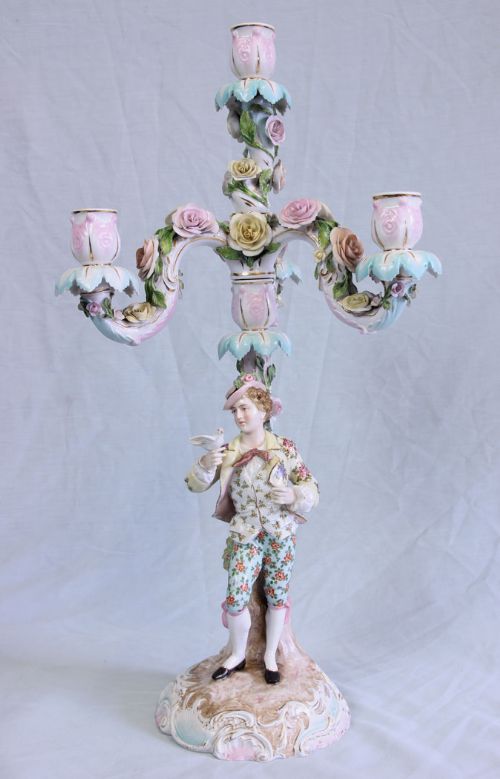
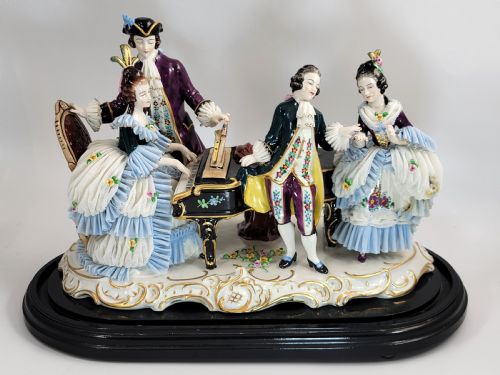
These vintage dresden porcelain figures are ornate German ornaments shaped into couples, animals and elaborate table centrepieces that bring intricate painted detail to a room.
Vintage Dresden Porcelain Figures
When you search for vintage dresden porcelain figures, you encounter a selection of German ceramic ornaments originating across the nineteenth and early twentieth centuries. These pieces take the form of porcelain figurines, candelabras, oil lamps and centrepiece bowls that reflect historical European styles.
The versions most commonly met on this page include nineteenth-century figural groups, candlesticks with floral bases, and detailed sculptures produced by factories in the Saxony region. Makers such as Sitzendorf, Meissen, Ernst Bohne Söhne, Helena Wolfsohn and Carl Thieme dominate the selection.
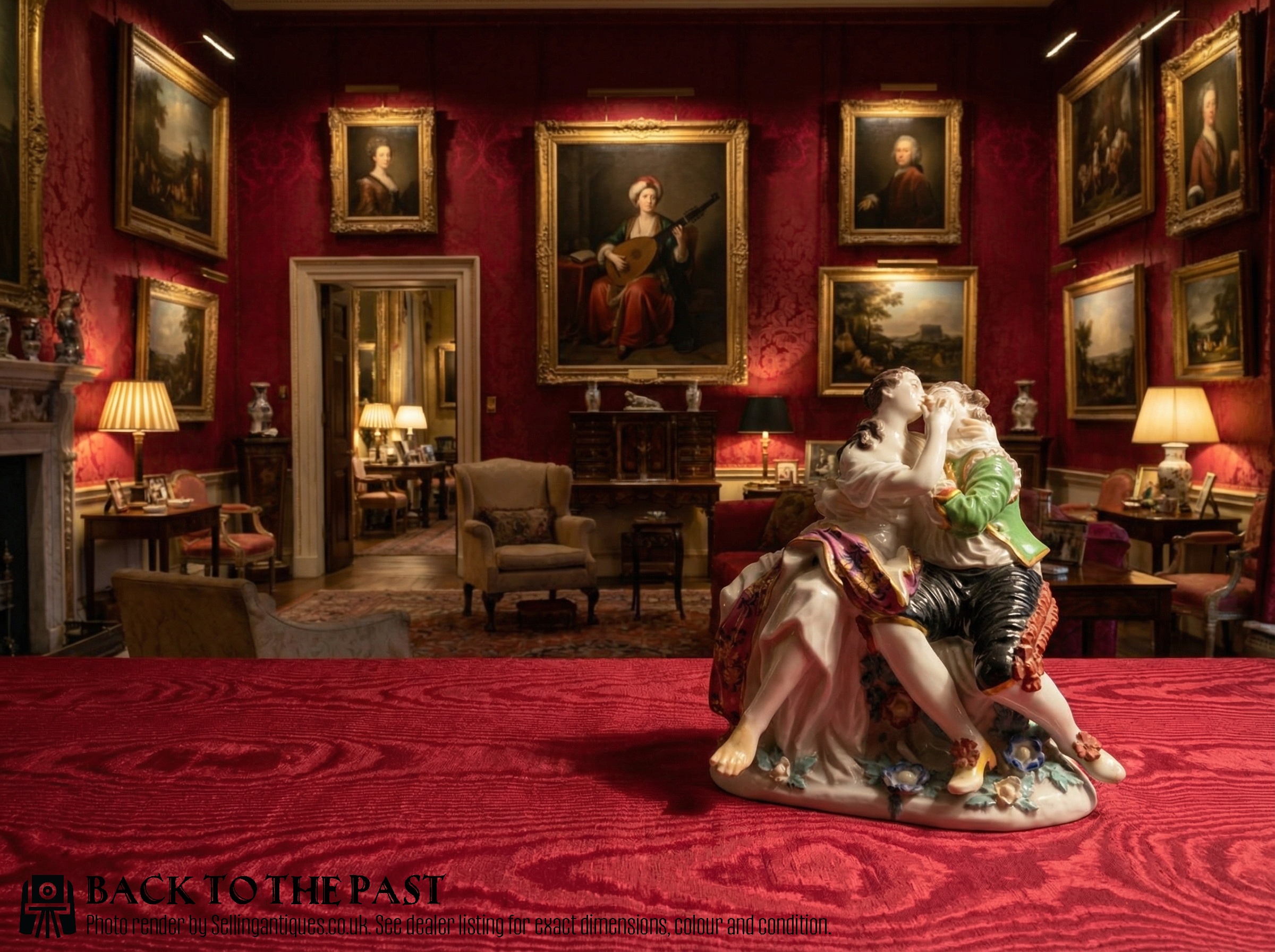
The forms range from single figures like grape harvesters and lovers to large animal sculptures and multi-branch candelabras. They display influences from Rococo revival and Victorian aesthetics, often incorporating lace detailing and hand-painted enamel.
How they were made
These pieces are constructed from hard-paste porcelain, moulded and fired at high temperatures to achieve a durable ceramic body. Enamel colours and gold leaf or gilt are then applied by hand to accent the intricate garments and floral bases.
Specialised techniques such as applied porcelain lace involve draping actual textile lace dipped in porcelain slip into the kiln, where the fabric burns away during firing to leave delicate ceramic threads. Metal components in brass and glass are occasionally incorporated into oil lamps and candelabras.
Vintage Dresden Porcelain Figures Retail Price Guide 2026
Typical asking prices for vintage dresden porcelain figures among the pieces listed under this phrase on Sellingantiques today, from the lower quarter to the upper quarter. They describe what is for sale here now, not the wider market.
Real textile lace was dipped in liquid porcelain and fired in a kiln, burning away the fabric to leave fragile ceramic threads.
What varies in quality
The distinction between standard examples and top-tier works rests in the crispness of the modelled details and the precision of the hand-painted enamel. Superior pieces exhibit finely defined facial expressions, individually shaped foliage, and meticulously applied lace work without heavy losses.
The reputation of the factory and the complexity of the figural grouping also dictate the standing of an object. Large-scale models and multi-figure compositions require greater technical skill in the kiln, marking out the most accomplished German manufactories.
Sitzendorf·Meissen·Ernst Bohne Söhne·Helena Wolfsohn·Carl Thieme
The Vintage Dresden Porcelain Figures Glossary
- Hard-Paste Porcelain
- A dense, vitrified ceramic material composed of kaolin and petuntse, fired at high temperatures to produce a durable and bright white body. It forms the structural base for most nineteenth-century German figures.
- Rococo Revival
- A nineteenth-century design style drawing on the asymmetrical scrolls, C-curves and naturalistic motifs of the eighteenth century. This aesthetic influences the elaborate bases and sweeping garments seen on many figures.
- Gilt
- A thin layer of gold applied to the surface of porcelain or metal details to provide metallic highlights. It is frequently used to accent the edges of garments, candlesticks and bases.
- Candelabra
- A branched candlestick designed to hold multiple tapers simultaneously. In this category, they often incorporate figural porcelain columns and floral encrustations.
Vintage Dresden Porcelain Figures: Frequently Asked Questions
What periods do these figures come from?
The listings span from the eighteenth century up to the early twentieth century, with a heavy concentration of pieces originating in the nineteenth century.
German factories during this era produced both revivalist interpretations of earlier Rococo designs and original Victorian figural groups.
How were these figures used originally?
These pieces served primarily as decorative ornaments and functional lighting items for wealthy nineteenth-century interiors.
Objects such as figural candlesticks, candelabras and oil lamps combined illumination with elaborate sculptural art, while centrepiece bowls adorned dining tables.
What materials make up these objects?
The primary material is hard-paste porcelain, painted with enamel colours and accented with gold leaf or gilt.
Some complex groups incorporate actual lace dipped in porcelain slip before firing, alongside secondary materials like brass and glass found on lamps and candelabras.
How do I identify different German factories?
Identification relies primarily on factory marks stamped or painted on the underside of the porcelain base, though specific modelling styles offer initial clues.
Different manufactories like Meissen or Sitzendorf employed distinct sculpting techniques, colour palettes and finishing methods for their figures and lace work.