


Vintage Double Strand Pearls
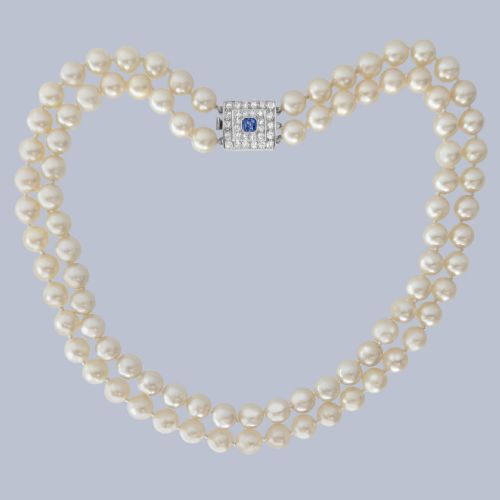
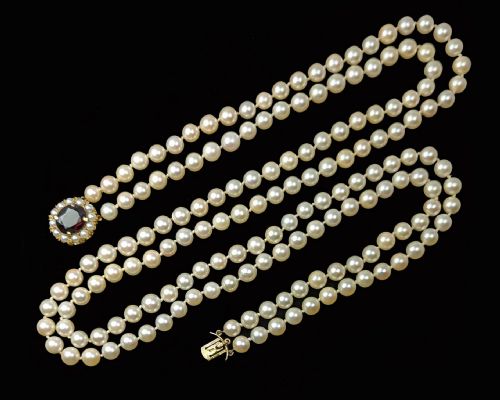
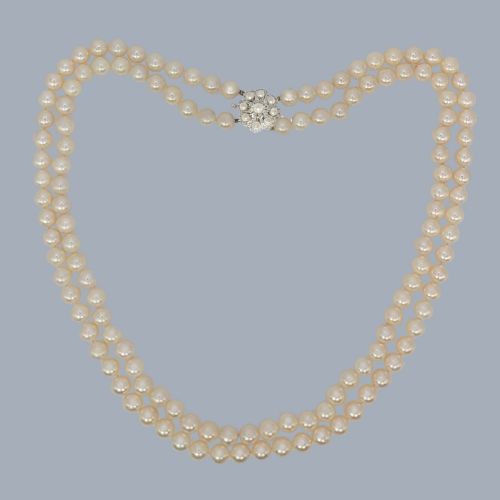
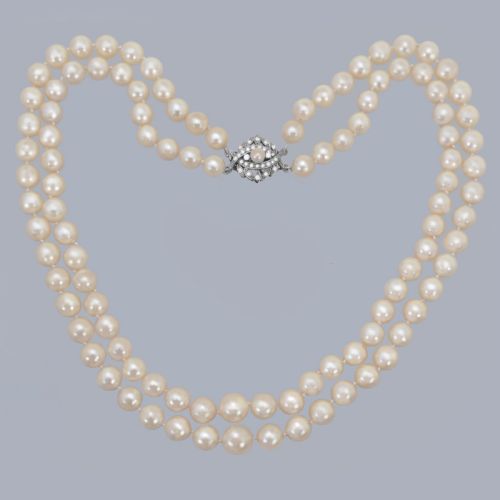
Vintage double strand pearls offer twin rows of lustrous beads fastened with gemstone and precious metal clasps.
Vintage Double Strand Pearls
Vintage double strand pearls comprise necklaces and bracelets formed from two parallel rows of beads. These pieces appear across periods including Edwardian, 1920s, 1940s, 1950s, 1960s, and the nineteenth century. Necklaces range from choker lengths to longer opera styles, whilst bracelets provide a multi-row wrist adornment.
Cultured pearls dominate the available selections, accompanied by freshwater examples and certified natural varieties. The forms span Art Deco, Mid-Century, and Retro styles, alongside classical variations. Most specimens on this page date from the mid-twentieth century, particularly the nineteen-fifties and nineteen-sixties.
Clasps serve as a defining visual component, frequently incorporating precious metals and gemstones. Common clasp designs feature diamonds, sapphires, garnets, turquoise, rubies, amethysts, and tourmalines set in nine-carat or eighteen-carat gold, white gold, and silver.
Materials and construction
Makers utilised cultured and natural pearls threaded in double rows, paired with precious metal settings. Gold in nine-carat and eighteen-carat purity, alongside silver and white gold, forms the structural frames for the clasps.
Gems such as diamonds, sapphires, garnets, turquoise, rubies, amethysts, and tourmalines are mounted into the clasps using traditional techniques. Many pieces record hallmarking details from assay offices such as London and Birmingham, indicating specific dates of manufacture.
Original presentation boxes occasionally survive with Edwardian pearl sets, keeping the vintage journey intact.
Distinctions in quality
Quality rests upon the uniformity, lustre, and origin of the pearls themselves, alongside the complexity of the clasp metalwork. Natural and certified pearls command higher regard than standard cultured varieties.
The sophistication of the clasp elevates a piece, particularly when set with fine diamonds, sapphires, or rubies in worked gold or silver mountings. Evidence of professional restringing also preserves the structural integrity of the double strands.
MIKIMOTO
The Vintage Double Strand Pearls Glossary
- Cultured pearl
- A pearl formed with human intervention by inserting a nucleus into an oyster or mollusc. These form the majority of mid-century pieces.
- Clasp
- The fastening mechanism situated at the back or side of the necklace or bracelet. These often incorporate gemstones and precious metals.
- Choker
- A short necklace length designed to sit high on the neck. Several pieces on this page utilise this tighter format.
- Opera length
- An extra-long necklace format measuring twenty-five inches. This longer style allows for versatile draping.
- Hallmark
- An official stamp applied to precious metals indicating purity and origin. Assay marks from London and Birmingham frequently appear on these pieces.
Vintage Double Strand Pearls: Frequently Asked Questions
How do I wear a double strand necklace?
Double strand necklaces sit closely around the collarbone or hang lower depending on the overall length of the piece. They pair well with open necklines that showcase the twin rows of beads.
The decorative clasp can be worn at the back of the neck or rotated to the side or front as a feature stone.
What metals are used in vintage clasps?
Clasps incorporate nine-carat gold, eighteen-carat white gold, yellow gold, and silver. These settings frequently secure gemstones such as diamonds, sapphires, and garnets.
Precious metal marks and Birmingham or London hallmarks often verify the metal purity on the reverse of the clasp.
Are these pearls natural or cultured?
The selection includes both cultured pearls and certified natural pearls. Gem lab certificates accompany specific pieces to confirm their origin.
Freshwater pearls also appear in Edwardian and mid-century examples across the available selection.
How do I date a pearl necklace?
Dating relies on style markers such as Art Deco geometric layouts or Mid-Century abstract clasp designs. Official hallmarked dates stamped on the gold or white gold clasps provide exact periods.
Documentation like gem certificates also helps establish the era of manufacture.