
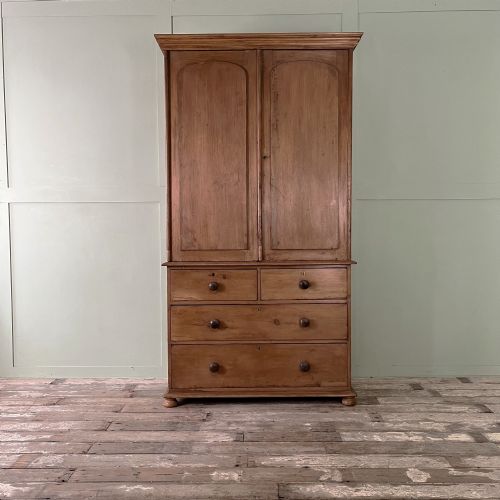
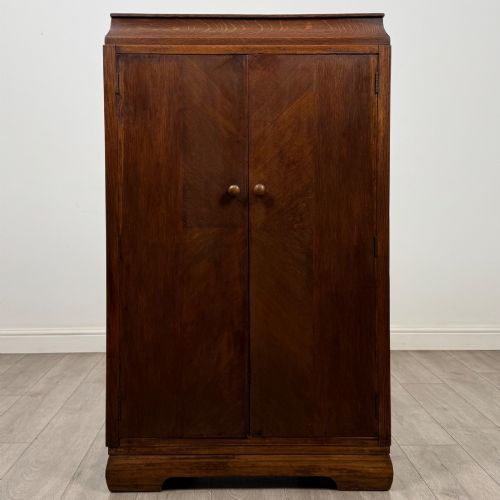
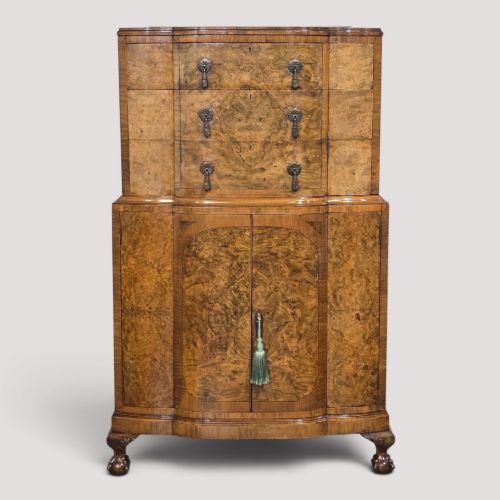
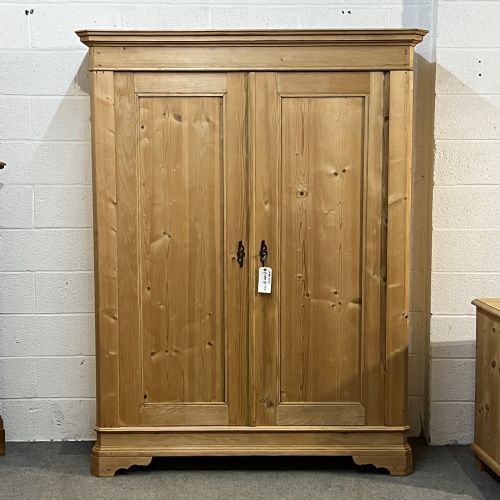
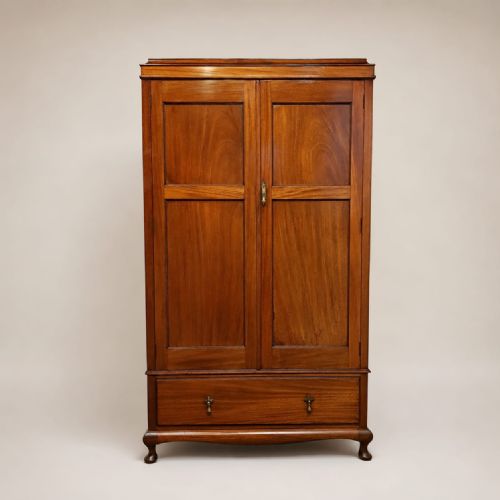
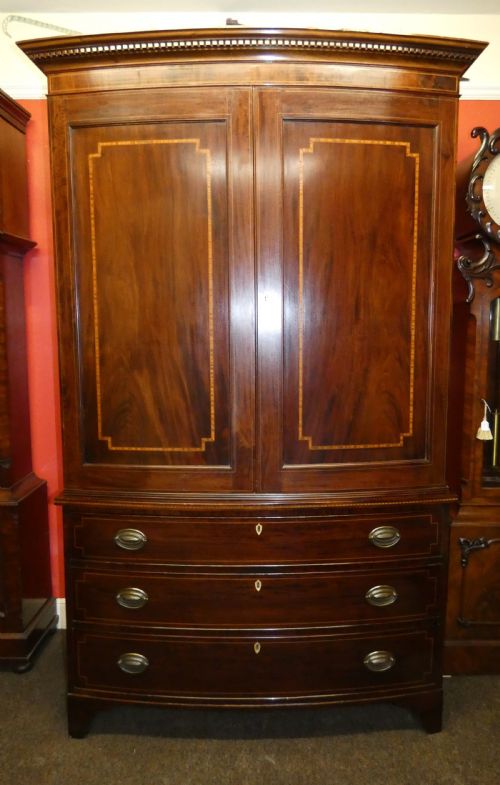
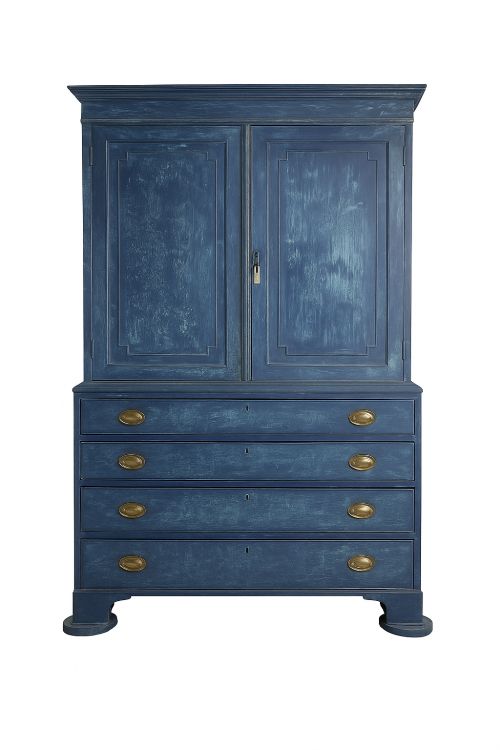
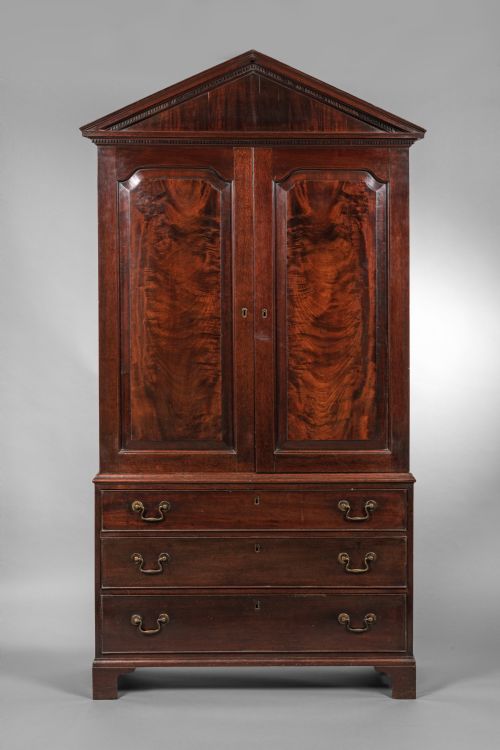


Vintage Double Door Tallboy
A vintage double door tallboy is a commanding storage piece built to last, offering generous internal capacity alongside distinctive period character.
Vintage Double Door Tallboy
A vintage double door tallboy combines vertical storage with traditional craftsmanship, spanning periods from the eighteenth century through to the twentieth. You will frequently encounter tallboys, linen presses, wardrobes, and armoires constructed in this double-door format.
The pieces on this page draw upon a rich lineage of styles, including Georgian, Regency, Edwardian, and Art Deco. These items serve as practical statement furniture for modern interiors while retaining their historical integrity.
How they were made
Cabinetmakers utilised robust timbers such as mahogany, oak, pine, and walnut, often accentuating the surfaces with burr veneers or satinwood details. Structural stability relies on traditional joinery methods suited to large-scale case furniture.
Hardware and decorative accents frequently incorporate brass and iron for hinges, handles, and lock escutcheons. Waxing and polishing were standard finishing techniques to protect the wood and enhance its natural grain.
Listings span multiple centuries, ranging from the 18th Century and Regency periods through to Edwardian and Art Deco designs.
What varies in quality
The grade of timber and the intricacy of the cabinetwork define the upper tier of these pieces. Fine cross-banding, thoughtful timber selection, and well-executed carved details elevate examples beyond standard utility items.
Proportion and the preservation of original surfaces dictate desirability. Pieces that retain their historic finish and hardware without heavy structural alterations command greater appreciation from collectors.
The Vintage Double Door Tallboy Glossary
- Linen press
- A tall piece of case furniture featuring upper double doors enclosing sliding trays or shelves, positioned above a chest of drawers. These items were traditionally used for storing folded textiles.
- Tallboy
- A tall chest of drawers or a cabinet mounted upon a lower chest base, maximising vertical storage space while maintaining a compact floor footprint. They emerged during the late seventeenth century.
- Armoire
- A large wardrobe with double doors, originating in France and traditionally utilised for hanging garments or storing household linens. They often display regional French provincial characteristics.
- Cross-banding
- A decorative technique where narrow strips of veneer are applied to the borders of a panel, with the wood grain running perpendicular to the central surface. This creates a neat framing effect on drawer fronts and cabinet doors.
Vintage Double Door Tallboy: Frequently Asked Questions
What is a double door tallboy used for?
These tall cabinets provide substantial vertical storage capacity for bedrooms, hallways, or living spaces. They accommodate folded garments, linens, or general household items behind closed doors.
The enclosed design keeps contents tidy while presenting a polished wooden facade to the room. Their height makes them an efficient choice for rooms with limited floor space.
How do I date a wooden tallboy?
Dating relies on examining the construction methods, timber choices, and stylistic vocabulary evident in the piece. Eighteenth-century examples often feature solid mahogany or oak with hand-cut dovetails, while Edwardian and later pieces may incorporate different veneer techniques.
Hardware styles and secondary woods inside drawers also offer clues to the period of manufacture. Comparing the proportions against known design movements helps narrow down the decade.
Are linen presses and tallboys the same thing?
While both offer tall storage, traditional linen presses specifically house sliding trays behind their upper double doors for garments and textiles. Tallboys typically refer to stacked chest configurations or taller cabinet designs.
Over time, terminology has blended as cabinetmakers adapted forms to suit changing domestic storage needs. Checking the interior layout reveals the specific intended function of the piece.
How do I care for antique furniture wood?
Maintain the timber by keeping pieces away from direct heat sources and fluctuating humidity levels. Applying appropriate furniture wax periodically helps nourish the wood and protect the polished surface.
Avoid using harsh chemical sprays or abrasive cloths that can damage historic finishes. Gentle dusting with a soft cloth preserves the natural patina over time.