
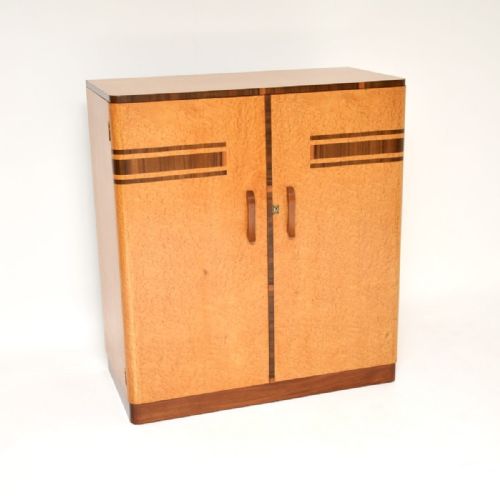
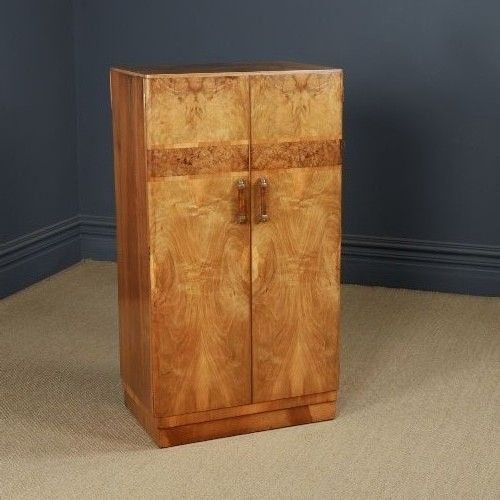
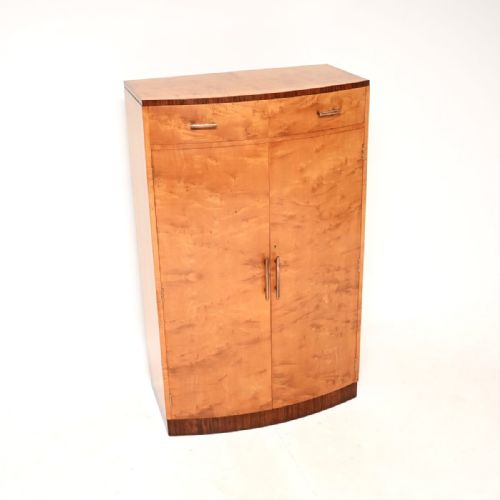
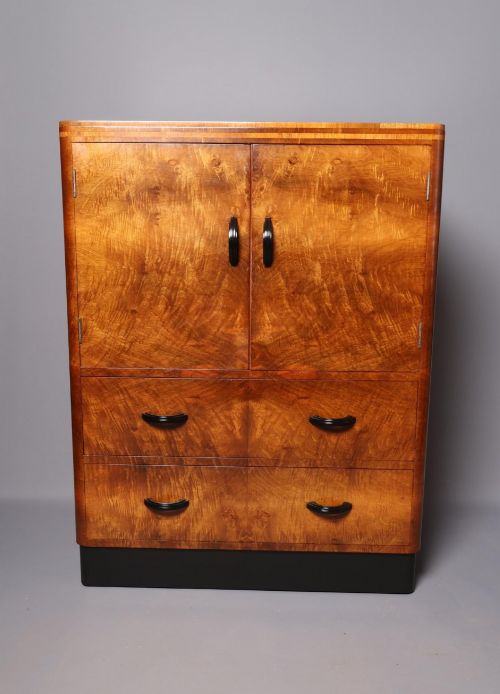


Art Deco Walnut Compactum
An art deco walnut compactum brings serious storage and striking grain patterns together in one substantial piece for the bedroom.
Art Deco Walnut Compactum
An art deco walnut compactum is a multi-functional storage piece designed to hold suits, shirts, linens, and accessories within a single tall cabinet. When you search for this phrase, you find combinations of hanging space, fitted drawers, and shelving enclosed behind matching doors.
The versions you meet most often date from around nineteen thirty, reflecting the streamlined geometry and rich timber selections of the period. These range from small two-door armoires to larger gentleman's and ladies' variations with compartmented interiors.
Most examples originate from English and Scottish workshops, featuring tall proportions built to maximise bedroom storage without claiming too much floor space. They stand as practical monuments to interwar cabinet making.
What varies in quality
The choice and matching of the veneer set the primary standard for these pieces, with book-matched burr walnut commanding the highest visual appeal. Plain walnut surfaces lack the dramatic figuring found on the finer workshop editions.
Internal configuration and secondary timber selection also distinguish standard builds from superior examples. Fitted compartments with clean linings and robust brass hardware demonstrate a higher grade of interwar manufacturing.
Listings for this phrase frequently feature items dated to nineteen thirty, constructed from walnut and burr walnut veneer with brass and Bakelite hardware.
Heal's·A&W Stewart
The Art Deco Walnut Compactum Glossary
- Compactum
- A multi-functional wardrobe combining hanging space, drawers, and shelving in a single unit. It offers complete bedroom storage behind coordinated doors.
- Burr Walnut
- A specialised wood cut from the abnormal growth of a walnut tree, producing swirling, highly decorative grain patterns. It is sliced into thin veneers for cabinet fronts.
- Tallboy
- A tall piece of furniture combining a chest of drawers with a wardrobe or cupboard section above. It provides generous vertical storage capacity.
- Book-matching
- A technique of placing adjoining veneer slices side by side to mirror each other, creating symmetrical patterns. This method highlights the natural figuring of the walnut.
- Ebonised Wood
- Timber treated with a dark finish to resemble ebony, used for decorative contrasts on mouldings and trim. It provides a sharp visual boundary against lighter walnut veneers.
Art Deco Walnut Compactum: Frequently Asked Questions
What is an art deco walnut compactum?
An art deco walnut compactum is a tall, fitted bedroom cabinet designed to house hanging garments, folded clothes, and small accessories in one piece. It combines wardrobes and drawer stacks into a single unified item.
These pieces typically feature rich wood veneers and symmetrical geometric door designs characteristic of the interwar period.
How do I date a walnut compactum?
You can date these cabinets by examining their overall silhouette, construction methods, and timber choices. Most examples originate from around nineteen thirty and display distinct art deco styling.
Hardware such as brass handles and Bakelite details also help confirm the manufacturing era.
Where should I place a compactum?
A compactum suits a bedroom or dressing room needing substantial vertical storage without occupying excessive floor area. Its tall proportions demand a wall with adequate height clearance.
Keep the piece away from direct heat sources to protect the walnut veneer from drying out.
How do I maintain walnut veneer?
Maintain walnut surfaces by dusting regularly with a soft, dry cloth and avoiding harsh chemical polishes. Occasional application of a suitable wax preserves the moisture and sheen of the wood.
Protect the timber from strong sunlight to prevent fading of the natural grain patterns over time.