


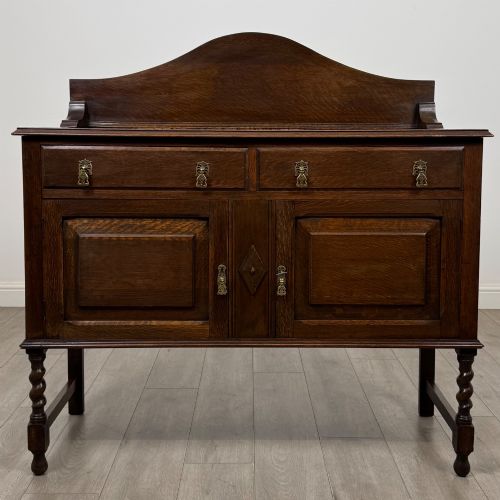
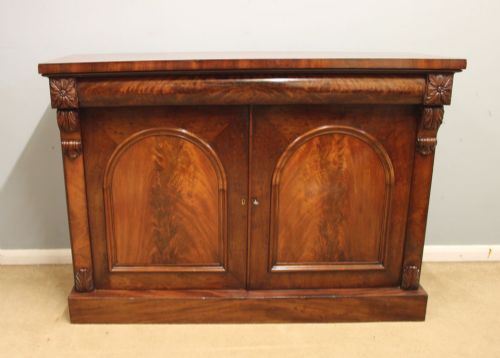
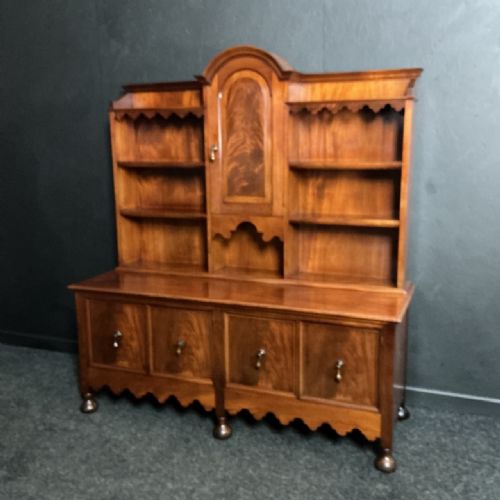
Vintage Dining Room Cabinet
A vintage dining room cabinet anchors the room with substantial timber and practical storage, spanning forms from Edwardian dressers to Art Deco sideboards.
Vintage Dining Room Cabinet
A vintage dining room cabinet encompasses a broad family of dining storage furniture, ranging from sideboards and chiffoniers to Welsh dressers and server buffets. When searching this phrase, buyers encounter pieces primarily shaped by Victorian, Edwardian, and Art Deco design movements, alongside revivals spanning the nineteenth and twentieth centuries.
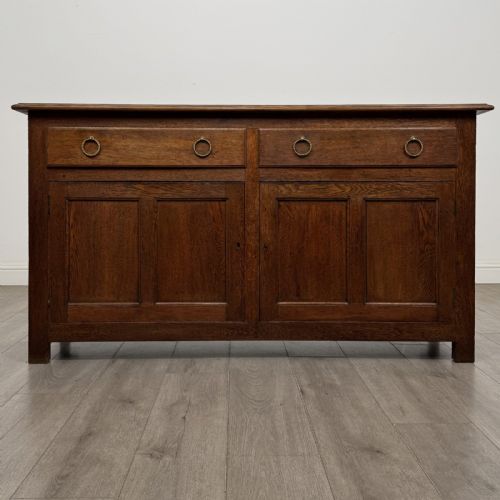
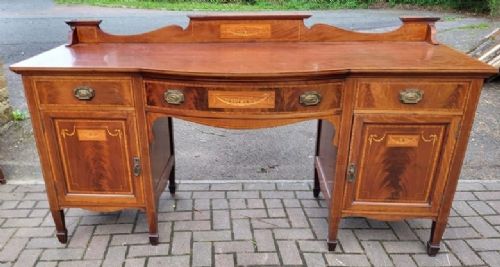
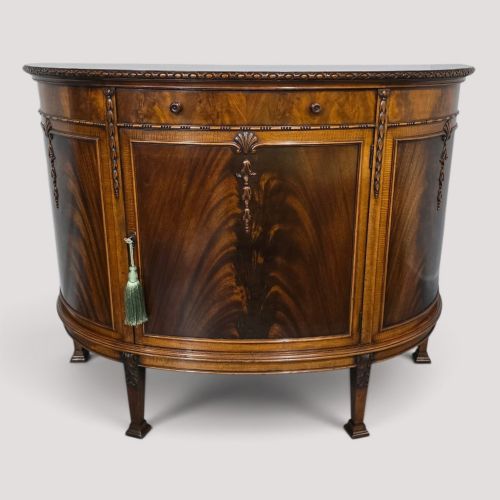
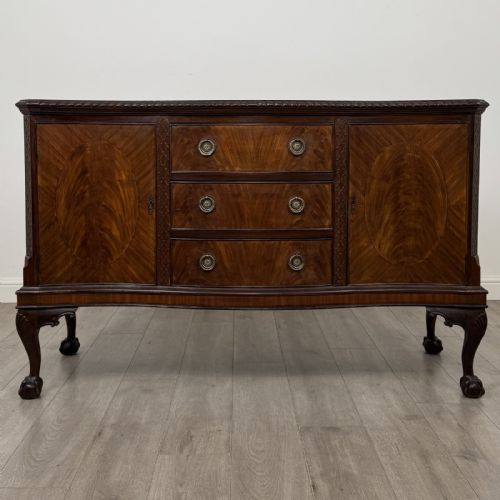
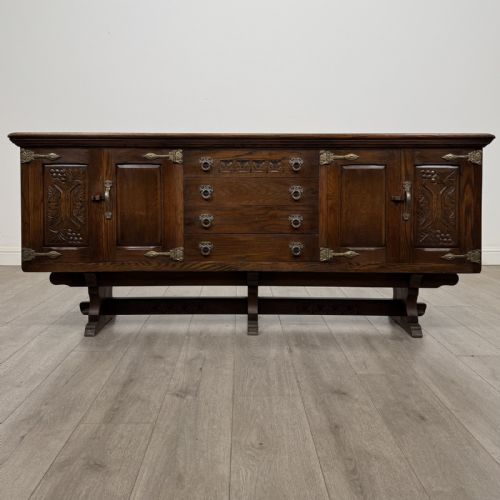
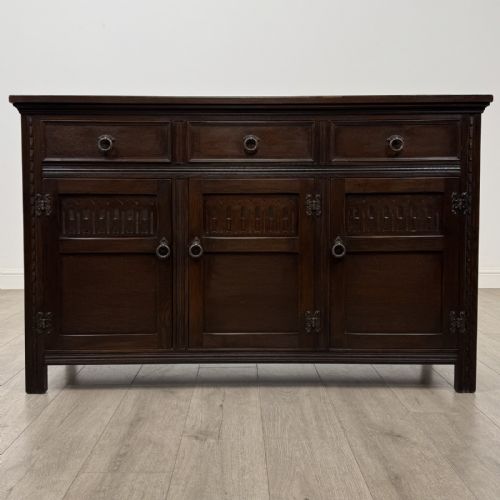
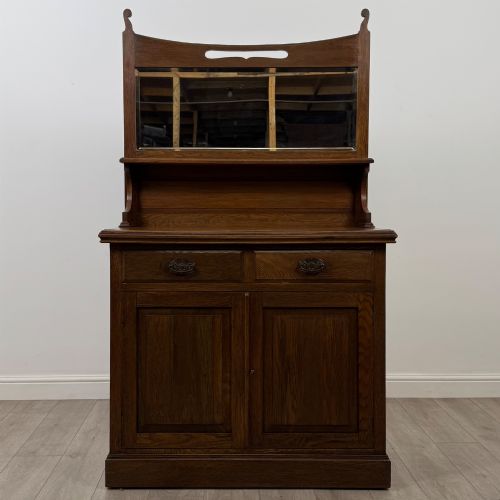
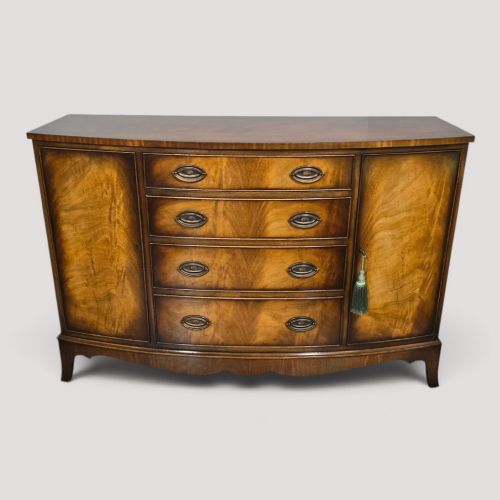
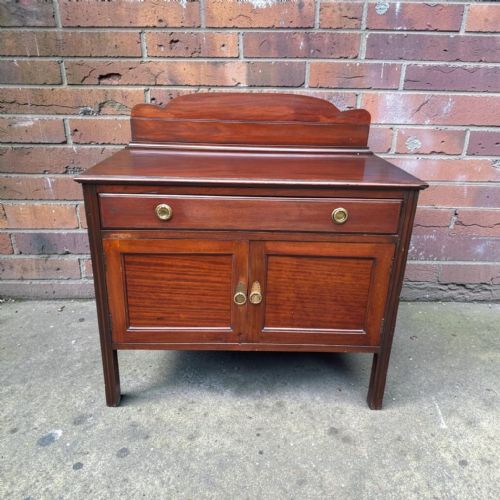
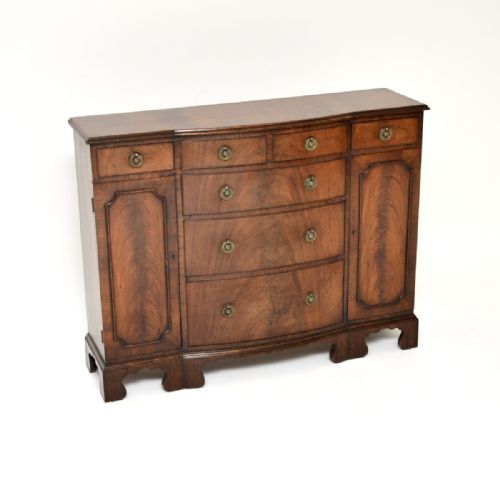
The most common iterations on this page are mahogany and oak sideboards dating from the early twentieth century, frequently featuring bow fronts, mirrored backs, or carved drawer fronts. These pieces reflect the shift in dining habits towards dedicated storage for cutlery, linen, and serving dishes during the Edwardian era and the interwar period.
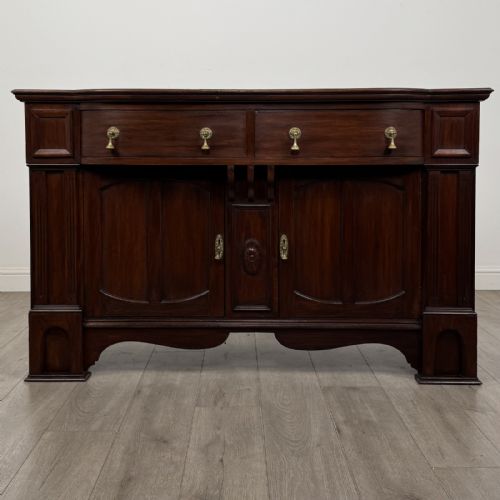
Origins vary from vernacular country workshops producing solid oak dresser bases to metropolitan cabinet makers crafting figured walnut and flame mahogany servers. Buyers find both formal Georgian revival models and streamlined 1930s forms designed to suit modern dining spaces of the period.
Materials and Construction
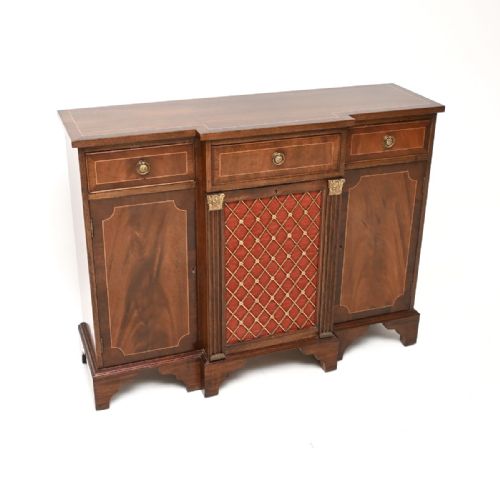
Cabinet makers utilised durable hardwoods, predominantly relying on solid oak and rich mahogany for structural integrity and longevity. Finer examples incorporate decorative veneers, displaying the distinct grains of burr walnut and flame mahogany across drawer fronts and cabinet doors.
Joinery techniques combined traditional frame and panel construction with substantial dovetailed drawers to withstand heavy daily use. Brass hardware, mirror glass inserts, and inlaid stringing completed the pieces, with specific details like barley twist legs or claw and ball feet defining particular regional and stylistic preferences.
Vintage Dining Room Cabinet Retail Price Guide 2026
Typical asking prices for vintage dining room cabinet among the pieces listed under this phrase on Sellingantiques today, from the lower quarter to the upper quarter. They describe what is for sale here now, not the wider market.
Listings feature oak, mahogany, and burr walnut across periods spanning from the eighteenth century to Art Deco designs of the 1930s.
Distinctions in Quality
The division between standard production and superior craftsmanship rests upon the selection of timber figures and the precision of decorative carving. Finely figured burr walnut veneers and deeply hand-carved oak panels elevate a piece well beyond utilitarian furniture.
Structural refinement also determines standing, seen in the harmony of proportions, the integration of original brass face handles, and the weight of solid mahogany or oak timbers used throughout the interior carcase.
Rushworth's·Maurice Adams·Epstein·M. D. Miller & Sons
The Vintage Dining Room Cabinet Glossary
- Sideboard
- A long dining room cabinet designed for serving food, storing cutlery, and holding tableware. They typically feature a combination of drawers and cupboards arranged horizontally.
- Chiffonier
- A compact sideboard or low cabinet popular during the Victorian period, frequently incorporating a raised shelf or mirrored superstructure on top.
- Welsh Dresser
- A traditional kitchen or dining piece comprising a lower base of drawers and cupboards surmounted by open plate racks for display. Oak versions often date to country workshops.
- Bow Front
- A convex curved cabinet front that projects outward in a smooth arc, frequently seen on mahogany sideboards from the Regency and Edwardian periods.
- Burr Walnut
- A highly prized wood veneer obtained from the gnarled growth knots of walnut trees, creating intricate swirling patterns across cabinet doors.
- Inlay
- A decorative technique where contrasting woods or metals are fitted into recessed channels on the timber surface to create geometric or floral patterns.
Vintage Dining Room Cabinet: Frequently Asked Questions
What is a vintage dining room cabinet?
A vintage dining room cabinet is a functional storage item made for the dining space, encompassing sideboards, dressers, and serving buffets from past centuries.
These pieces were built to hold heavy silverware, linens, and dining china, combining utility with the prevailing aesthetic styles of their era.
How were these cabinets used originally?
Dining room cabinets served as staging areas during meals where food was plated before being brought to the main table, as well as secure storage for valuable tableware.
Cupboards housed bulky serving dishes, while lined drawers kept family cutlery organised and protected from tarnish.
How do I care for a mahogany or oak cabinet?
Maintain timber cabinets by keeping them away from direct heat sources and sudden humidity changes that can cause wood to split or veneer to lift.
Apply a traditional beeswax polish occasionally to nourish the grain, avoiding silicone-based sprays that build up residue over time.
How can I tell an Edwardian cabinet from a Victorian one?
Victorian cabinets generally display heavier proportions, darker finishes, and dense ornamentation, often utilising solid mahogany with minimal inlay.
Edwardian pieces tend to show lighter construction, brighter mahogany or satinwood veneers, and decorative elements inspired by Sheraton or Art Nouveau revivals.