



Vintage Diamond Dress Pin
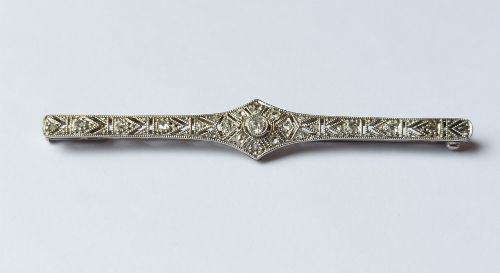
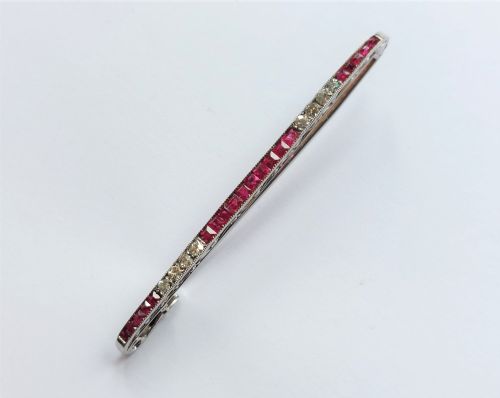
A vintage diamond dress pin brings together precious stones and intricate metalwork from the early twentieth century.
Vintage Diamond Dress Pin
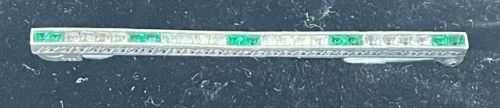
A vintage diamond dress pin functions primarily as a decorative fastening for garments, drawing the eye with carefully set stones and detailed metalwork. When searching for a vintage diamond dress pin, buyers encounter pieces ranging from delicate Edwardian bar brooches to bold Art Deco geometric designs.
The selection on this page spans from the early 1900s through the mid-twentieth century, encompassing Victorian, Edwardian, Art Deco, Retro, and Mid-Century styles. Bar brooches and spray brooches dominate the forms, alongside cluster and swirl configurations.
Origins vary across Britain, France, Sweden, and the wider Continent, reflecting the distinct jewellery manufacturing centres of each period. These items were worn to secure lapels, scarves, and formal gowns, serving both a functional and an ornamental role in historical wardrobes.
Materials and Construction Techniques
Goldsmiths and platinum smiths utilised precious metals including platinum, white gold, yellow gold, and rose gold as the foundational structure for these pins. Platinum gained particular favour during the Art Deco period for its strength, allowing intricate openwork designs to hold diamonds securely without heavy metal settings.
Stones were hand-set into the metal, often accompanied by accent gems such as rubies, sapphires, emeralds, onyx, pearls, and citrines. Construction techniques combined traditional hand-cutting for the diamonds with precision metal fabrication to create bar shapes, geometric plaques, and naturalistic spray motifs.
Qualities That Distinguish the Pieces
The standard of craftsmanship depends heavily on the precision of the stone setting and the complexity of the metalwork. Hand-forged platinum settings with fine millegrain edges and well-matched diamond carat weights represent the upper tier of execution.
The choice of secondary materials, such as natural pearls, untreated coloured gemstones, or high-carat gold and platinum combinations, elevates a piece. Conversely, simpler yellow gold configurations with smaller stone totals occupy a more accessible tier of the range.
The Vintage Diamond Dress Pin Glossary
- Bar brooch
- A horizontal pin configuration popular across the Edwardian and Art Deco periods. It typically displays a central cluster or a linear arrangement of diamonds and coloured stones.
- Millegrain
- A decorative technique involving a row of tiny raised metal beads along the edge of a setting. This detail softens the transition between metal and stone.
- Old cut
- A diamond facet style pre-dating modern brilliant cutting, characterised by a smaller table and larger culet. These stones catch candlelight and softer illumination effectively.
- Platinum
- A dense, durable white metal widely utilised in early twentieth-century fine jewellery. Its strength permitted delicate piercing and wirework without risking structural failure.
Vintage Diamond Dress Pin: Frequently Asked Questions
How do I wear a dress pin today?
These pieces attach securely to heavy coat lapels, structured blazers, and thick wool scarves. The pin stem on the reverse fastens through the fabric and locks into a safety clasp.
Positioning the brooch near the shoulder or high on a lapel ensures the weight of the platinum and diamonds pulls evenly against the fabric.
How can I tell an Edwardian pin from an Art Deco one?
Edwardian pieces rely on softer motifs like garlands, swirls, and bows, often set in yellow gold or light platinum with pearls and softer-cut diamonds. The aesthetic prioritises naturalistic grace and delicate filigree.
Art Deco pins shift towards rigid geometry, symmetry, and straight lines using platinum and white gold contrasted with black onyx or bright rubies.
What metals are typical for these pieces?
Platinum and various karats of gold, including 14ct and 18ct yellow, white, and rose gold, form the structure of these items. Platinum became the dominant choice during the 1920s for its ability to support intricate stone settings.
Silver also appears occasionally in Continental pieces from the same eras, sometimes paired with gold backings.
Are coloured stones common in diamond pins?
Coloured gemstones frequently accompany the diamonds in these designs. Rubies, sapphires, emeralds, citrines, and amethysts serve as focal points or contrasting borders.
Onyx and rock crystal quartz also appear, particularly in Art Deco items to create a stark monochrome contrast against the white diamonds.