

Vintage Diamond Brooch Pin
A vintage diamond brooch pin brings a flash of period elegance to a lapel, combining precious stones with enduring metalwork from the late nineteenth to the mid-twentieth century.
Vintage Diamond Brooch Pin
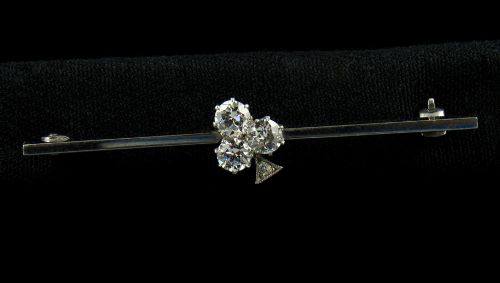
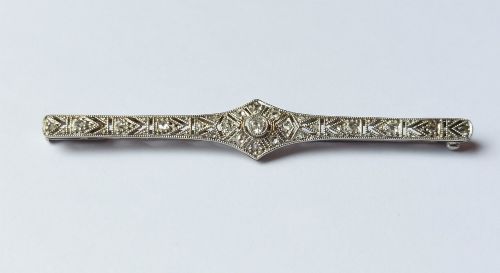
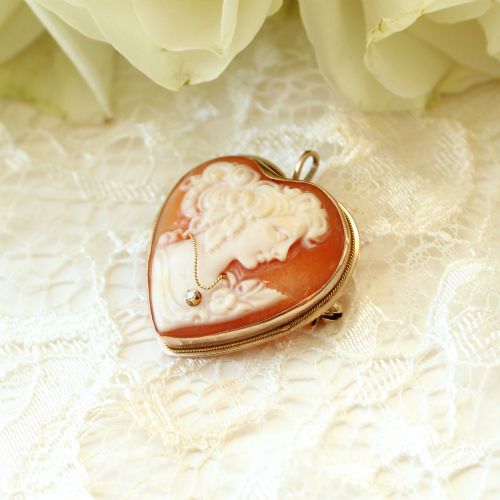
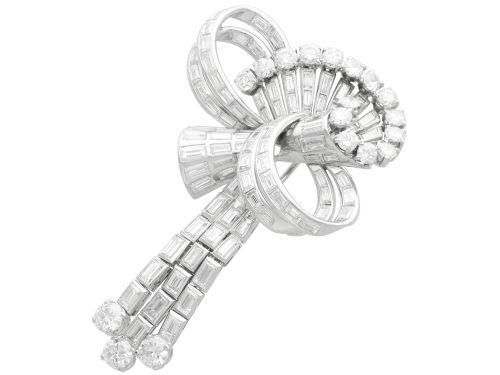
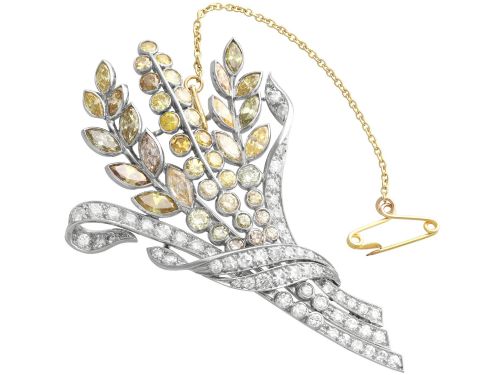
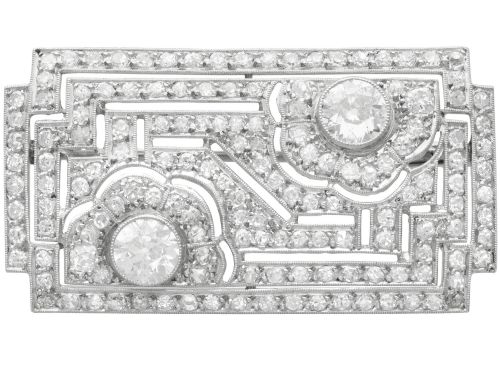
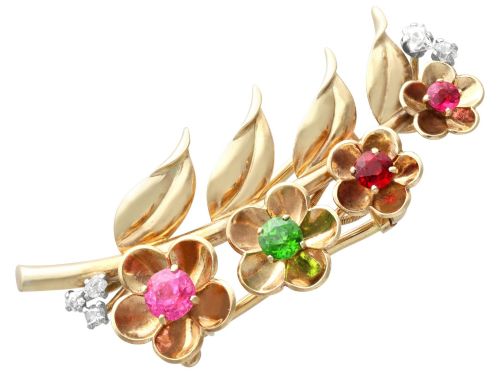
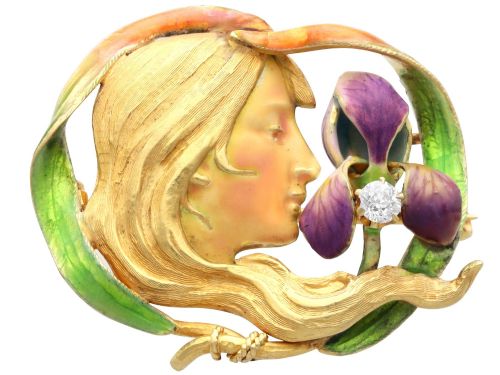
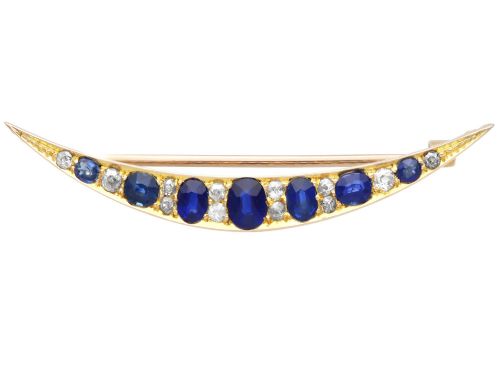
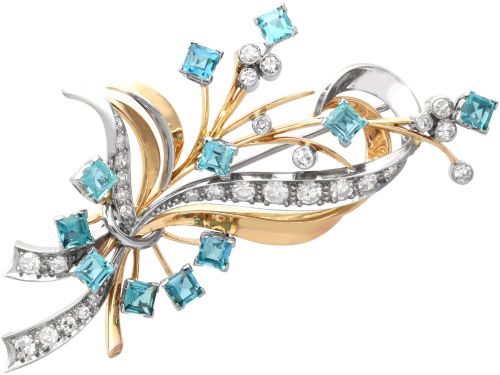
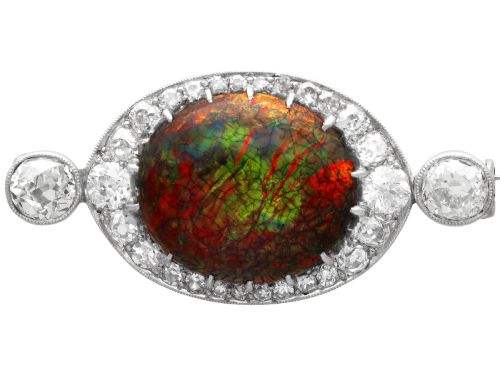
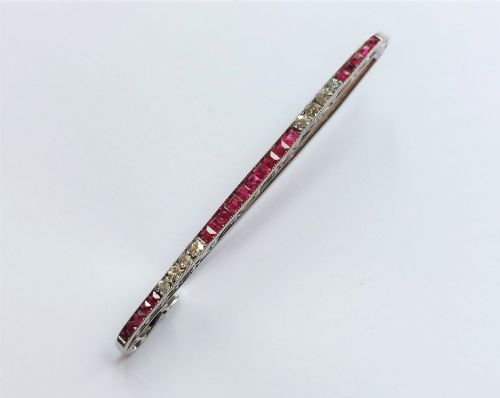
A vintage diamond brooch pin encompasses wearable ornamentation designed to fasten to garments, drawing from distinct stylistic movements including Edwardian, Art Deco, Art Nouveau, and Mid-Century periods. Buyers encounter varied formats ranging from delicate bar pins and floral sprays to convertible pendant brooches that transition from dress adornments to neckpieces.
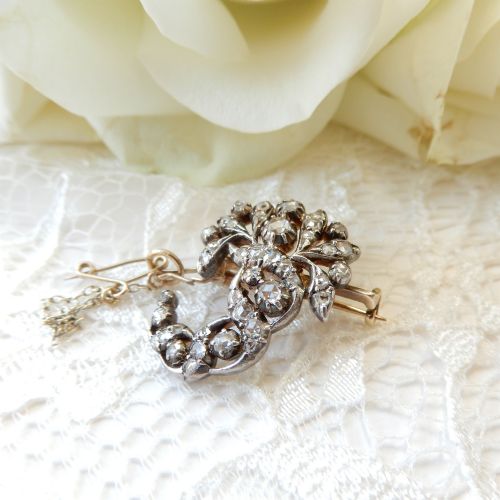
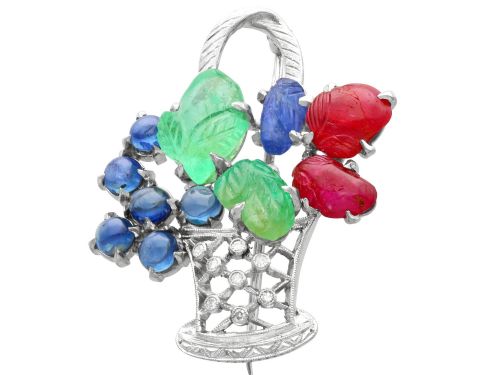
The selection on this page centres on pieces created across the decades from Victorian beginnings through the 1950s, utilising forms such as bows, crescents, baskets, and geometric arrangements. These items often integrate central diamond clusters flanked by calibré-cut gems or pearls, serving both decorative and functional purposes in historic wardrobes.
Materials and construction methods
Master jewellers constructed these pieces utilising durable precious metals such as platinum, palladium, silver, and various grades of gold including 9ct, 14ct, 15ct, and 18ct variants. Platinum gained prominence during the Edwardian and Art Deco eras for its strength, allowing intricate openwork settings to securely hold old-cut and step-cut diamonds without heavy metal surrounds.
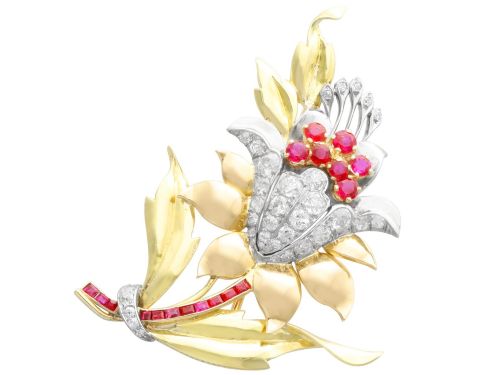
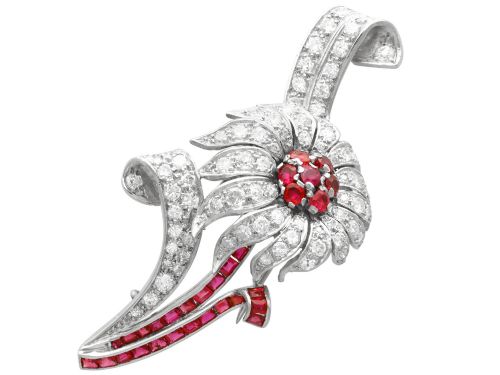
Gemstones including rubies, sapphires, emeralds, pearls, and garnets were selected to complement the diamonds, often set alongside enamel work or black enamel accents. Artisans employed hand-cutting techniques, such as old-cut and rose-cut diamond facets, integrating millegrain edges and pierced metal galleries to maximise light refraction.
Vintage Diamond Brooch Pin Retail Price Guide 2026
Typical asking prices for vintage diamond brooch pin among the pieces listed under this phrase on Sellingantiques today, from the lower quarter to the upper quarter. They describe what is for sale here now, not the wider market.
Among the fauna represented in the metalwork are delicate bees, birds, chicks, butterflies, and a whimsical lucky wishbone.
Distinctions in construction and design
Quality separates pieces through the precision of stone setting and the complexity of the metalwork, where hand-pierced platinum galleries and uniform millegrain decoration indicate skilled craftsmanship. The integration of secondary coloured gems, such as natural pearls or fine Burmese rubies alongside the diamonds, elevates the standing of an individual piece.
The architectural integrity of the pin mechanism, the symmetry of geometric Art Deco layouts, and the preservation of original enamel or delicate drop elements determine the overall execution. Pieces signed by established makers or displaying exceptional stone carat weights without compromising balanced proportions represent the upper echelon of the range.
Cartier·Ben Rosenfeld
The Vintage Diamond Brooch Pin Glossary
- Art Deco
- A design style spanning the 1920s and 1930s characterised by geometric symmetry, clean lines, and stark contrasts often achieved by pairing diamonds with platinum and black enamel.
- Edwardian
- A decorative period from the early 1900s known for light, lace-like platinum and silver settings, floral motifs, and garland styles.
- Old-cut diamond
- A diamond cut by hand before modern machinery, featuring a smaller table, higher crown, and deep culet designed to catch candlelight.
- Millegrain
- A decorative technique involving a row of tiny raised metal beads along the edges of a setting, common in Edwardian and Art Deco jewellery.
- Tutti Frutti
- A colourful style originating in the early twentieth century featuring carved sapphires, rubies, and emeralds arranged in vibrant gemstone clusters alongside diamonds.
- Bar brooch
- A slender horizontal pin format popular across multiple periods, frequently centred on a diamond cluster, insect, or floral spray.
Vintage Diamond Brooch Pin: Frequently Asked Questions
How do I wear a vintage brooch pin today?
These pieces fasten securely to heavy coat lapels, knitted cardigans, or silk scarves using traditional pin and catch closures.
Many convertible examples feature hidden loops that allow the item to transition from a garment fastening to a pendant suspended from a chain.
What is the difference between Edwardian and Art Deco brooches?
Edwardian items favour delicate, lace-like platinum and silver openwork with garlands, bows, and organic floral motifs inspired by nature.
Art Deco pieces shift toward bold geometric symmetry, straight lines, and stark colour contrasts created with calibrated gemstones and enamel.
How can I tell if a brooch is antique or vintage?
Examining the metal purity marks, the style of stone cutting, and the construction of the pin stem helps identify the era of manufacture.
Old-cut diamonds and hand-fabricated platinum galleries typically point to early twentieth-century origins, while mid-century examples show heavier cast gold structures.
What are convertible pendant brooches?
Convertible items are dual-purpose pieces engineered with fold-down bails or removable fittings to function interchangeably as a garment brooch or a necklace pendant.
This versatility allowed past owners to adapt their jewellery for daytime dress pins or evening wear neck adornments.