


Vintage Desktop Accessories
These vintage desktop accessories bring functional elegance to a study, transforming correspondence and organisation into daily rituals.
Vintage Desktop Accessories
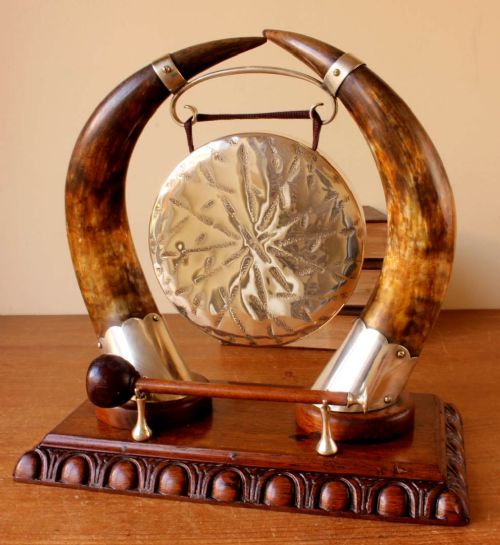
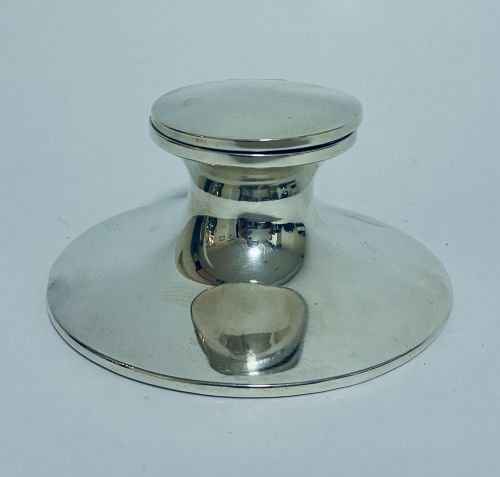
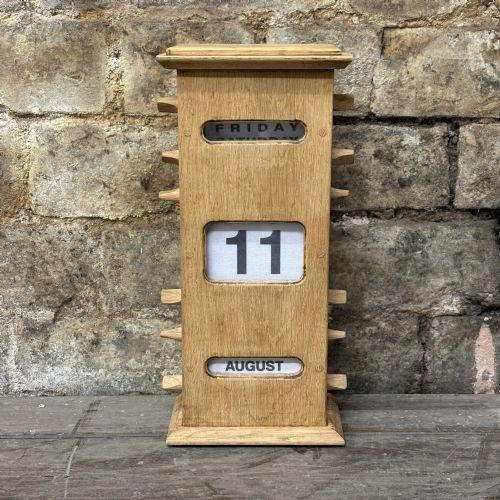
Vintage desktop accessories encompass the functional items used to manage correspondence, reading materials, and writing instruments on a writing desk or library table. When exploring vintage desktop accessories on this page, buyers most frequently encounter items spanning the Victorian, Edwardian, and Art Deco periods, ranging from oak perpetual calendars to silver capstan inkwells.
Origins span English cabinetmaking traditions, continental faience, and Anglo-Indian carving workshops, providing varied regional interpretations of desk organisation. Forms range from simple wooden bookends and blotters to elaborate smoking cabinets and silver-mounted inkstands.
Materials and methods
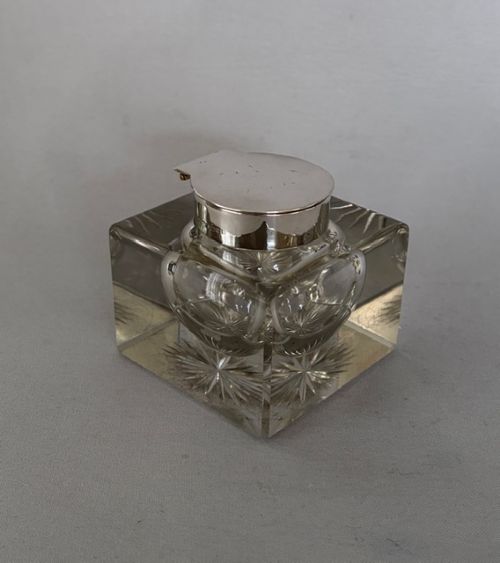
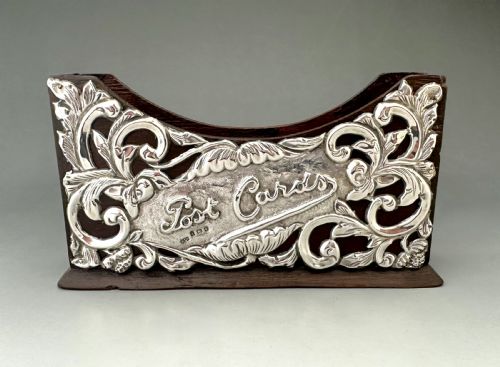
Makers utilised dense hardwoods such as oak, mahogany, rosewood, and burr walnut, frequently incorporating brass mounts, cut glass wells, and tooled leather panels. Cabinetmakers constructed letter boxes and book slides with tight joinery to withstand daily manipulation, while silversmiths cast and hammered sterling silver for inkwells and novelties.
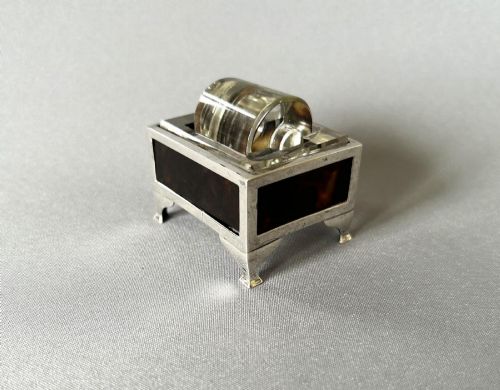
Surface decoration involved marquetry, fine painting, and metal casting, demonstrated by pieces bearing ormolu mounts and carved pine details. Artisans also worked with specialised materials including shagreen, tortoiseshell, faience, and white onyx to create distinctive Art Deco cigarette boxes and perpetual calendars.
Vintage Desktop Accessories Retail Price Guide 2026
Typical asking prices for vintage desktop accessories among the pieces listed under this phrase on Sellingantiques today, from the lower quarter to the upper quarter. They describe what is for sale here now, not the wider market.
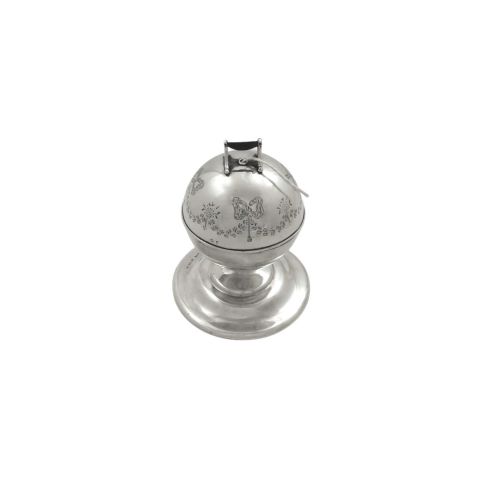
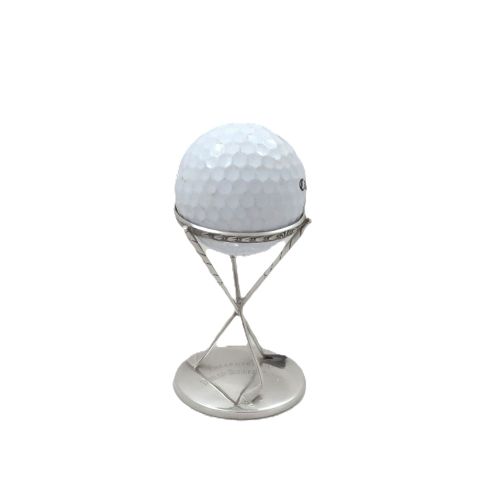
Desk ornaments occasionally took whimsical forms, including solid silver golf ball stands, miniature biplanes, and novelty pin cushions shaped like drinking goblets.
Assessing quality
Quality in these items rests on the weight of the materials used, such as heavy solid silver casings, thick cut glass inserts, and substantial hardwoods rather than thin veneers. Superior pieces display crisp casting in brass and ormolu mounts, alongside precise mechanical action in extending book slides and perpetual calendars.
The refinement of secondary details separates standard utility objects from finer workshop productions, visible in hand-tooled leather, finely painted plaques, and well-fitted locking mechanisms on cigar cabinets. The integration of decorative elements must complement the structural integrity of the piece.
William Tonks of Birmingham·Theo Fennell
The Vintage Desktop Accessories Glossary
- Capstan inkwell
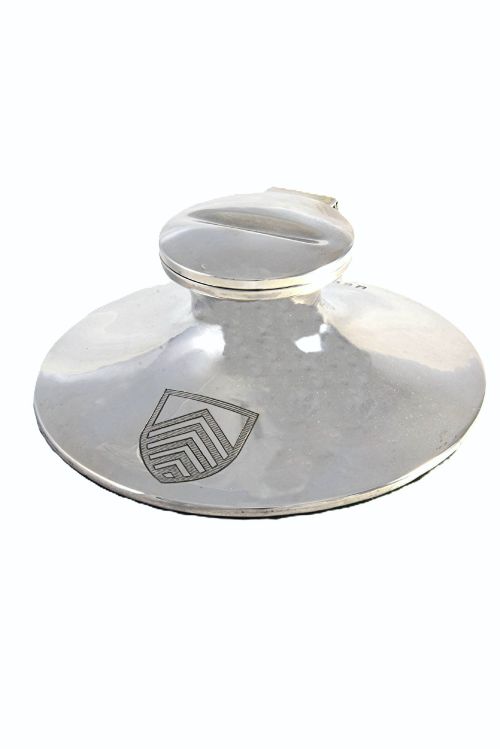
- An inkwell shaped like a nautical capstan, featuring a wide base that tapers upwards to a small opening. This design prevented the heavy glass and silver vessels from tipping over easily during use.
- Perpetual calendar
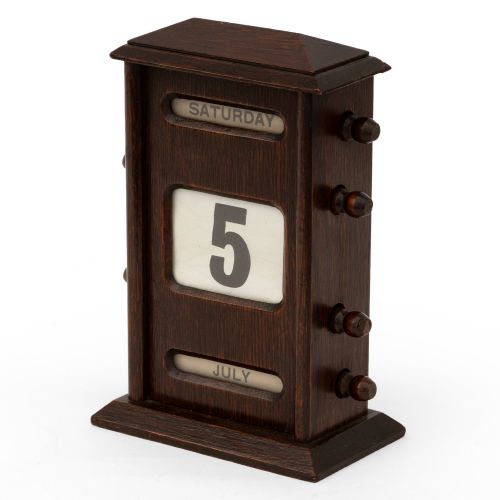
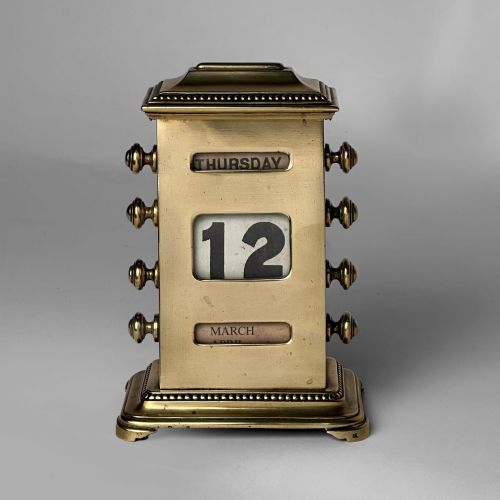
- A desk device with rotating drums, cards, or sliding panels designed to display the day, date, and month for any year. These mechanical items were frequently housed in oak, mahogany, or silver frames.
- Cartonnier
- A decorative standing set of pigeonholes or document drawers used for sorting papers. These pieces often featured elaborate mounts and veneered wood surfaces.
- Shagreen
- The untanned skin of a shark or ray, characterised by a distinctive rough, granular texture. It gained popularity as a luxury covering for decorative boxes and lighters during the Art Deco period.
- Book slide
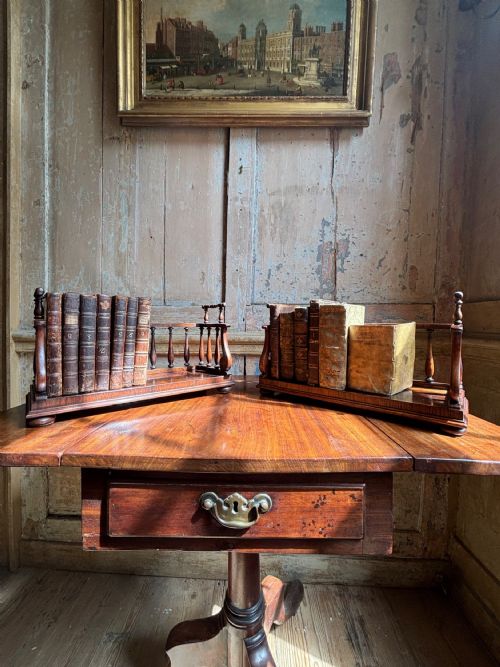
- An adjustable rack designed to hold a row of books upright on a desk or table, often featuring extending wooden actions with brass or metal hinges. They allowed library users to expand or contract the storage space as volumes were added or removed.
Vintage Desktop Accessories: Frequently Asked Questions
How do I date a brass perpetual calendar?
Dating relies upon the typographic style of the numerals, the assembly technique of the metal components, and patent marks stamped into the brass.
Earlier Victorian examples often feature cast brass frames with hand-stamped letters, whereas 1920s and Art Deco pieces display cleaner, stylised fonts and plated finishes.
Were silver inkwells meant for everyday writing?
Silver capstan and double inkwells served as primary writing accessories in affluent Victorian and Edwardian studies and offices. They held liquid ink in fitted glass inserts to prevent corrosive reactions with the surrounding metal.
Secretaries and writers dipped steel nib pens directly into the central well before recording correspondence.
How do extending book slides function?
Extending book slides operate via a scissor action or overlapping wooden tracks that expand smoothly to accommodate varying numbers of volumes. Brass hinges and runners stabilise the movement as the user adjusts the length.
They were placed directly on desks or library tables to keep working references close at hand.
What is the purpose of a smoking cabinet?
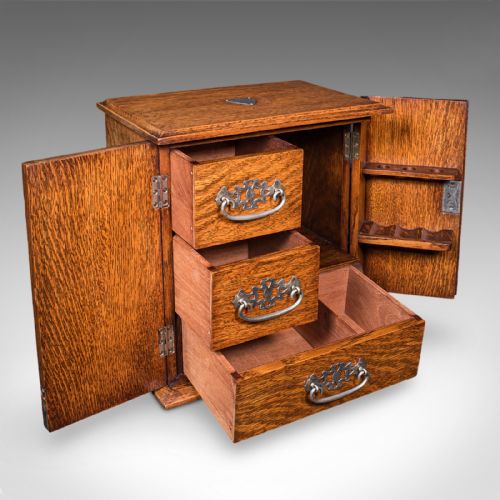
Smoking cabinets provided secure, compartmentalised storage for cigars, tobacco, pipes, and matches in Edwardian and Victorian homes. They protected dry tobacco leaves from humidity and kept smoking paraphernalia neatly concealed when not in use.
Many featured locking doors and specialised holders for clay pipes or cigar cutters.