


Vintage Desk Watch
A vintage desk watch provides a reliable timekeeper for your workspace, combining period charm with daily utility.
Vintage Desk Watch
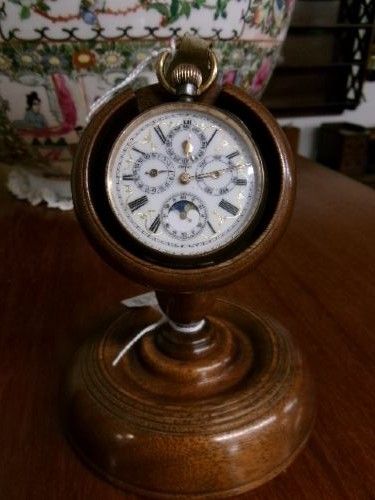
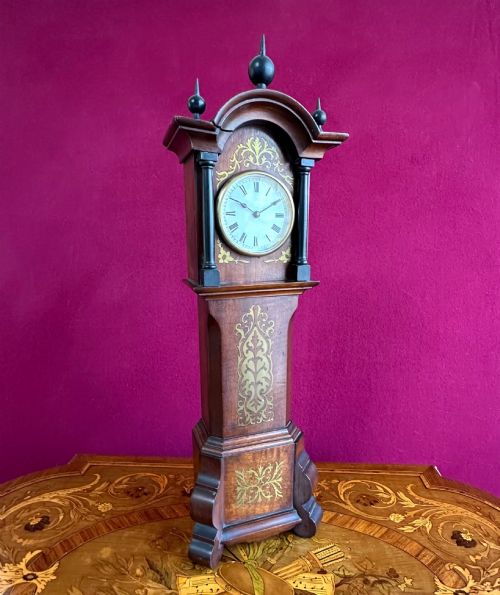
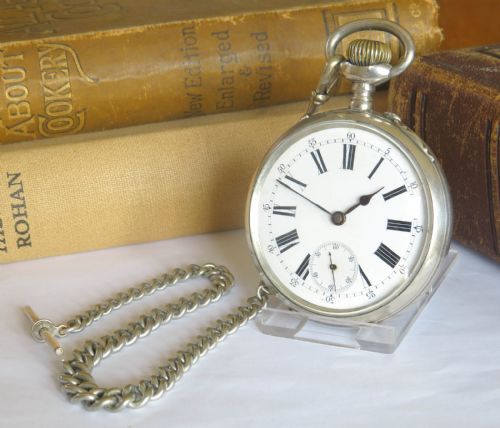
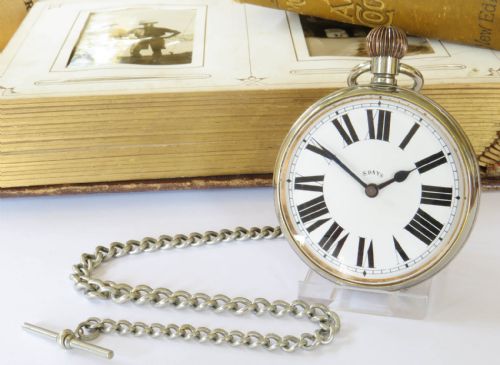
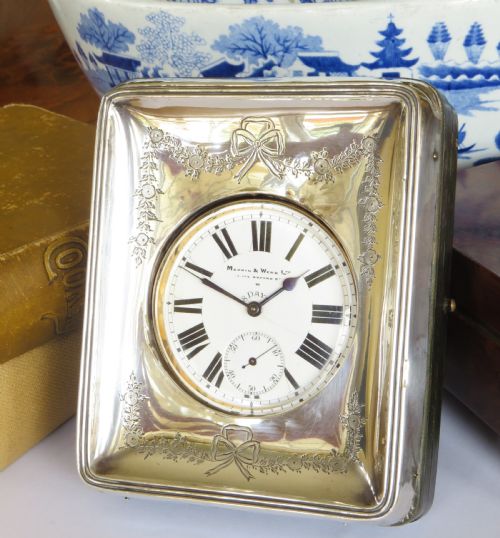
A vintage desk watch brings together timekeeping instruments and domestic objects, drawing heavily from pocket watches, travel clocks, and dedicated desk accessories. You encounter forms ranging from goliath pocket watches mounted in stands to capstan inkwells integrating timepieces.
The pieces on this page span the Victorian and Edwardian eras into the 1920s and 1930s, reflecting shifts in interior style from ornate traditional designs to clean Art Deco lines. Pocket watches converted with custom holders or fitted into leather and silver travel cases dominate the selection.
Originating from British, French, and Swiss workshops, these items served the study, office, and bedside table. Their survival depends on the durability of their cases and the adaptability of pocket watch movements repurposed for static display.
Materials and Construction
Makers utilised durable metals such as brass, nickel, gunmetal, and sterling silver to house delicate clockwork movements. Cases often incorporate glass crystals to protect the dial alongside wood, leather, and guilloche enamel for exterior decoration.
Construction techniques combine traditional watchmaking with silversmithing and case making. Dedicated stands, pocket watch holders, and folding travel cases were engineered specifically to support portable timepieces on flat surfaces.
Listings feature brass, sterling silver, glass, and wood alongside pocket watches, capstan inkwells, and travel clocks spanning the Victorian to Art Deco periods.
Evaluating Quality and Craftsmanship
Quality rests in the precision of the movement and the integrity of the housing material, distinguishing standard mass-produced items from superior examples by notable makers. Heavy gauge silver, clean enamel work, and robust brass frames indicate higher initial manufacture.
The sophistication of the mechanism, such as eight-day movements or calendar complications, elevates a piece above simpler thirty-hour clocks. Condition of the dial, clarity of hallmarks, and originality of the matching chain or stand determine desirability.
Mappin & Webb·Crisford & Norris·Smiths·Bellenot Paris·Ross of London
The Vintage Desk Watch Glossary
- Goliath pocket watch
- An oversized pocket watch manufactured around nineteen hundred, frequently utilised as a portable desk or travel clock.
- Guilloche enamel
- A decorative technique involving precise, intricate geometric patterns engraved beneath a translucent layer of coloured enamel.
- Capstan inkwell
- A desk accessory shaped like a ship's capstan, taper-waisted and weighted, occasionally adapted to hold a timepiece.
- Hallmark
- An official stamp applied to precious metals in Britain to indicate standard of purity, assay office, and year of manufacture.
- Gunmetal
- A type of bronze alloy used for watch cases, valued for its dark grey appearance and resistance to corrosion.
Vintage Desk Watch: Frequently Asked Questions
What is a goliath pocket watch?
A goliath pocket watch is an exceptionally large timepiece produced around the turn of the twentieth century. These watches were designed to be carried in heavy coats or placed into dedicated travel stands for desks.
Because of their substantial size, they function well as standalone desk clocks when paired with a matching silver or leather frame.
How did Victorians use travel clocks?
Victorians relied on folding leather and silver cases to protect portable timepieces during railway journeys and hotel stays. These cases kept the glass crystal safe while allowing the dial to remain visible on a bedside table.
Many examples feature hinged struts at the back to prop the watch upright on any flat surface.
Are these desk watches mechanical?
The vast majority of these timepieces rely on traditional mechanical movements powered by a mainspring that requires manual winding. Some superior examples feature eight-day movements, reducing the frequency of winding.
Every piece operates without electricity, driven by intricate gear trains and escapements developed by period watchmakers.
How do I date a silver watch case?
British silver cases carry hallmarks that include a specific letter signifying the year of assay alongside the maker's mark and town mark. Consulting standard assay office date tables reveals the exact year of manufacture.
Foreign pieces rely on maker signatures, style markers, and registration numbers stamped onto the metal or movement.