

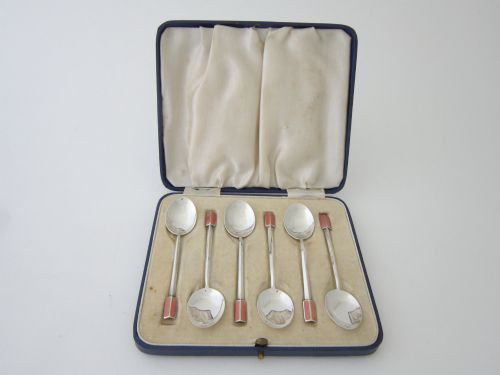


Vintage Demitasse Spoons
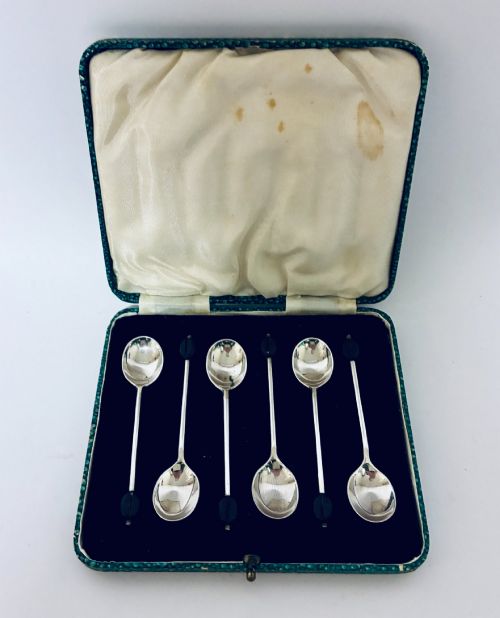
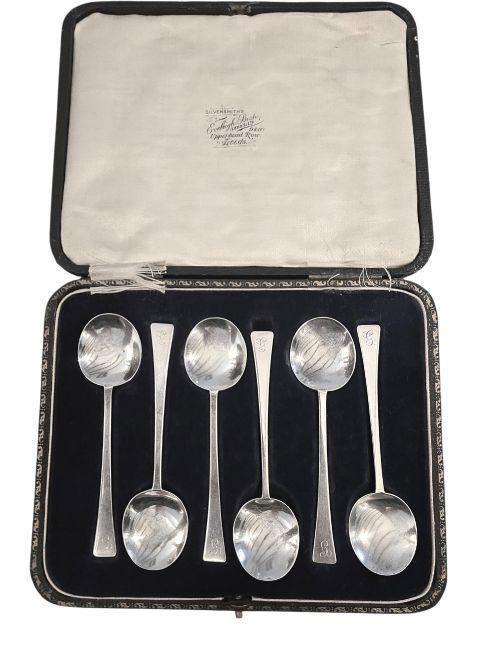
These vintage demitasse spoons are miniature silver implements designed for after-dinner coffee, offering an elegant touch of historical service to the modern table.
Vintage Demitasse Spoons
The selection ranges widely across stylistic movements, including Victorian, Edwardian, Art Nouveau, Arts and Crafts, Art Deco, and Mid-Century Modern periods. Alongside standard English sterling silver hallmarked in cities such as Sheffield and Birmingham, the listings include continental European pieces, Ottoman Turkish figural designs, and Norwegian enamel work.
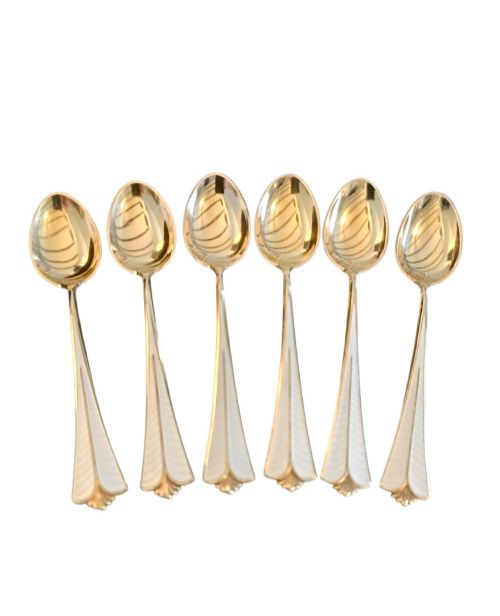
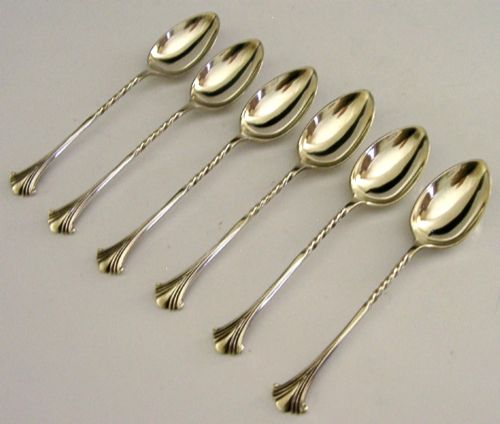
Most examples function as coffee spoons, though related forms include teaspoons, silver gilt variations, and matched sets incorporating ceramic coffee cans and saucers. Makers represented in these finds include established British firms like Walker and Hall and Cooper Brothers and Sons, alongside distinctive retailers such as Liberty and Co and Harrods.
Materials and construction methods
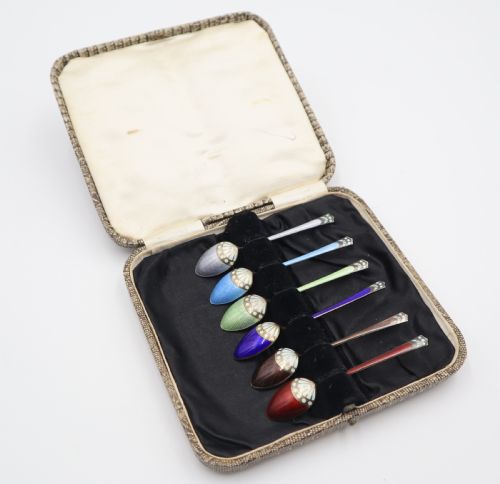
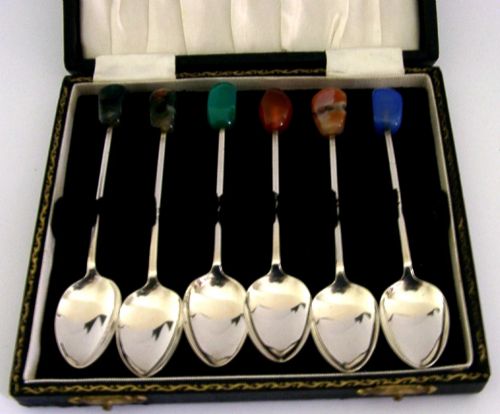
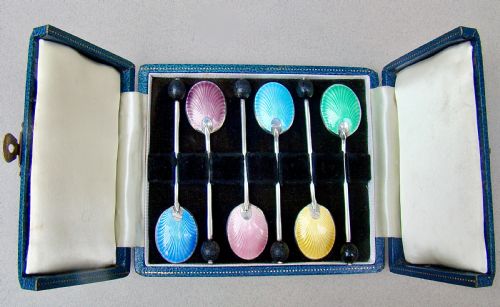
Silversmiths forged these implements from solid silver, sterling silver, and silver-gilt, applying traditional hallmarking stamps to verify the metal standard. Many pieces incorporate vitreous enamel decoration fused directly to the metal surface, creating vibrant colour accents on the handles or bowls.
Presentation cases rely on sturdy wooden carcasses wrapped in leather or cloth exteriors, paired with plush internal linings of velvet, satin, and silk to secure each spoon snugly in its fitted recess.
Vintage Demitasse Spoons Retail Price Guide 2026
Typical asking prices for vintage demitasse spoons among the pieces listed under this phrase on Sellingantiques today, from the lower quarter to the upper quarter. They describe what is for sale here now, not the wider market.
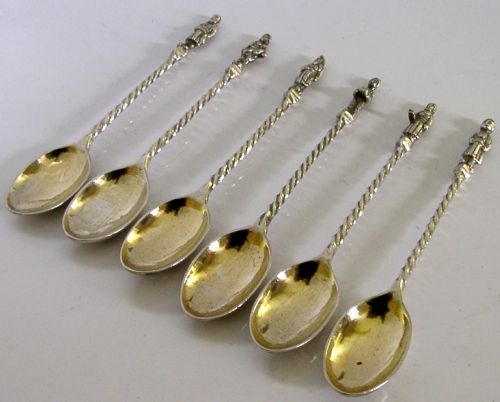
Some sets cross international borders entirely, pairing British silver standards with intricate Norwegian enamel work and Ottoman figural motifs.
Evaluating quality and craftsmanship
The distinction between standard utility flatware and superior examples often rests on the crispness of the silversmith's chasing, the precision of the hallmark stamping, and the complexity of any applied figural work. Pieces featuring hand-applied enamel demand a high degree of technical skill from the artisan to avoid firing flaws and ensure long-term durability.
Completeness significantly influences the overall desirability of a set, particularly when dealing with cased groupings that retain their original fitted boxes and matching tongs. The inclusion of renowned retail stamps or documented maker marks adds a further layer of historical interest to individual pieces.
Walker and Hall·Cooper Brothers and Sons·Liberty and Co·David Andersen
The Vintage Demitasse Spoons Glossary
- Demitasse
- A small cup used for serving espresso or Turkish coffee, which dictates the diminutive scale of these matching spoons.
- Sterling silver
- A silver alloy containing ninety-two point five percent pure silver and seven point five percent other metals, usually copper, ensuring structural strength.
- Silver-gilt
- Silver objects that have been coated with a thin layer of pure gold applied via chemical or electrolytic methods, sometimes referred to as vermeil.
- Hallmark
- An official stamp applied to precious metals by an assay office to guarantee the purity of the material, alongside marks for the maker and year.
- Vitreous enamel
- A material made by fusing powdered glass to a substrate by firing, producing a smooth and durable coloured coating on metal surfaces.
Vintage Demitasse Spoons: Frequently Asked Questions
What are vintage demitasse spoons used for?
These small spoons are specifically proportioned for stirring sugar into demitasse cups of strong black coffee or espresso after a meal.
Historically, they formed part of a formal after-dinner service, often accompanied by matching sugar tongs within a presentation case.
How do I care for silver and enamel spoons?
Clean solid silver gently with a soft cloth and specialised silver polish, avoiding abrasive pastes that might scratch the metal surface.
Keep enamelled pieces away from hot water immersion and harsh chemical dips to protect the delicate glass fusion on the handles.
Can I use these spoons every day?
While sturdy enough for regular use, silver-gilt and enamelled spoons benefit from careful hand washing rather than automated dishwasher cycles.
Storing them in their original fitted velvet or silk-lined boxes prevents accidental scratching when not in use on the table.
How do I identify the period of a set?
Examine the stamped hallmarks on the back of the stem to find the specific assay office mark and date letter corresponding to active registry years.
Stylistic cues such as geometric Art Deco lines or flowing Art Nouveau motifs also help narrow down the decade of manufacture.