






Vintage Delftware
Vintage delftware brings tin-glazed earthenware into the home through chargers, vases, and apothecary jars decorated in blue and white or polychrome.
Vintage Delftware
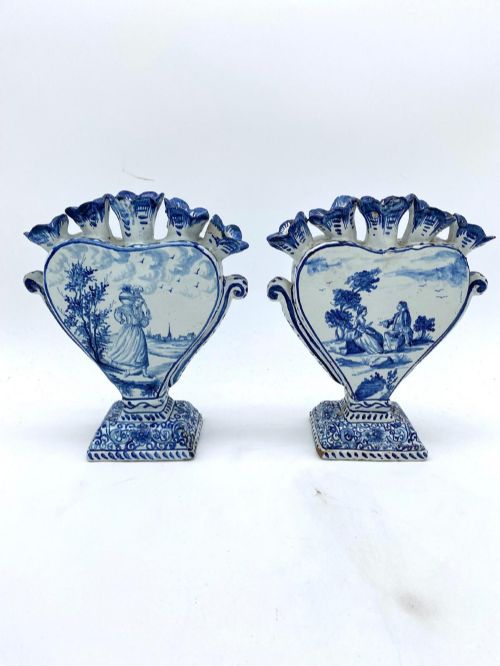
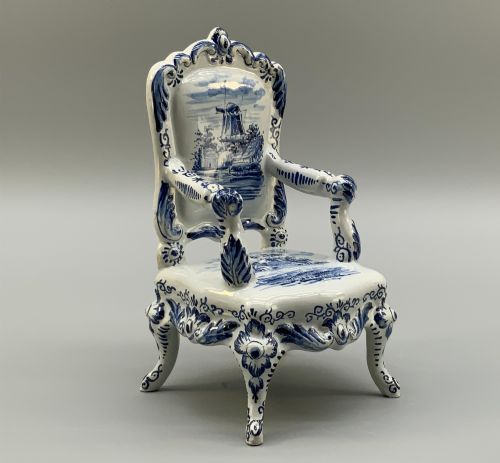
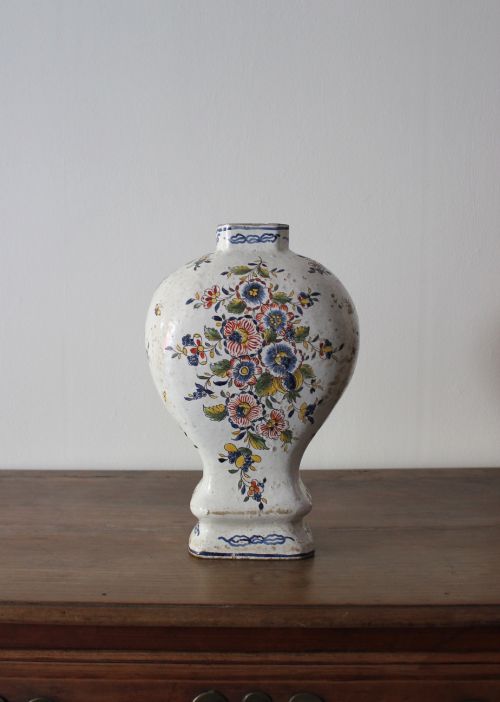
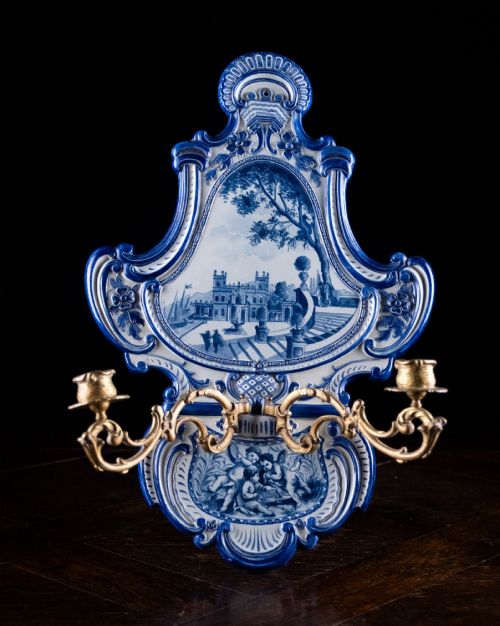
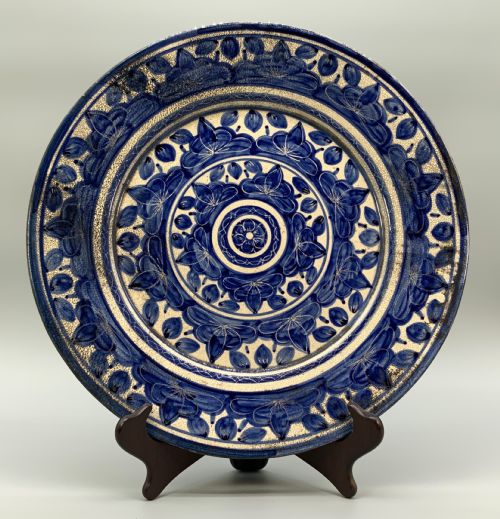
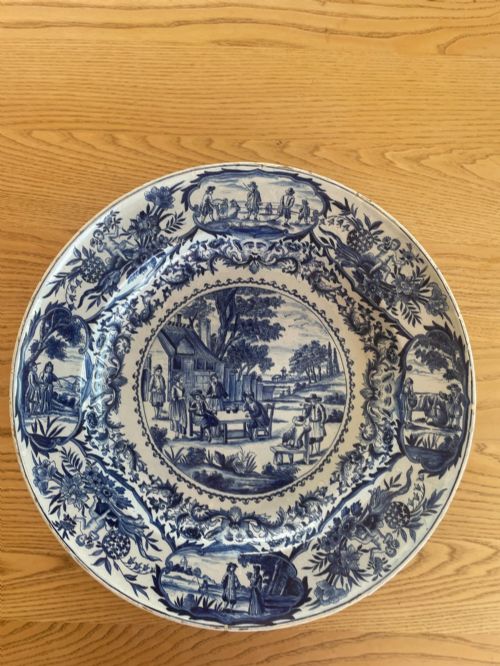
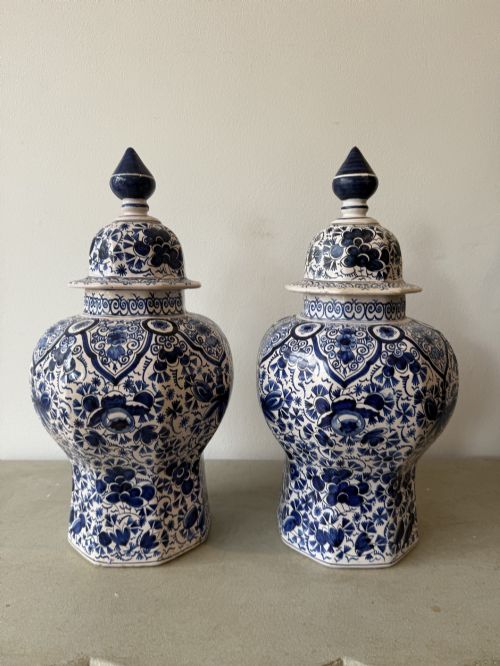
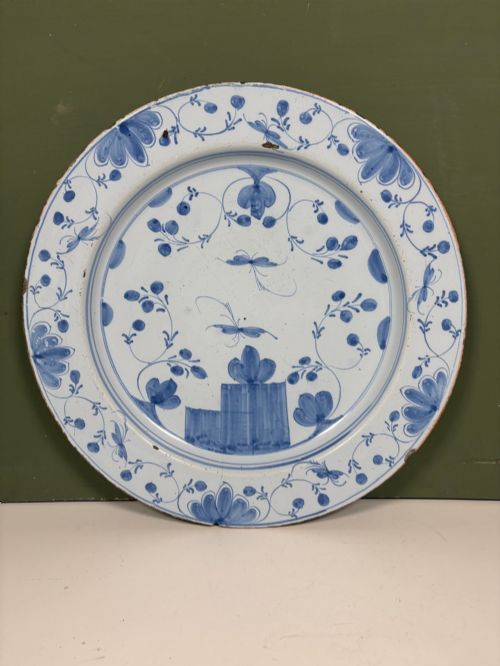
Vintage delftware encompasses tin-glazed ceramic objects originating primarily from the seventeenth, eighteenth, and nineteenth centuries, taking forms such as chargers, vases, and apothecary jars. Buyers seek these pieces for their hand-painted cobalt pigment or polychrome decoration, which often draws on Dutch, French, German, and English traditions.
The selections available here range from small snuff boxes and tiles to large decorative plates and table lamps. Eighteenth-century chargers and nineteenth-century animal figures appear alongside apothecary jars and tobacco jars, demonstrating the varied domestic and decorative uses of tin-glazed earthenware over successive centuries.
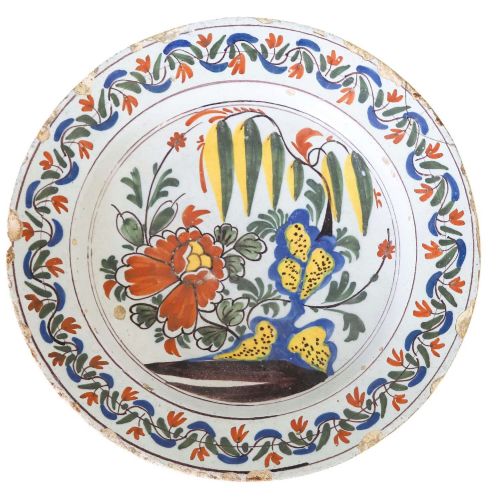
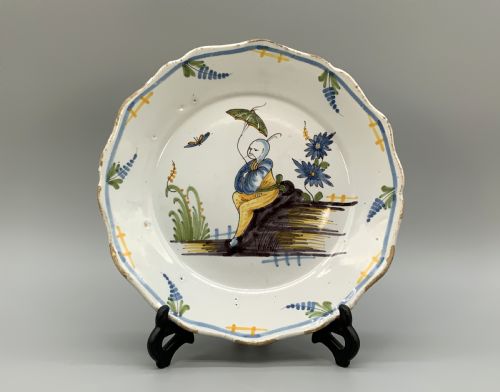
Dutch delft, faience, and English delftware share a common technological ancestry involving a tin-opacified glaze over a ceramic body. The pieces span straightforward blue and white designs to complex Chinoiserie and manganese palettes, reflecting changing tastes across periods from seventeen-fifty to nineteen-forty.
Materials and production methods
Potters formed these items from earthenware bodies, applying a tin glaze that produced an opaque white surface suitable for painting. Artisans then brushed cobalt oxide or other pigments directly onto the unfired or raw glaze, absorbing the colour before a high-temperature kiln firing.
Grand feu techniques allowed certain eighteenth-century chargers to fuse pigment and glaze deeply during a single intense firing, while other items incorporated brass fittings or ormolu mounts added in later nineteenth-century adaptations. Ceramic bodies varied in thickness according to the vessel type, from thin apothecary jars to heavy wall chargers.
Vintage Delftware Retail Price Guide 2026
Typical asking prices for vintage delftware among the pieces listed under this phrase on Sellingantiques today, from the lower quarter to the upper quarter. They describe what is for sale here now, not the wider market.
Listings feature tin-glazed earthenware from the seventeenth century through to nineteen-forty, including plates, clocks, and apothecary jars.
Standards of craftsmanship
Quality rests in the precision and fluidity of the hand-painted brushwork, distinguishing confident floral motifs and Chinoiserie scenes from stiff or formulaic decoration. The stability of the tin glaze and the intensity of the cobalt or manganese pigment also define the visual impact of each charger or vase.
Superior examples exhibit careful control during the firing process, resulting in an even glaze surface with minimal crawling or pooling. The crispness of moulded details on figures, tobacco jars, and inkstands further separates standard utility wares from pieces produced for wealthier interiors.
Villeroy and Boch
The Vintage Delftware Glossary
- Tin-glazed earthenware
- Ceramic pottery coated with a lead glaze made opaque by the addition of tin oxide. This white surface provided a ground for painters to apply cobalt and other mineral pigments.
- Charger
- A large decorative plate or dish intended for display on a wall or dresser rather than for dining use. Eighteenth-century examples frequently feature hand-painted floral or figural subjects.
- Albarello
- A cylindrical earthenware jar designed for holding pharmacy drugs, spices, or ointments. Originating in the Near East, the form was widely adopted by European tin-glazed potteries.
- Chinoiserie
- European decorative motifs imitating Chinese artistic styles, commonly found on blue and white delftware plates and vases. These designs depict imaginative landscapes, pavilions, and figures.
- Grand feu
- A firing method where tin-glazed ceramics are subjected to high temperatures so the pigments fuse into the liquid glaze. This technique produced robust colours on early chargers and jars.
Vintage Delftware: Frequently Asked Questions
How do I clean antique delftware?
Dust tin-glazed earthenware gently with a dry, soft cloth to prevent abrasion to the delicate glaze surface. Avoid using water, detergents, or soaking, as moisture can penetrate old ceramic bodies through microscopic fissures.
Keep pieces away from direct sunlight and areas prone to humidity changes. Gentle handling preserves both the earthenware structure and the painted cobalt decoration.
Were these chargers meant for walls?
Large decorative chargers featured suspension holes in their foot rings specifically for hanging on walls in domestic interiors. Eighteenth-century households displayed them in reception rooms and kitchens to showcase fine blue and white or polychrome designs.
While some flat dishes served functional dining purposes, the larger formats functioned primarily as ornamental displays. Their weight and size made wall presentation the standard practice.
What is manganese delft?
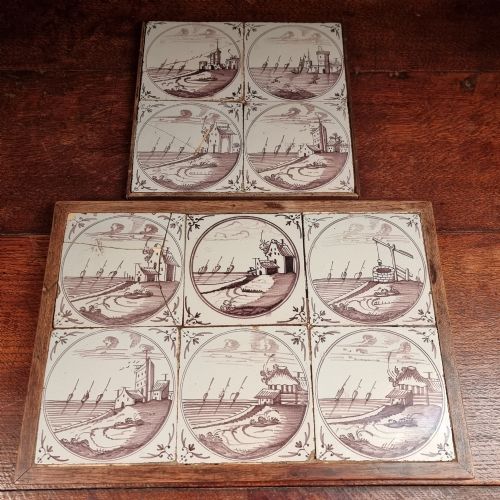
Manganese delft utilises a purple-brown manganese pigment instead of standard cobalt blue for the painted decoration. This colouring agent produced distinct warm purple, plum, and brown tones on seventeenth and eighteenth-century tiles, chargers, and jars.
Potters applied manganese oxide onto the tin glaze before firing, achieving subtle monochrome effects or combining the pigment with yellow and green in polychrome schemes.
How can I date a delft charger?
Dating relies on stylistic shifts in painting conventions, rim profiles, and the composition of the ceramic body. Seventeenth and eighteenth-century pieces often display thinner earthenware bodies and softer glaze textures compared to later nineteenth-century revivals.
Examining the foot ring, pigment saturation, and the nature of any glaze wear provides further chronological context. Comparing pieces to dated archive examples helps clarify their period of origin.