




Vintage Decorative Tazza
A vintage decorative tazza raises fruit or flowers upon a pedestal, bringing height and classical proportion to a dining table.
Vintage Decorative Tazza
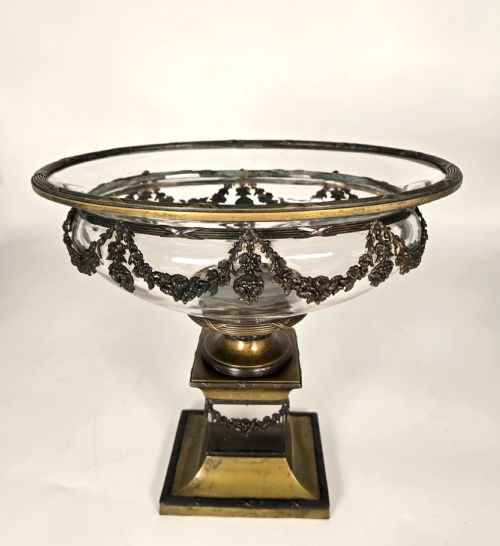
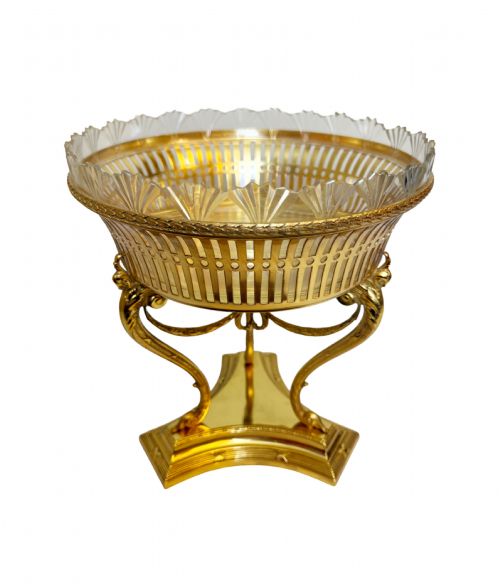
A vintage decorative tazza stands as an elevated dish, comport or centrepiece bowl, designed to display fruit or ornamentation in the dining room or parlour. These footed vessels draw upon historical forms ranging from nineteenth-century Victorian revival styles to early twentieth-century Arts and Crafts and Art Nouveau designs.
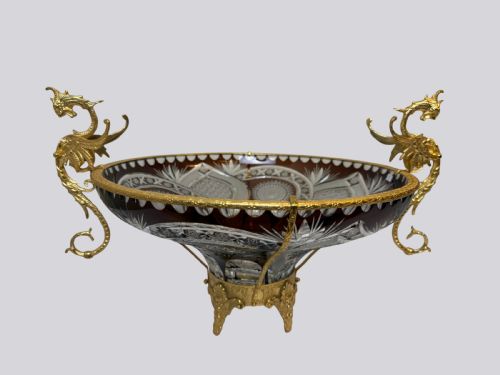
The most common examples on this page combine pedestal bowls with pedestals in metals such as brass, gilt bronze, copper, and cast iron, often paired with inserts of cut glass, coloured glass, or alabaster. Forms stretch from simple oak fruit bowls with carved vine decoration to ornate French pedestal bowls and Austrian table decorations.
Origins span British, French, Austrian, and Italian workshops, reflecting diverse aesthetic movements including Neoclassical, Belle Epoque, and Jugendstil. Buyers encounter pieces from the mid nineteenth century through to the nineteen-thirties, each utilising traditional pedestal architecture to command attention on a table centre.
Assessing quality in pedestal bowls
Quality rests upon the harmony between the pedestal and the bowl, and the crispness of the casting or carving. Superior examples display refined chasing on gilt bronze, precise joinery between glass inserts and metal mounts, and deeply articulated details such as hand-carved oak vines.
The choice of materials dictates the character of the piece, with weighty metals like cast iron or gilt bronze offering substantial presence compared to lighter brass structures. Artisanal touches, including enamelled cabochons, pietra dura insets, or complex lattice glasswork, elevate individual pieces above standard production.
Vintage Decorative Tazza Retail Price Guide 2026
Typical asking prices for vintage decorative tazza among the pieces listed under this phrase on Sellingantiques today, from the lower quarter to the upper quarter. They describe what is for sale here now, not the wider market.
Some nineteenth-century makers cast entire garden urns into miniature tazzas, proving that even fruit bowls occasionally harbour architectural grandiosity.
The Vintage Decorative Tazza Glossary
- Tazza
- A shallow bowl mounted on a pedestal foot, traditionally used for serving fruit or sweets. This classical form originates from ancient drinking vessels.
- Comport
- A footed dish or bowl used on the dining table for fruit or dessert presentation. It is synonymous with the tazza in many nineteenth-century contexts.
- Centrepiece
- A decorative object placed in the middle of a dining table, often taking the form of a large pedestal bowl or tazza. These items anchor the tablescape.
- Pietra dura
- An artistic technique using cut and fitted, highly polished coloured stones to create images or geometric patterns. It appears inlaid into stone or metal bases.
- Cabochon
- A gemstone or piece of glass shaped and polished as a convex dome rather than faceted. Enamelled versions provide colourful focal points on metalwork.
Vintage Decorative Tazza: Frequently Asked Questions
What is a tazza used for?
A tazza serves as an elevated display dish for fruit, flowers, or small decorative items upon a dining table or sideboard. Its raised pedestal design brings height and architectural interest to a room.
Historically, these pieces held sweetmeats or desserts during formal dining. Today, they function primarily as decorative centrepieces that draw the eye.
How do I style a decorative tazza?
Place a tazza in the centre of a dining table or on a wooden sideboard to anchor the surface arrangement. You can leave the bowl empty to showcase its craftsmanship or fill it with seasonal fruit.
Pair metal and glass tazzas with natural wood or polished surfaces to create textural contrast. Their vertical height helps balance lower surrounding objects.
How do I date an antique tazza?
Dating relies on identifying stylistic markers such as Neoclassical motifs, Victorian cast iron work, or organic Art Nouveau lines. Material combinations, like gilt bronze with coloured glass or oak with carved vines, also point to specific decades.
Examine the construction methods and any maker marks for clues about the manufacturing period. Pieces range from mid nineteenth-century Victorian designs to nineteen-thirties oak vessels.