

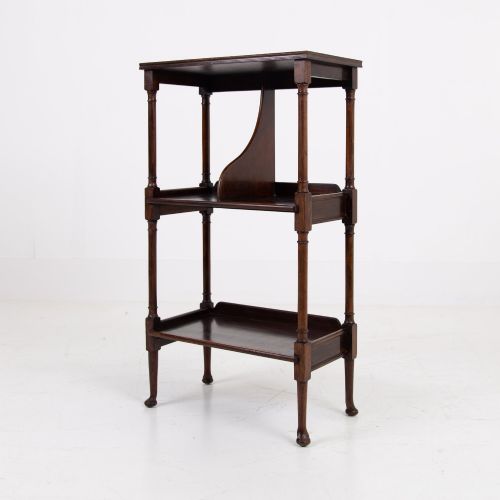


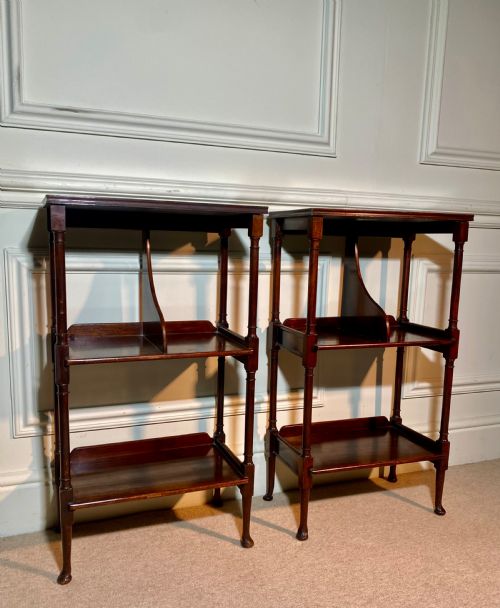
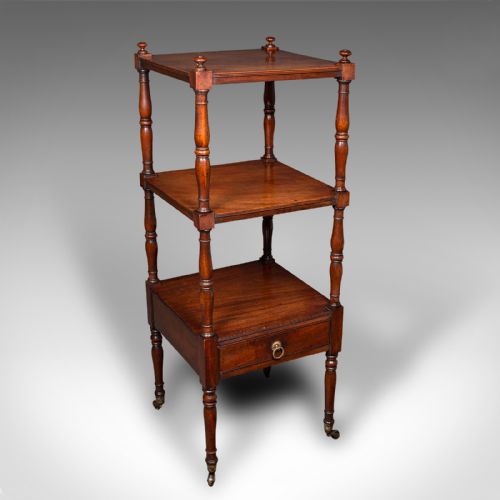


Vintage Dark Wood Whatnot
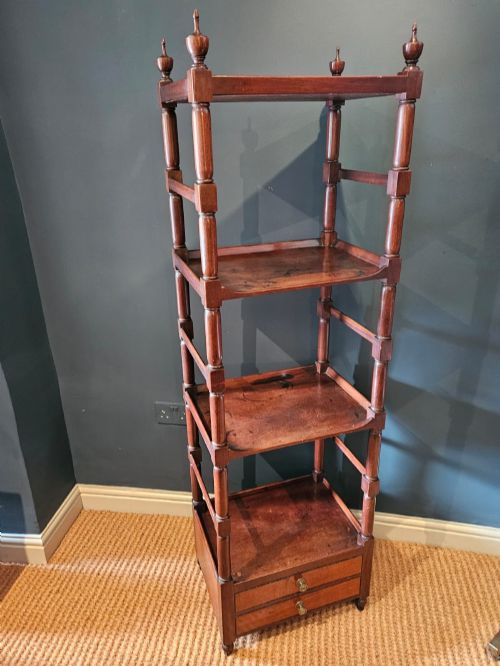
A vintage dark wood whatnot brings tiered display space to a room, offering open shelves for books and decorative objects.
Vintage Dark Wood Whatnot
When you search for a vintage dark wood whatnot, you encounter tiered open shelving units and etageres designed for display and storage. These pieces originate from periods spanning the Georgian era through the Victorian period, the Regency era, and into the early twentieth century.
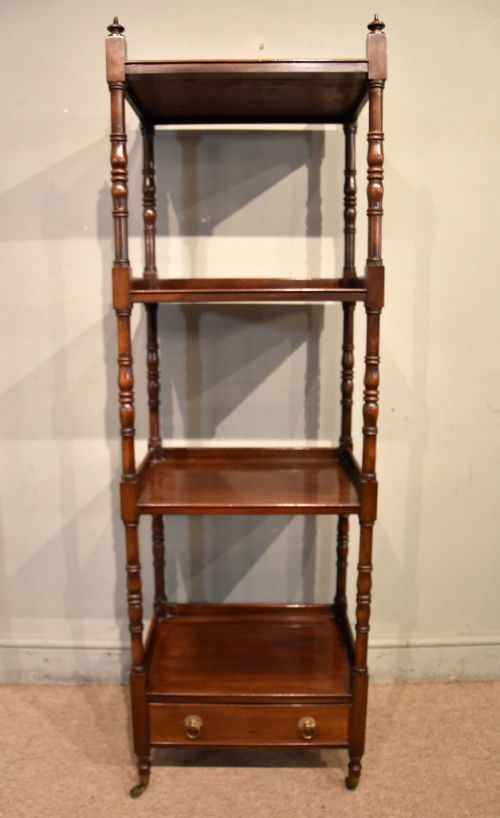
The most common formats on this page are four-tier shelving units and corner shelves constructed in rich timbers. Many examples function as bedside night stands or display pieces, utilising vertical space efficiently in domestic interiors.
How they were made
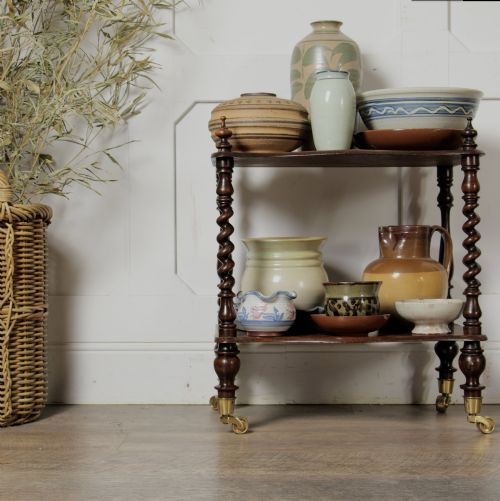
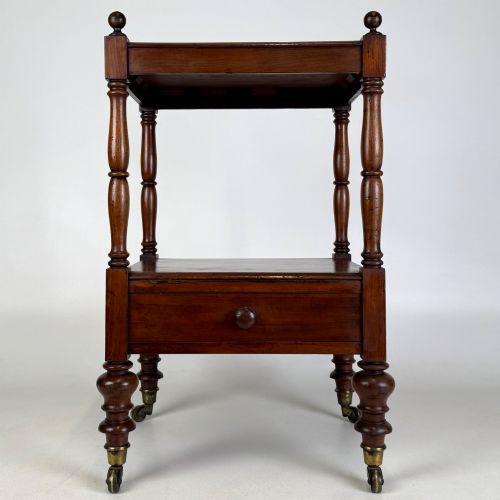
Cabinet makers utilised dense hardwoods such as mahogany, rosewood, walnut, and teak to build these tiered structures. Individual tiers are frequently supported by turned uprights, columns, or barley twist supports.
Details such as brass fittings and mounted elements appear across various pieces to secure joints and enhance the structural integrity of the open shelves.
What varies in quality
The distinction between standard examples and finer pieces rests in the selection of the timber grain and the precision of the turning on the upright supports. Superior pieces display carefully matched veneers and solid timber construction that maintain stability across multiple tiers.
Proportion and decorative restraint also separate basic utility shelving from high-status display pieces. Finer examples integrate refined mouldings and balanced tiered arrangements that sit squarely without wobble.
Samson and Son London
The Vintage Dark Wood Whatnot Glossary
- Whatnot
- An open set of tiered shelves designed for displaying ornaments, books, or small possessions. The form developed in the eighteenth century and remained popular through the Victorian era.
- Etagere
- A piece of furniture consisting of a number of open shelves for displaying articles, functioning similarly to a whatnot. The term derives from French usage for a tiered stand.
- Barley twist
- A decorative turning technique resembling a twisted rope, commonly utilised for the vertical supports or legs of stands and tables. This style appears frequently on Victorian pieces.
- A-frame
- A structural configuration where the sides slope inward toward the top, creating a stable triangular profile for corner or wall shelving. This format supports graduated shelf depths.
Vintage Dark Wood Whatnot: Frequently Asked Questions
What is a vintage dark wood whatnot used for?
These pieces provide open shelving to display books, ceramics, and small decorative items in a living space or bedroom.
They also serve as bedside tables or corner units where surface area is needed without blocking light.
How do I identify a Victorian whatnot?
Victorian examples often feature turned uprights, such as barley twist supports, and utilise dense timbers like rosewood or walnut.
They typically present as multi-tiered open stands or etageres dating from the mid to late nineteenth century.
Are these pieces made of solid wood?
Many units utilise solid timbers including mahogany, teak, and walnut for their shelves and structural supports.
Some pieces also incorporate fine wood veneers applied to stable secondary foundations to create figured surfaces.
How do I care for a wooden whatnot?
Keep the timber clean with a soft, dry cloth and avoid placing the unit in direct sunlight or near heat sources.
Apply traditional wax polish occasionally to nourish the wood and maintain the finish of the dark timber.