
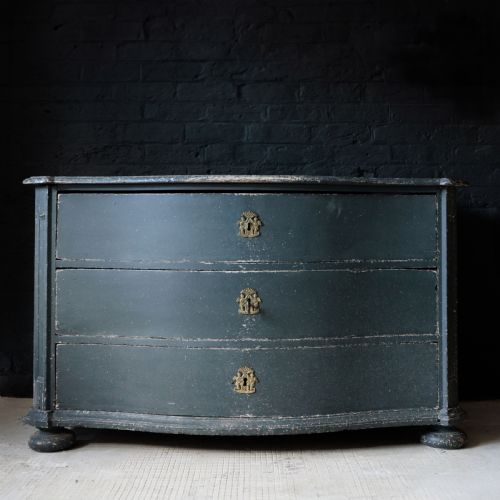

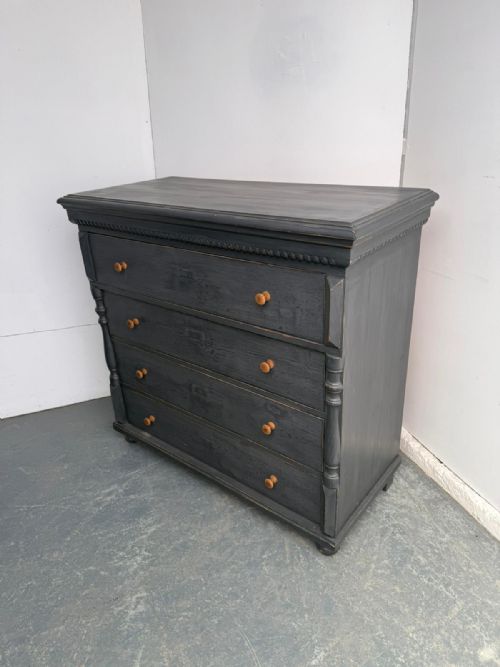


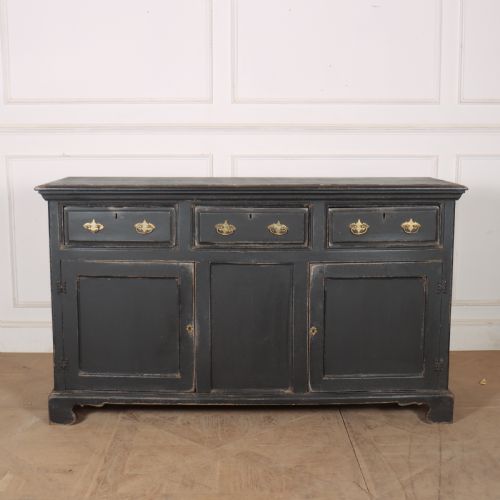


Vintage Dark Painted Dresser
A vintage dark painted dresser brings heavy timber character and honest utility into a room through deep colour and time-worn pigment.
Vintage Dark Painted Dresser
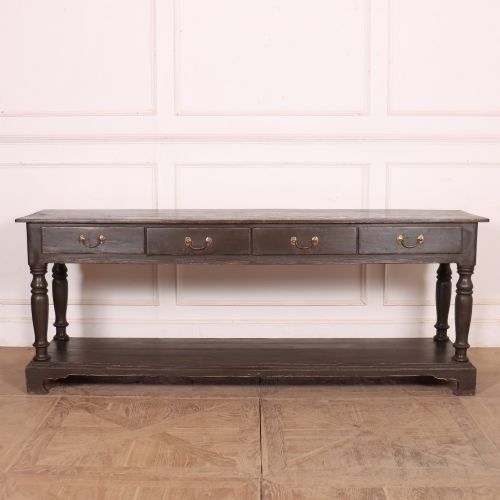
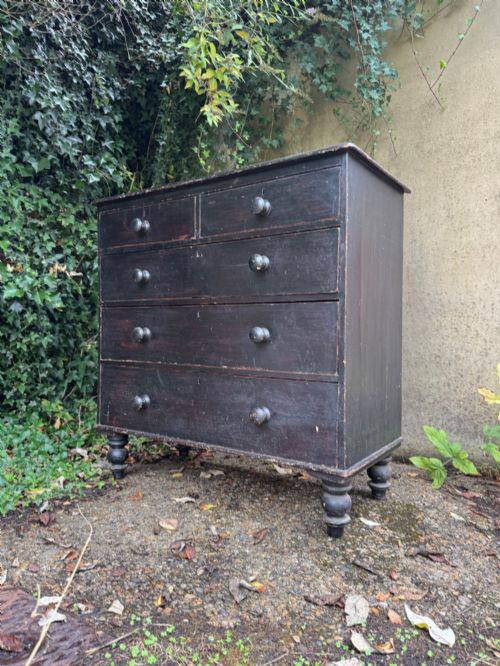
A vintage dark painted dresser spans substantial kitchen dressers, low dresser bases with potboards, and multi-drawer chests in muted or deep historic tones. Buyers searching for a vintage dark painted dresser encounter robust forms originating from the eighteenth, nineteenth, and early twentieth centuries.
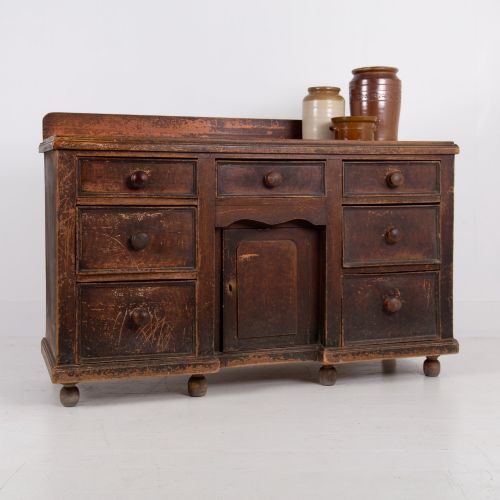
The regional styles vary from English country house and Georgian country models to French provincial and Victorian country pieces. Many examples utilise original paint surfaces, showing the natural softening of dark pigments over decades of domestic use.
Materials and construction methods
Carpenters built these pieces primarily from solid pine, oak, and general painted timber, often employing scumble glazes to simulate richer grain patterns. Heavy brass and iron hardware serves both structural and decorative functions on doors and drawer fronts.
Surfaces received successive layers of oil or water-based paint, which bonded deeply with the underlying wood over generations. Joinery relies on traditional pegged and dovetailed joints designed to withstand heavy daily storage.
The listings span the eighteenth, nineteenth, and early twentieth centuries, incorporating pine, oak, iron, and brass across English and French regional styles.
Markers of construction and surface quality
Quality rests upon the integrity of the original timber frame and the survival of an untouched, early painted finish rather than later applied coats. Superior examples retain their structural rigidity, smooth-running drawers, and authentic backboards without extensive timber replacement.
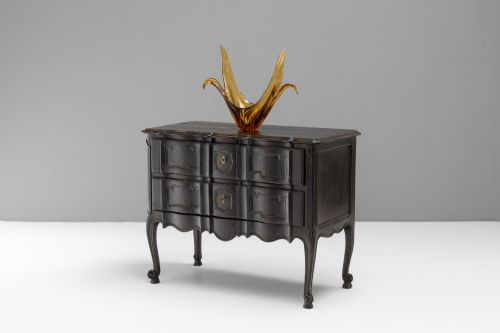
Proportion and regional detailing separate standard utility furniture from finer country pieces, particularly where serpentine fronts or carved oak elements appear. The depth of the paint patina, showing honest wear without heavy modern intervention, dictates the standing of the piece.
The Vintage Dark Painted Dresser Glossary
- Potboard
- An open slatted lower shelf on a dresser base designed originally for storing heavy earthenware and pots. This practical feature distinguishes potboard dressers from enclosed cupboards.
- Scumble
- A decorative painting technique involving a translucent top glaze manipulated over a lighter base coat to imitate wood grain or create mottled depth. It appears frequently on nineteenth-century pine furniture.
- Serpentine
- A gently undulating front profile curving outward in the centre and inward at the sides. This sophisticated shaping demands skilled woodworking, seen on select chests and commodes.
- Commode
- A low piece of furniture containing drawers or doors, functioning traditionally as a decorative storage chest. French and English variations appear across several periods.
- Dresser Base
- The lower solid cabinet or sideboard portion of a kitchen dresser, often utilised independently as a serving surface. These low bases frequently feature multiple drawers and surface boards.
Vintage Dark Painted Dresser: Frequently Asked Questions
How do I clean a painted finish?
Dust the surface regularly with a soft, dry cloth to prevent dirt accumulation within the grain and brush marks. Avoid harsh chemical cleaners and modern detergents, which can strip historic pigment layers.
Apply microcrystalline wax sparingly if the painted wood appears dry, buffing gently with a clean cloth to maintain a soft sheen without altering the historic patina.
Are these pieces made of solid wood?
Most examples utilise solid pine, oak, or mixed structural timber rather than modern manufactured boards. Carpenters selected these sturdy domestic woods for their availability and structural stability.
Drawer linings, backboards, and internal framing consistently display natural grain and solid construction appropriate to their nineteenth or eighteenth-century origins.
Can I use a dresser in a hallway?
Dresser bases and narrow chests function effectively in hallways and entrance spaces for storing everyday items while anchoring the room visually. Their deep painted finishes contrast well against neutral walls.
Ensure you measure the depth of the cabinet and clearance for opening drawers before placement, as country proportions can occasionally prove generous.
How do I identify original paint?
Original paint surfaces exhibit natural fading, fine crackle lines, and wear patterns concentrated around handles and working edges. Examination under magnification often reveals microscopic layers matching the age of the underlying timber.
Modern repaint jobs usually feel uniform and lack the subtle tonal variations accumulated through decades of environmental exposure and household cleaning.