
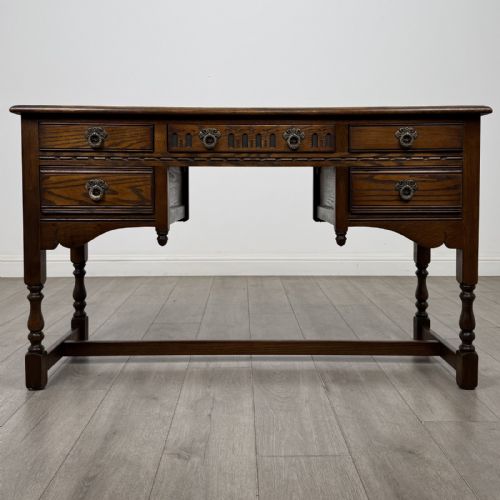
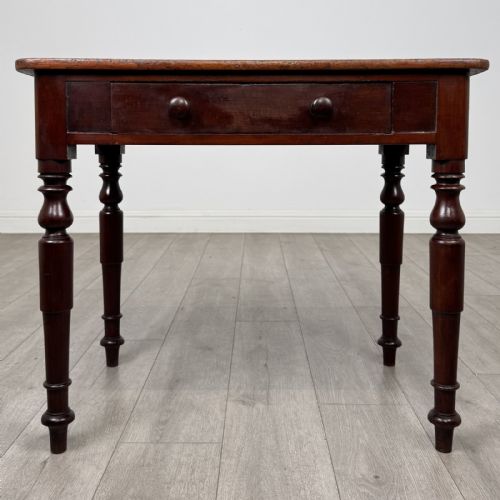
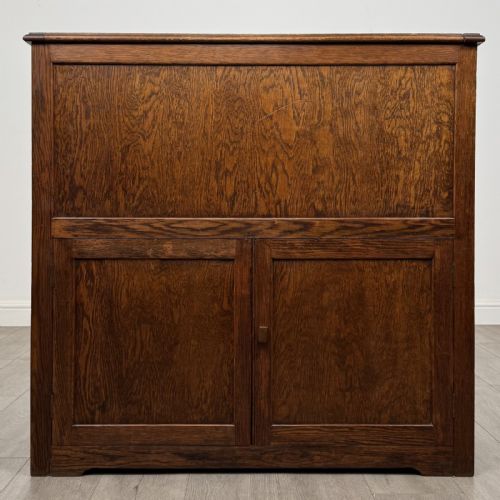
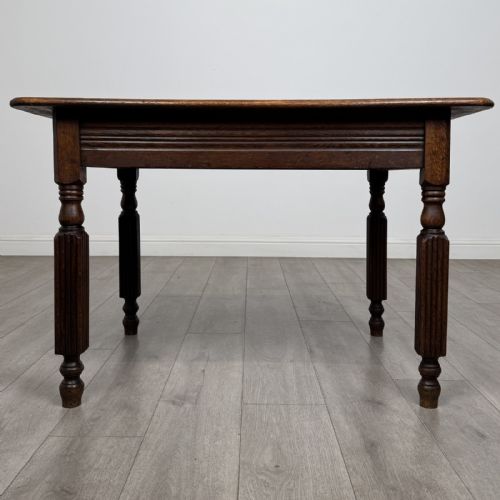
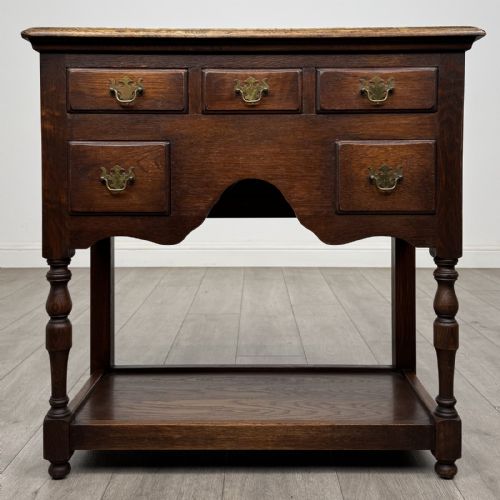
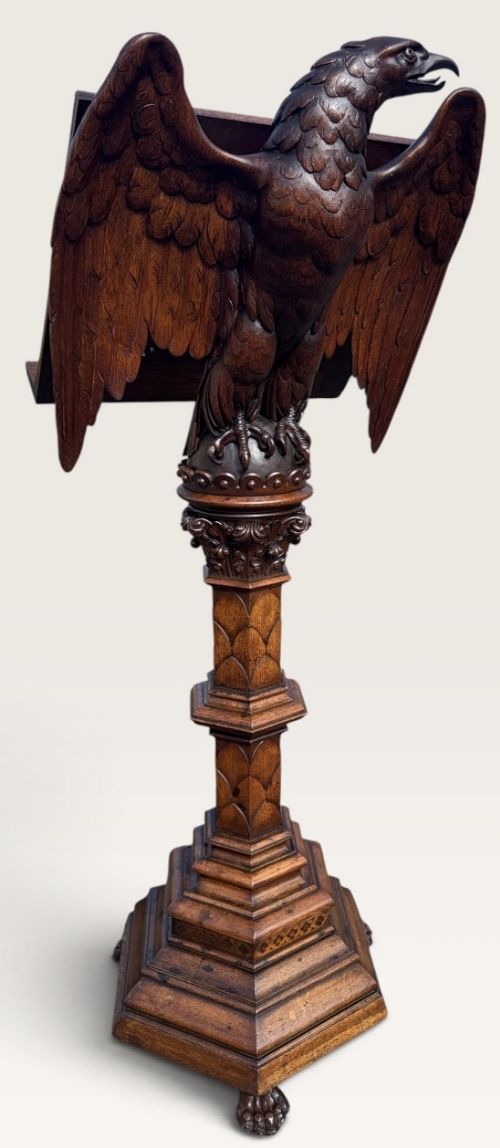
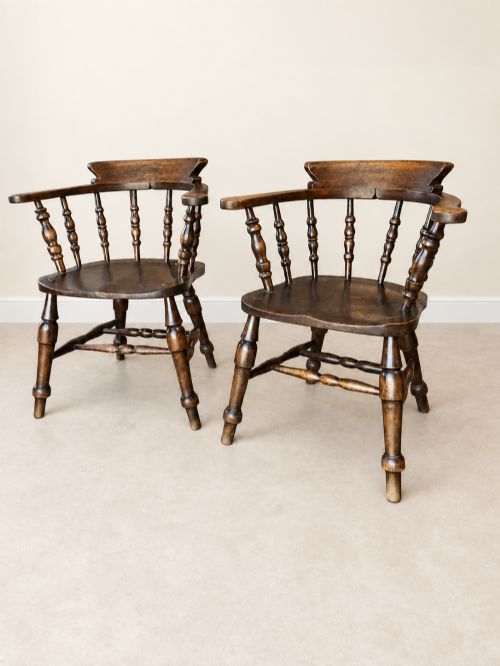
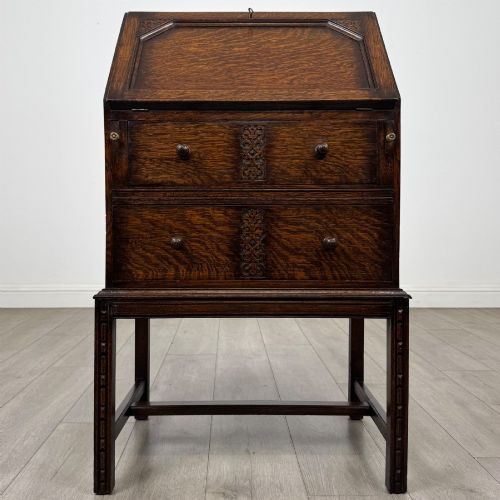
Vintage Dark Oak Desk
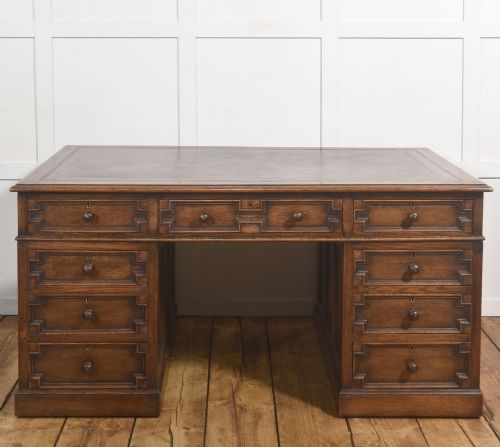
A vintage dark oak desk brings heavy timber and honest grain into a room, offering a sturdy workspace rooted in past centuries.
Vintage Dark Oak Desk
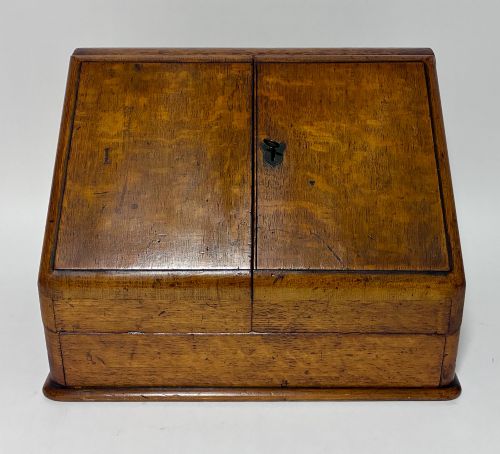
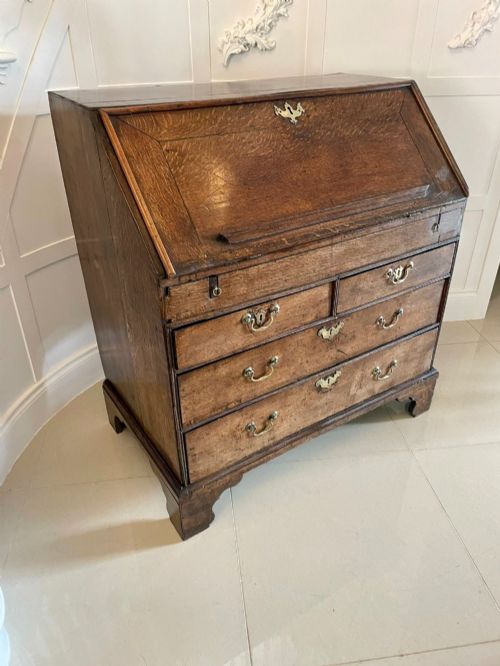
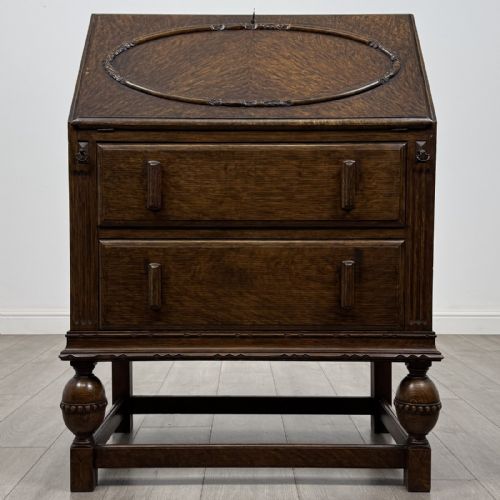
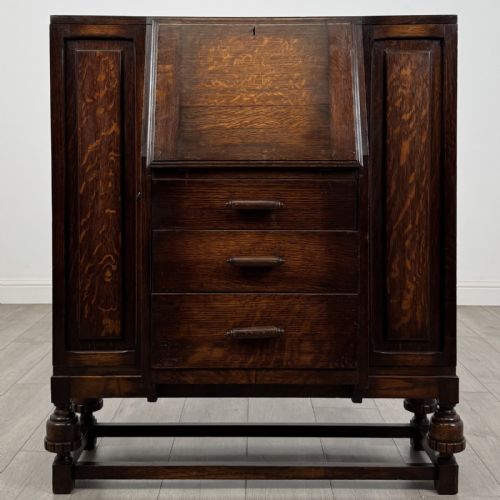
A vintage dark oak desk encompasses writing tables, fall front bureaux, and bureau bookcases spanning several centuries of British and continental cabinetmaking. Buyers searching this phrase look for functional workspace housed within timber furniture displaying deep, dark patination and solid construction.
The pieces appearing most frequently on this page date from the Edwardian era and the 1920s, often drawing on earlier Jacobean Revival or Arts & Crafts styles. These works combine practical storage drawers with drop-down writing flaps or flat timber tops suited to daily use.
Materials and construction
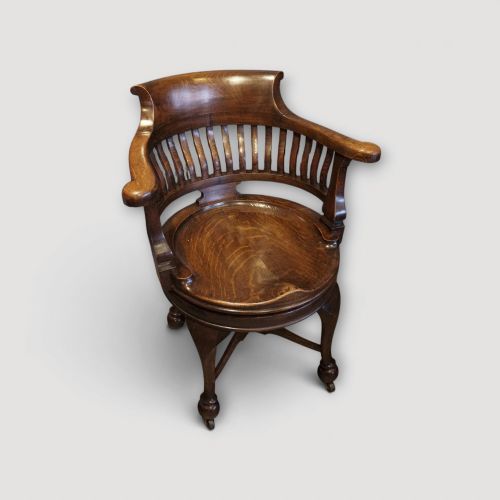
Makers built these pieces primarily from solid oak, sometimes pairing the heavy timber with brass hardware, iron fittings, or leather writing inserts. The dark finishes arose through traditional staining, waxing, and decades of natural ageing.
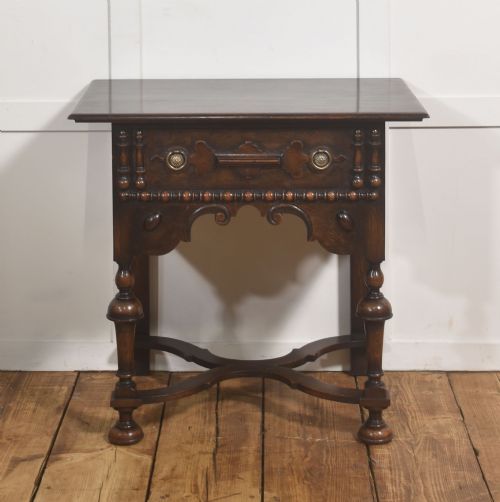
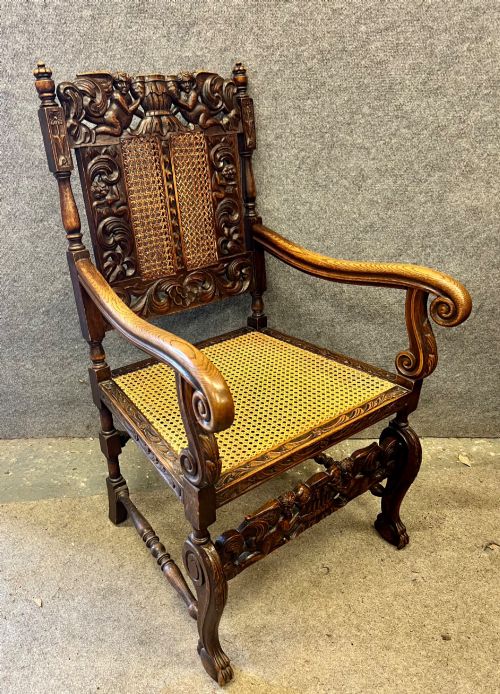
Joinery techniques relied on sturdy framing and carved ornamentation, particularly linenfold panels and geometric mouldings characteristic of revival styles. Structural integrity remains high due to the density of the oak and straightforward mechanical construction.
Among the heavy oak and ironwork sits a cheerful cast-iron signal cannon mounted on an oak carriage.
Evaluating the pieces
Quality rests on the depth of the timber grain, the crispness of any hand carving, and the weight of the hardware. Pieces featuring intricate linenfold panels or fitted interior pigeonholes stand apart from simpler utilitarian surfaces.
The balance between original patination and later restoration dictates the character of each desk. Uniformity in the dark oak tone and smooth movement of drawers indicate superior historic craftsmanship.
The Vintage Dark Oak Desk Glossary
- Bureau
- A writing cabinet featuring a sloping hinged flap that opens to reveal a fitted interior of small drawers and pigeonholes. This form provides both concealed storage and a fold-down writing surface.
- Linenfold
- A style of carved wooden panelling designed to resemble folded fabric, frequently seen on Edwardian and revival furniture. This decorative motif adds texture to drawer fronts and fall flaps.
- Jacobean Revival
- An architectural and furniture style popular in the nineteenth and twentieth centuries that imitates seventeenth-century British design. It utilises heavy proportions, dark oak, and geometric mouldings.
- Arts and Crafts
- A design movement emphasising handcraftsmanship, simple forms, and visible construction methods. Pieces in this style often highlight the natural grain of the oak without excessive ornamentation.
- Fall Front
- A hinged writing flap that drops into a horizontal position to serve as a desk surface. When closed, it conceals the inner compartments and papers.
Vintage Dark Oak Desk: Frequently Asked Questions
How do I care for dark oak?
Maintain the timber by applying a traditional beeswax rather than modern silicon sprays, which build up harmful residues over time. Keep the desk away from direct heat sources and strong sunlight to prevent the dark oak finish from drying out or fading.
Regular dusting with a soft cloth preserves the natural lustre of the wax. Occasional light buffing keeps the dark surface resilient against daily use.
Are these desks suitable for daily work?
Many vintage writing tables and bureaux offer adequate surface area and compartment storage for contemporary laptops and paperwork. Their solid oak construction provides a stable, durable platform for daily tasks.
Buyers should check the working height and knee clearance of older models, as historical proportions can differ from modern office furniture. Adding a supportive chair ensures comfort during long hours of use.
How do I date an oak desk?
Examine the construction methods, hardware types, and secondary timbers visible inside the drawers. Hand-cut dovetails, iron pulls, and traditional peg joints point towards earlier 19th-century or Georgian origins, whereas later pieces employ standardised fixings.
Stylistic markers such as Edwardian linenfold carving or Arts & Crafts simplicity also help narrow the period of manufacture. Comparing the patination across hidden and exposed areas confirms the age of the timber.
What is a bureau bookcase?
A bureau bookcase combines a lower writing desk with an upper shelving unit enclosed by glazed or wooden doors. This combination piece offered Victorian and Edwardian households a dual function of workspace and library storage.
Lower fall-front sections conceal small drawers, while upper glass-fronted shelves display books or decorative items. Their substantial scale makes them focal points within a room.