



Vintage Cutlery Storage Box
These vintage cutlery storage boxes range from oak chests to mahogany knife boxes, designed to keep flatware organised and protected.
Vintage Cutlery Storage Box
A vintage cutlery storage box provides a dedicated place to keep flatware safe, tidy, and ready for use. When you search for a vintage cutlery storage box, you encounter various forms including canteen chests, knife boxes, and country kitchen trays.
The pieces on this page span several eras from the seventeenth century through to the art deco period. Mahogany, oak, and pine feature prominently among the materials, alongside toleware and painted sheet iron.
You find traditional English designs alongside Scandinavian rustic pieces and Portuguese coromandel boxes. Each object reflects the domestic habits and dining customs of its specific period.
Materials and construction
Cabinet makers utilised dense hardwoods such as mahogany, oak, and walnut to build durable storage chests and canteens. Wood inlay and brass fittings frequently accent these timber boxes.
Some domestic kitchen pieces utilise painted sheet iron or toleware for lighter utility work. Interiors often feature baize lining to cushion silver plate and steel blades.
Vintage Cutlery Storage Box Retail Price Guide 2026
Typical asking prices for vintage cutlery storage box among the pieces listed under this phrase on Sellingantiques today, from the lower quarter to the upper quarter. They describe what is for sale here now, not the wider market.
Materials represented include mahogany, oak, walnut, coromandel, brass, baize, and painted toleware.
Judging quality in storage boxes
Superior examples display careful selection of timber grain, particularly in mahogany and inlaid specimens. The precision of the joinery and the integration of brass hardware dictate the structural integrity.
Original interior fittings and lining materials elevate a piece above altered or later additions. Maker attribution also distinguishes standard utility boxes from fine commission work.
Walker & Hall
The Vintage Cutlery Storage Box Glossary
- Canteen
- A fitted box or chest designed to hold a complete set of cutlery. These often feature multiple tiers or baize-lined slots.
- Toleware
- Enamelled or painted sheet metal used for domestic containers and utility buckets. This material offered a durable surface for busy kitchens.
- Serpentine front
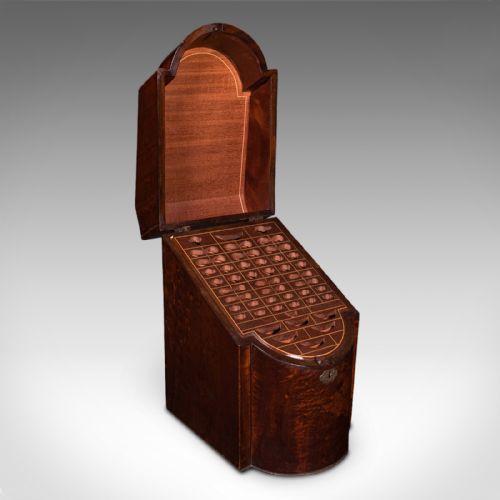
- A curved furniture front curving outward at the centre and inward at the sides. This shape appears on fine eighteenth-century knife boxes.
- Baize
- A coarse woollen material resembling felt used to line the interior of chests. It prevents flatware from scratching during transit or storage.
- Coromandel
- A dense, heavily figured timber from South East Asia used for luxury boxes. Its dark grain makes it distinctive.
Vintage Cutlery Storage Box: Frequently Asked Questions
What fits inside a cutlery box?
These boxes accommodate various flatware sets, ranging from modest kitchen tool collections to large canteens containing over one hundred pieces. Interior layouts often include slotted trays or dedicated compartments for knives, forks, and spoons.
Larger chests and campaign trunks provide deeper storage for bulk silverware and heavier service items. Smaller knife boxes and trays suit specific table service needs.
How do I date a wooden box?
Dating relies on timber selection, construction methods, and hardware styles associated with periods like the Georgian era or the Edwardian years. Mahogany and walnut work frequently indicate eighteenth or nineteenth-century origin, while oak appears across multiple centuries.
Examining the fixings, locks, and interior lining provides further clues to the manufacturing decade. Regional variations, such as Scandinavian rustic pine, also point to specific geographic traditions.
How should I clean a wooden chest?
Maintaining timber surfaces involves gentle dusting and occasional application of appropriate furniture wax to nourish the grain. Harsh chemical cleaners can strip historic finishes and damage brass fittings.
Internal baize lining requires careful vacuuming with a soft brush attachment to remove dust without disturbing the fabric.
Where were these boxes used?
Kitchens, dining rooms, and country house pantries served as the primary locations for these storage items. Butler's pantries utilised fitted canteens to keep large flatware services organised between meals.
Campaign trunks and travel chests accompanied owners on journeys, protecting silverware during transit. Smaller work boxes and trays remained accessible in domestic working areas.