





Fitted Wooden Cutlery Box
A fitted wooden cutlery box keeps flatware organised and protected, bringing period craft and timber into the dining room.
Fitted Wooden Cutlery Box
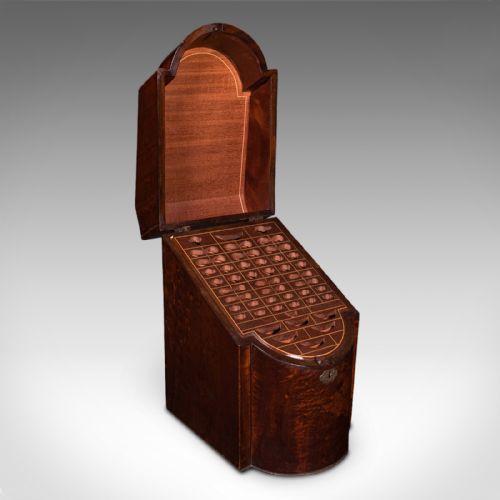
A fitted wooden cutlery box is a specialised chest or canteen designed to hold flatware securely, appearing across periods from Georgian and Victorian to Edwardian and Art Deco. These pieces range from knife boxes and slant-lidded storage chests to extensive canteens housing dozens of items.
The versions most commonly met on this page include oak and mahogany canteens, alongside serpentine mahogany boxes and walnut cases. They often feature dedicated internal slots, trays, or compartments lined to cushion silver and steel.
Origins span English workshops and broader Victorian production, taking forms that double as decorative table storage or travel trunks. Each item reflects the domestic dining habits of its era, from modest fruit sets to large silver canteens.
How they were made
Construction relies on solid hardwoods and veneers such as oak, mahogany, and walnut, shaped into robust boxes and chests. Joinery is paired with structural timber framing to withstand the weight of heavy metal flatware.
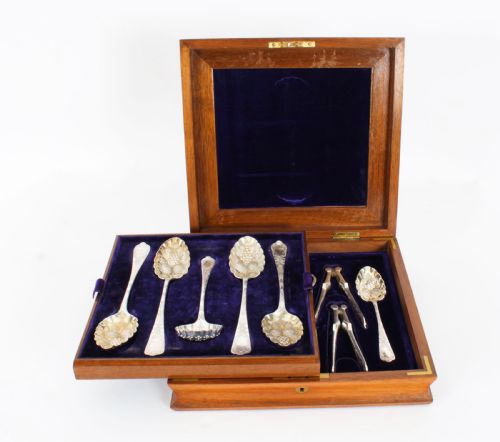
Internal fittings utilise velvet linings, brass handles, locks, and escutcheons, alongside detailed carpentry to create individual slots for spoons, forks, and knives. Some examples incorporate mother of pearl detailing on handles and fitted trays within.
Fitted Wooden Cutlery Box Retail Price Guide 2026
Typical asking prices for fitted wooden cutlery box among the pieces listed under this phrase on Sellingantiques today, from the lower quarter to the upper quarter. They describe what is for sale here now, not the wider market.
Some Victorian trunks managed to survive bumpy travels with complete fruit sets, silver spoons, and grape scissors intact inside.
What varies in quality
Quality rests upon the selection of timber grain, the precision of the internal dividers, and the integrity of the brass hardware. Superior examples display seamless dovetail joints, well-figured mahogany or walnut surfaces, and intact velvet interiors that show careful original fitting.
The level of completeness and the integration of maker-stamped components further distinguish the range. Finer pieces maintain original locks, keys, and matched flatware sets, while simpler storage boxes rely on straightforward utility construction.
Walker & Hall·Waring & Gillows·Hukin & Heath
The Fitted Wooden Cutlery Box Glossary
- Canteen
- A fitted box or chest designed specifically to hold a complete set of cutlery. These containers often feature multiple internal tiers or lift-out trays.
- Escutcheon
- A flat plate surrounding a keyhole, usually made of brass to protect the surrounding wood from wear. It forms a decorative and functional detail on box lids and drawer fronts.
- Serpentine
- A shaped furniture front or box profile characterised by a concave central curve flanked by two convex sweeps. This contour demands skilled woodworking to achieve.
- Flatware
- Table cutlery such as forks, spoons, and servers traditionally made from silver, silver plate, or steel. These items are the primary contents stored within fitted canteens.
- Fiddle Pattern
- A traditional nineteenth century cutlery handle shape widening smoothly towards a squared-off, notched end resembling a stringed instrument. It appears frequently on silver canteens from the period.
Fitted Wooden Cutlery Box: Frequently Asked Questions
What periods do fitted wooden cutlery boxes come from?
These pieces date from the Georgian era through the Victorian period and Edwardian times, extending into Art Deco designs of the early twentieth century. Each period brings distinct timber choices and carpentry styles.
Earlier examples often feature mahogany or walnut with serpentine fronts, while later pieces favour sturdy oak cases or fitted campaign trunks designed for travel.
How were fitted cutlery boxes used originally?
Households used them to protect silver and steel flatware from tarnish, dust, and damage between meals. The fitted interiors kept each fork and spoon in a designated slot.
Larger canteens stayed in the dining room or butler's pantry, while campaign chests and smaller knife boxes were built for secure storage and transport.
What woods are commonly found in these boxes?
Oak, mahogany, and walnut form the primary structure of these pieces, selected for their durability and attractive grain patterns. Solid timbers provide the necessary weight and strength.
Interiors often combine these hardwoods with softer secondary woods for hidden dividers, finished with velvet linings and brass fittings.
How do you date a wooden cutlery box?
Dating relies on combining the timber type, architectural style, brass hardware, and construction methods. Georgian pieces often display fine mahogany veneers and serpentine lines.
Victorian and Edwardian versions introduce heavier oak construction, stamped maker marks, and distinct interior layouts designed for larger multi-piece canteens.