
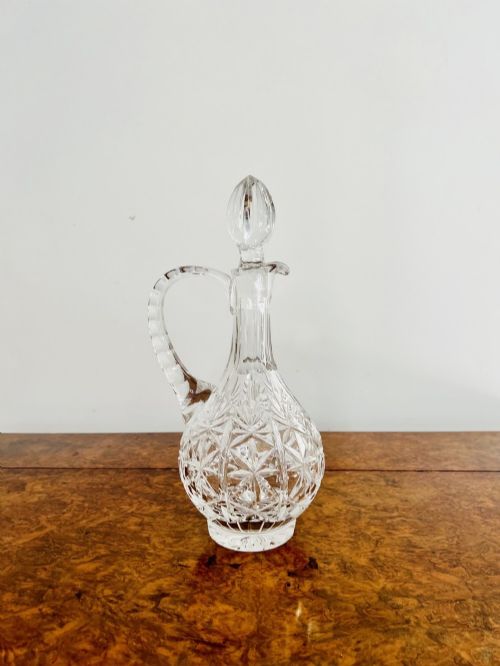
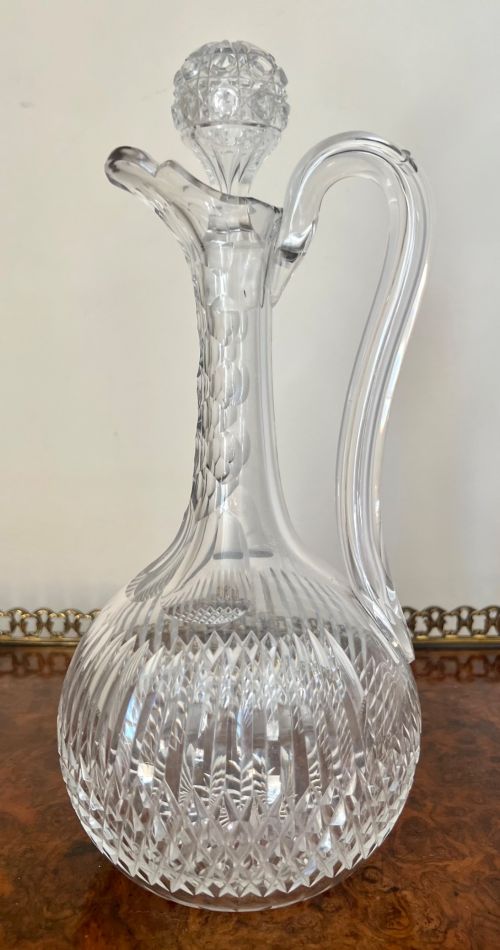
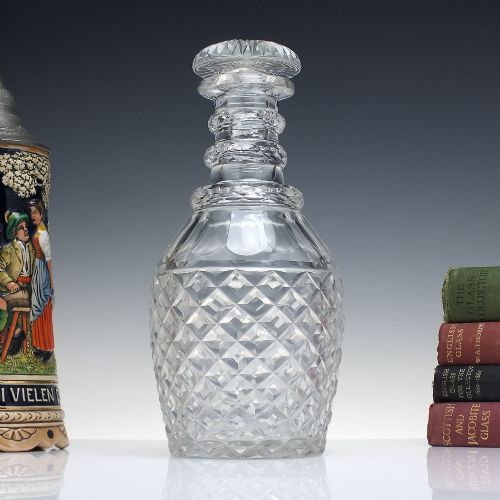
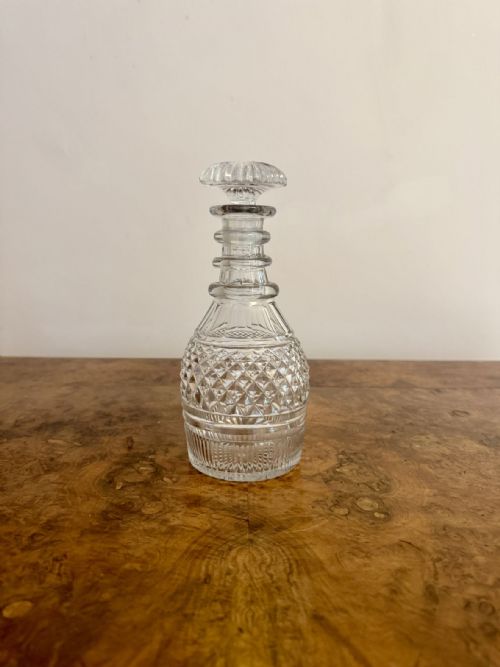
Vintage Cut Glass Decanter
A vintage cut glass decanter brings weight and brilliant refraction to a sideboard, catching the light through deep wheel-cut patterns.
Vintage Cut Glass Decanter
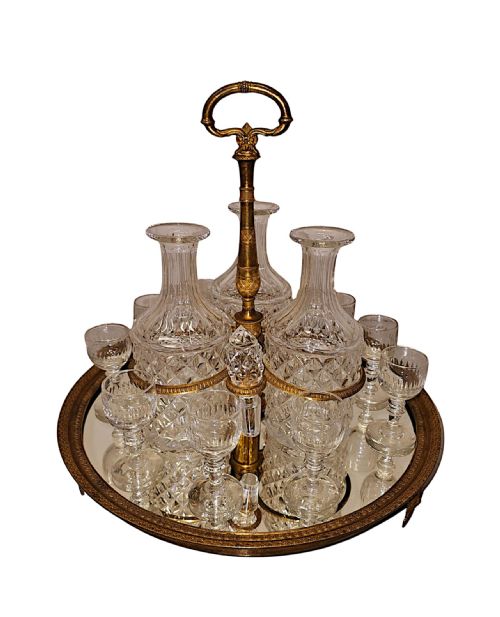
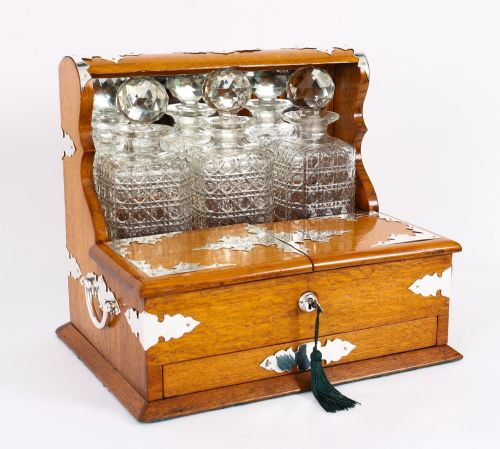
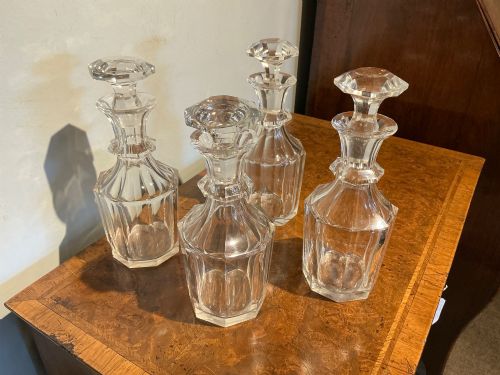
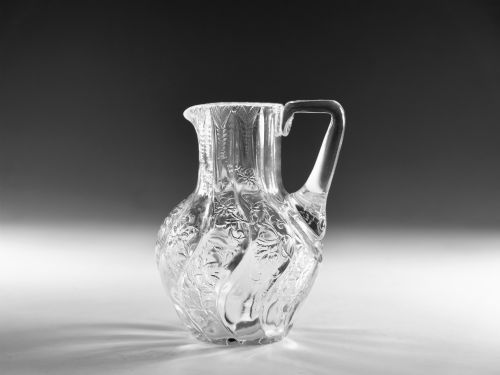
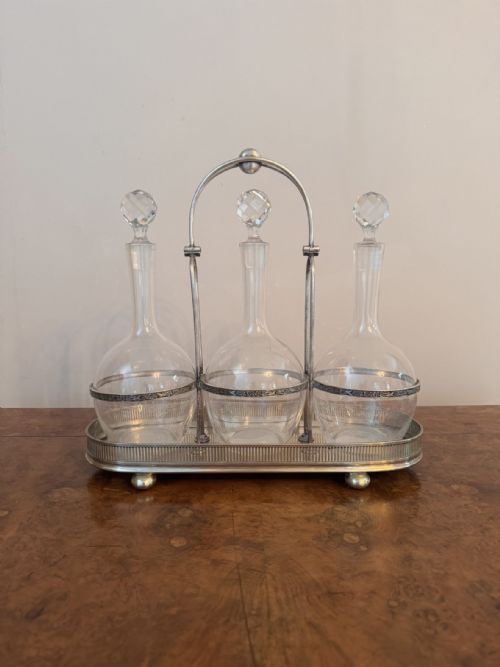
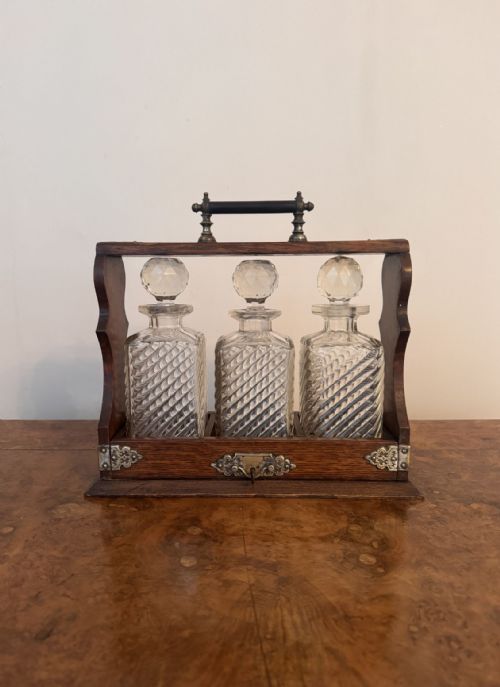
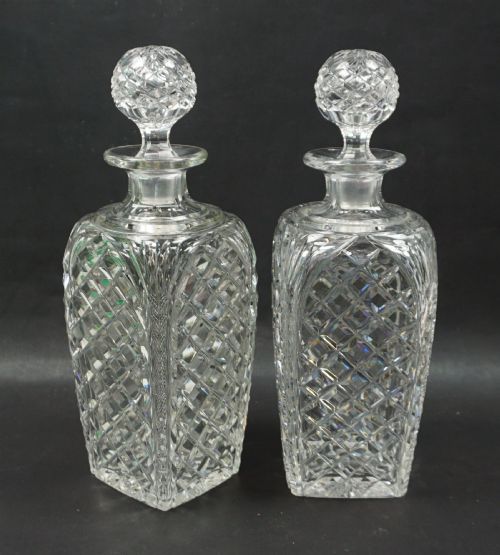
A vintage cut glass decanter covers vessels made from the nineteenth century through the Edwardian period and George V years, spanning styles from Regency pillar cuts to heavy Victorian spirit containers and Art Deco blue glass. Buyers examine standalone carafes, pairs of square-section tapered bottles, and larger ensembles housed within oak or coromandel tantalus frames alongside games compendiums.
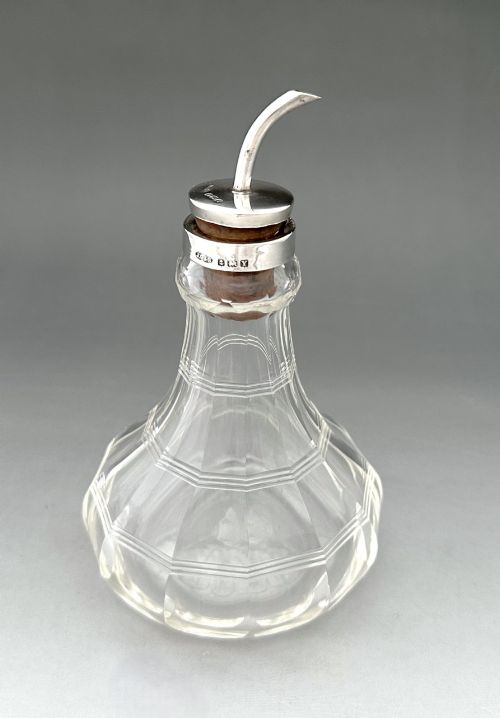
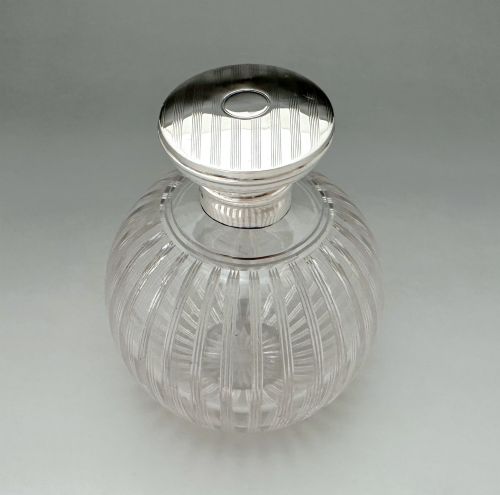
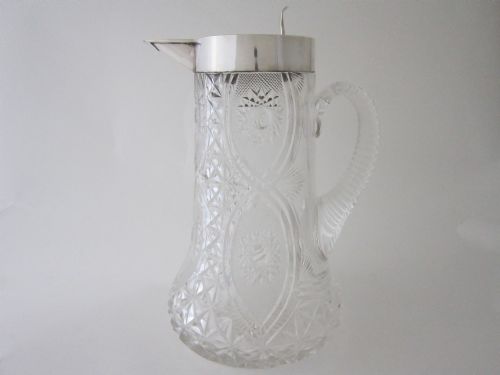
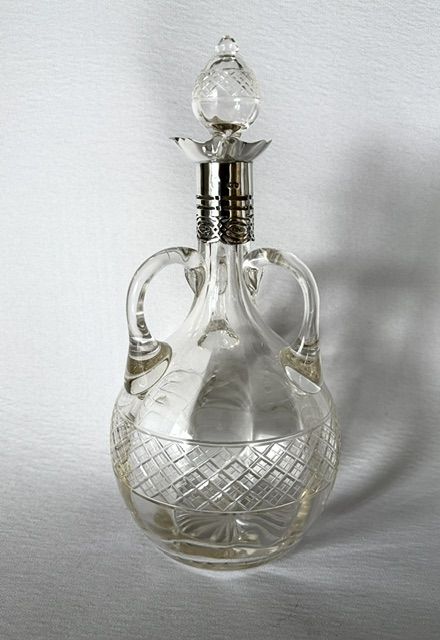
The most common examples on this page date from the Edwardian era and the late nineteenth century, frequently fitted with silver collars, mounts, or plated stands. Alongside traditional wine and spirits vessels, the selection encompasses claret jugs, scent bottles, cologne containers, and oil and vinegar sets.
Origins stretch across English workshops to Bohemian and Irish glasshouses, reflecting varied regional traditions in heavy crystal blowing and deep wheel cutting. Each piece serves either as a functional barware item or a decorative table centrepiece.
Materials and technique
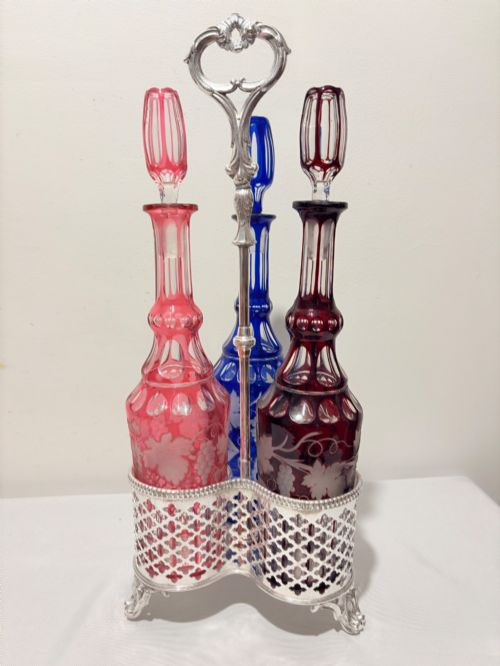
Vessels are formed from heavy lead crystal or standard glass, often utilising coloured overlays such as cranberry or cobalt blue over clear crystal to create sharp contrast when cut. Makers shaped the molten metal through blowing and pressing before applying cold-work techniques.
Artisans decorated the surfaces using wheel-cutting, pillar and prism cuts, and engraved decoration to achieve deep facets that refract light. Mounts, collars, and handles incorporate sterling silver, silver plate, or brass, secured firmly to the glass necks.
Listings feature items from the 1850s through the Art Deco period, incorporating lead crystal, sterling silver, and oak.
Standards of execution
The distinction between standard production and the finest work lies in the crispness and depth of the cutting, where superior pieces exhibit sharply defined facets with no blurring at the edges. The weight and clarity of the crystal itself determine the resonance and brilliance of the vessel.
The Vintage Cut Glass Decanter Glossary
- Tantalus
- A locking frame designed to secure decanters containing expensive spirits while still displaying the cut glass through wooden or metal bars. The locking mechanism prevents unauthorised access to the contents.
- Claret jug
- A pouring vessel specifically designed for serving red wine, usually featuring a hinged metal lid and a handle attached to a slender glass body. These often combine silver-plated mounts with heavy cut crystal.
- Pillar and prism cut
- A linear cutting style common on nineteenth-century decanters that creates flat, geometric planes along the body to maximise light refraction. It produces distinct optical effects as the vessel rotates.
- Cranberry over crystal
- A dual-layer glass technique where a thin layer of red glass is fused over a clear crystal base before being cut away to reveal the clear glass beneath. This method creates striking contrast in coloured glassware.
Vintage Cut Glass Decanter: Frequently Asked Questions
How do I date a cut glass decanter?
Dating relies primarily on the shape of the body, the style of the cutting, and the hallmarks found on any silver mounts. Victorian examples tend to be heavy with deep facets, while Edwardian pieces often feature lighter mounts and refined floral or geometric engraving.
Changes in stopper design and the presence of pontil marks on the base also help narrow down the period of manufacture, moving from nineteenth-century hand-finished bottoms to smoother twentieth-century production.
What is a tantalus set?
A tantalus is a secure wooden or metal cabinet or frame that holds two or three decanters in place with a locking top bar. It was originally designed to stop servants from sampling the master's expensive liquor while keeping the bottles proudly on display.
Many surviving examples incorporate storage for playing cards or games compendiums beneath the bottles, making them substantial pieces of nineteenth-century entertaining furniture.
Can I use antique decanters for serving wine?
Most antique decanters are safe for serving wine and spirits, provided they are thoroughly cleaned and inspected for any internal staining or residue. Lead crystal decanters should not be used to store liquids for long periods, but serving wine during a meal is entirely appropriate.
Hand washing is essential to protect both the old glass and any attached silver mounts from harsh detergents and thermal shock.
How do I care for silver-mounted decanters?
Silver collars and mounts require gentle cleaning with a specialised cloth to avoid abrasive contact with the surrounding glass. Care must be taken to keep polishing compounds away from the junction where the metal meets the glass.
When washing the interior, use warm water and bottle brushes rather than very hot water, which can stress antique glass.