
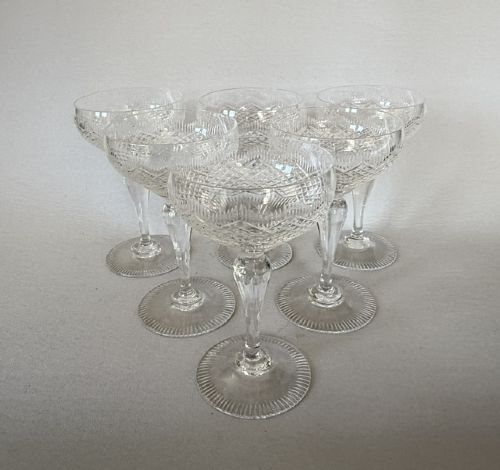
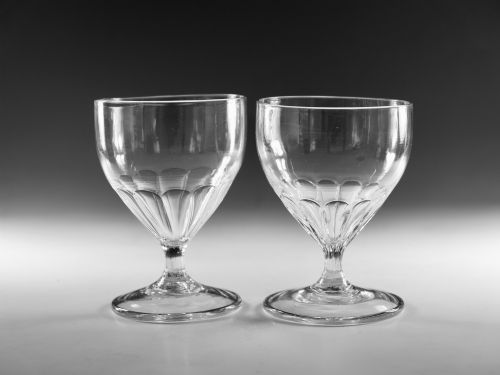

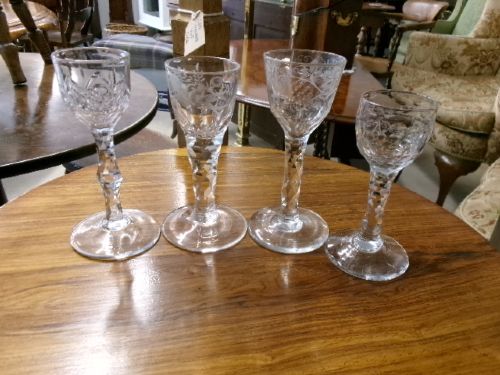
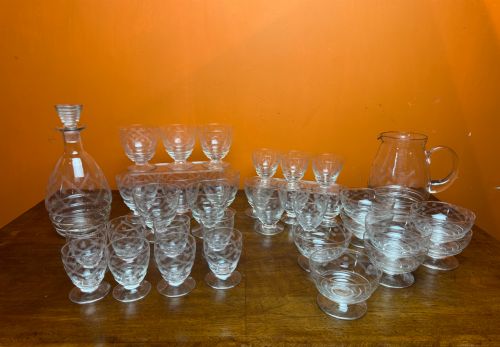
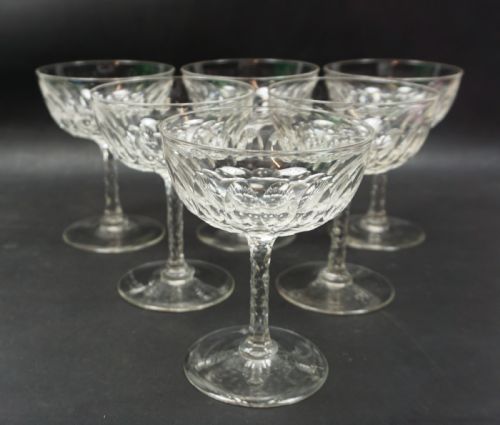


Vintage Cut Crystal Stemware
These vintage cut crystal stemware pieces bring brilliance to the table through centuries of refined glassmaking.
Vintage Cut Crystal Stemware
When you search for vintage cut crystal stemware, you encounter drinking vessels and service sets spanning from the eighteenth century through the twentieth century. These pieces encompass wine glasses, champagne coupes, hock glasses, and goblets originating from English, French, and Bohemian makers.
The selection on this page most frequently presents nineteenth-century Victorian examples alongside Edwardian and Art Deco suites. Forms range from single faceted wine glasses to large matching drinking services with engraved or cut decoration.
Materials and construction
The pieces listed utilise lead crystal, lead glass, and clear glass shaped through cutting, engraving, and facet work. Makers also employed cased glass techniques, layering coloured glass over crystal to achieve deep contrast when cut away.
Surface ornamentation relies on wheel-cutting, intaglio engraving, and acid treatment to create floral motifs, geometric facets, and gilded accents. Stems frequently feature faceted or knop designs supporting the decorated bowls above.
Listings feature lead crystal, cased glass, and clear glass across Victorian, Edwardian, and Art Deco periods.
Judging quality in cut crystal
Quality reveals itself in the crispness of the facet cuts and the weight and clarity of the crystal itself. Superior pieces demonstrate precise symmetry across matching sets and deep, clean incisions that catch the light sharply without blurring.
The complexity of the engraved or cased decoration distinguishes standard tablewares from workshop pieces. Master glasshouses achieved seamless colour overlays and delicate wheel-engraving that required exceptional control.
Baccarat·Saint Louis·Webb Corbett·Stevens and Williams·Moser
The Vintage Cut Crystal Stemware Glossary
- Lead crystal
- Glass containing a significant proportion of lead oxide, which increases weight, brilliance, and the refractive index. This material allows for deeper and sharper cutting than standard glass.
- Champagne coupe
- A shallow, broad-bowled stemmed glass designed originally for sparkling wine. The wide bowl showcases the clarity and surface cutting of the crystal.
- Hock glass
- A tall stemmed drinking vessel traditionally used for German white wine. These often feature coloured cased glass bowls cut back to clear crystal.
- Facet cut
- A surface pattern composed of multiple flat polished planes meeting at sharp angles. This technique maximises light reflection across the body of the glass.
- Intaglio
- A design carved into the surface of the glass rather than raised in relief. The recessed carving creates a subtle, frosted visual texture.
Vintage Cut Crystal Stemware: Frequently Asked Questions
How do I clean antique crystal?
Wash pieces by hand in warm water using a mild detergent, placing a towel in the bottom of the sink to prevent chipping. Avoid sudden temperature changes that can crack historical glass.
Dry and polish each piece immediately with a lint-free linen cloth to maintain the brilliance of the crystal facets.
Can I use these glasses daily?
These drinking vessels can certainly grace the dining table for special occasions, provided they are handled with care. Hand washing remains essential to preserve any fine engraving or gilding.
Store them securely on sturdy shelving with adequate space between stems to prevent accidental impacts.
How do I date cut crystal stemware?
Examine the form, weight, and cutting style of the piece alongside any pontil marks left on the base. Eighteenth-century examples often feature thicker lead glass and simpler facet stems, while Victorian and Edwardian pieces show more elaborate engraving and cased colours.
Matching sets with extensive suites typically point towards the later nineteenth and twentieth centuries, as uniform production methods advanced.
What is cased glass?
Cased glass consists of a core layer of clear or coloured crystal fused with one or more outer layers of contrasting glass. When the maker cuts through the outer layer, the base colour reappears in sharp relief.
This technique produces striking visual depth, particularly evident in green and cranberry hock glasses and champagne coupes.