


Vintage Curved Stool
These vintage curved stool designs combine functional seating with distinct period forms, offering character and utility for modern rooms.
Vintage Curved Stool
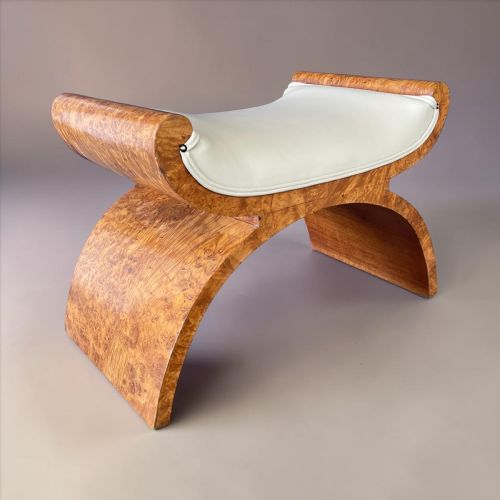
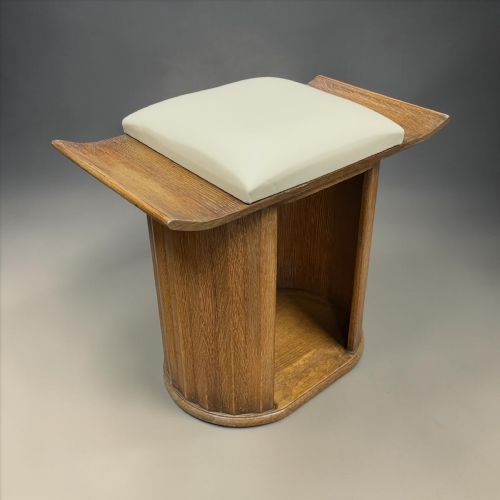
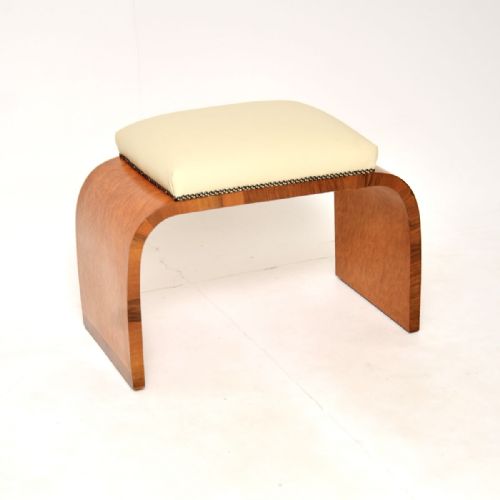
A vintage curved stool encompasses diverse forms ranging from Art Deco dressing table seats to Arts and Crafts saddle-seated chairs and African tribal artefacts. Buyers searching for a vintage curved stool encounter everything from 1930s walnut and birds eye maple frames to 19th-century bentwood and gilded wood pieces.
The selection on this page leans heavily towards 1930s Art Deco examples alongside earlier Victorian and Edwardian iterations. Dressing table stools and footstools dominate the current offerings, often featuring upholstered tops in leather, velvet, or fabric.
Origins vary widely across these listings, spanning English cabinetmakers, French styles, and African tribal traditions. This variety ensures that every vintage curved stool brings a distinct silhouette to domestic spaces.
Materials and Construction
Makers utilised a rich palette of timbers including oak, mahogany, burr walnut, birds eye maple, and sycamore to shape these frames. Wood bending techniques, particularly evident in bentwood production, allowed craftsmen to achieve fluid, organic radii without compromising structural integrity.
Upholstery methods involved durable leather, textured fabrics, and plush velvets, frequently paired with traditional stuffing. Gilt wood and polished finishes further highlight the grain and decorative qualities of the underlying timber.
Among the seating are surprising additions like a wine bar set and spiral library steps.
Assessing Quality and Execution
Superior examples demonstrate precision in timber selection, particularly where figured walnut or birds eye maple veneers display intentional grain matching. The crispness of carved details in styles such as Louis XVI or Arts and Crafts dictates the level of workshop proficiency.
Structural stability relies on the integrity of the joints and the original condition of bentwood frames or wooden supports. Finer pieces retain their integrity through robust joinery and careful preservation of original surfaces.
Harry and Lou Epstein·Thonet
The Vintage Curved Stool Glossary
- Art Deco
- A design style characterised by sleek geometric shapes, streamlined forms, and luxurious materials popular during the 1920s and 1930s. It frequently manifests in polished wood and curved silhouettes.
- Birds Eye Maple
- A figure in maple wood that resembles tiny, swirling eyes packed together. This prized veneer creates distinctive patterned surfaces on mid-century and decorative furniture.
- Bentwood
- Wood that has been heated and bent into curved shapes, famously utilised by manufacturers to create elastic and lightweight frames. This technique defines several classic seating forms.
- Bergere
- A type of enclosed upholstered armchair or stool featuring cane or wicker panelling. It provides a light, textured appearance to classical seating designs.
- Sycamore
- A dense hardwood often used in English cabinetmaking for its pale colour and fine grain. It accepts finishes cleanly, making it popular for dressing table furniture.
Vintage Curved Stool: Frequently Asked Questions
What periods do these stools date from?
The pieces span from the late nineteenth century through to the 1930s, encompassing Victorian, Edwardian, and Art Deco eras.
Each period brings distinct stylistic traits, from ornate gilt framing to streamlined modernism.
How do I identify an Art Deco stool?
Art Deco examples typically feature streamlined curved lines, figured walnut or birds eye maple veneers, and polished finishes.
They often serve as dressing table stools designed for interwar interiors.
Are the upholstery covers original?
Upholstery varies, with some pieces retaining older textiles or leather while others feature replacement covers.
Listings specify whether elements like top covers are recent updates to historical frames.
What wood types are most common?
Oak, mahogany, walnut, and sycamore appear frequently across the different styles and centuries.
Exotic veneers like birds eye maple are also used for decorative impact on 1930s pieces.