

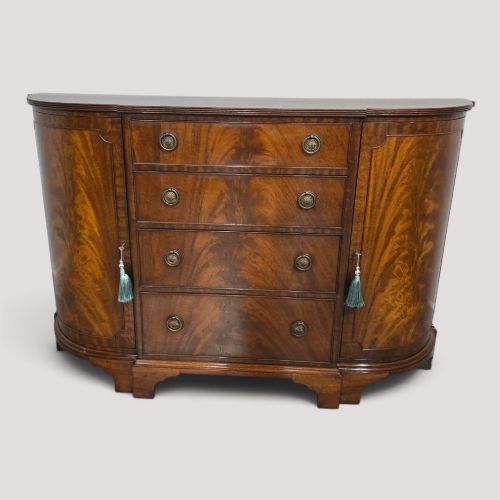
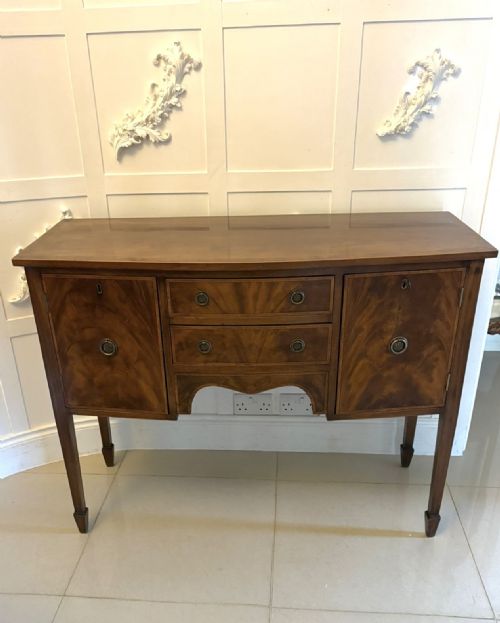
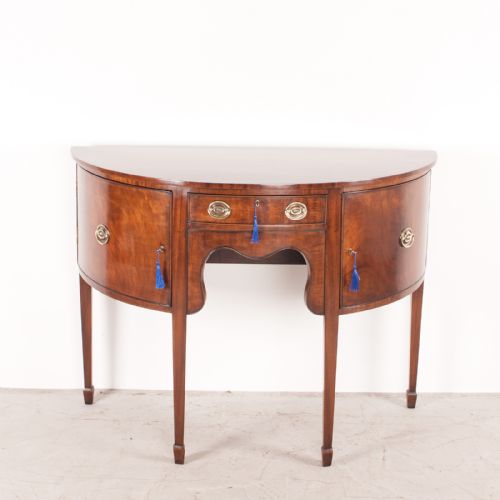


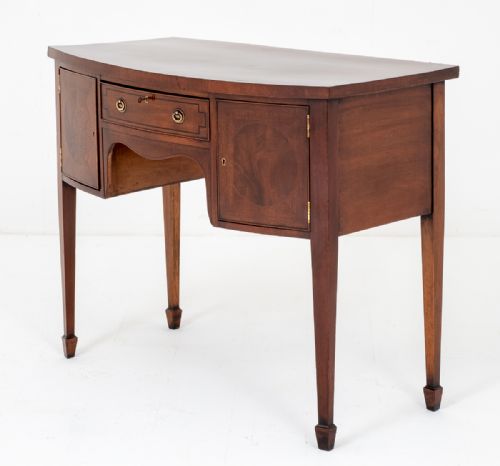


Vintage Curved Front Sideboard
A vintage curved front sideboard brings graceful lines and rich timber tones to a dining room or hallway.
Vintage Curved Front Sideboard
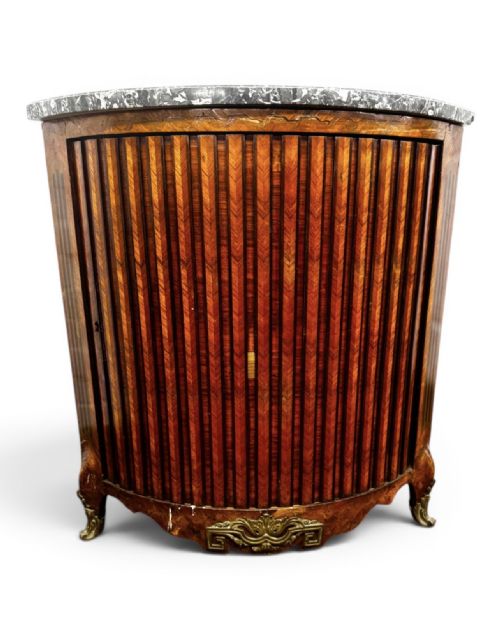
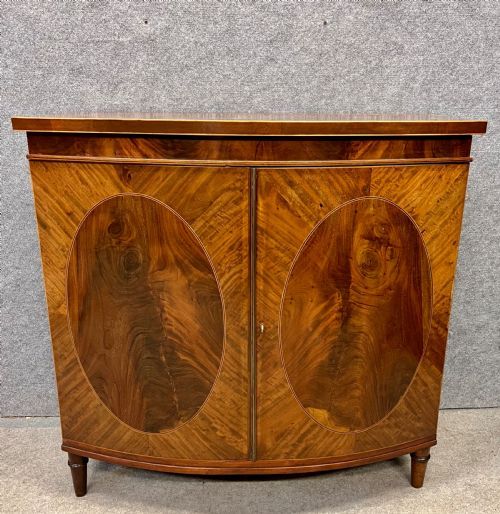
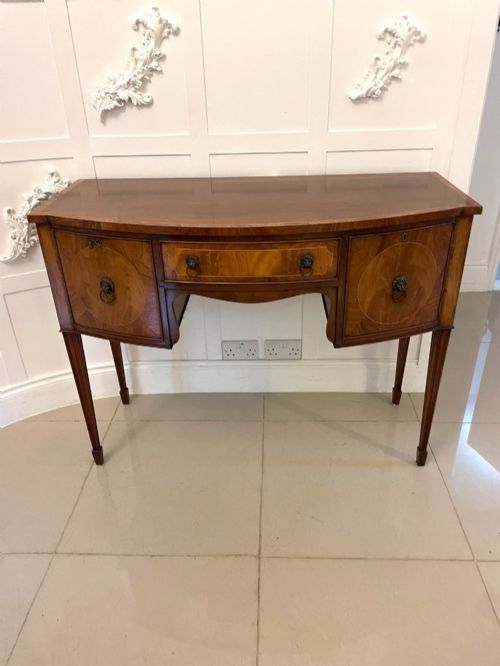
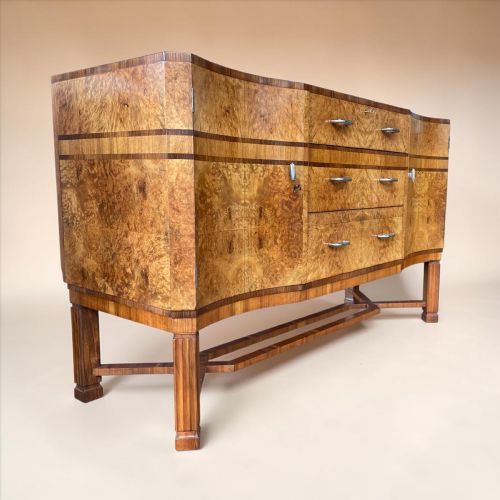
A vintage curved front sideboard serves as a commanding yet functional dining room storage piece, designed with sweeping bow, serpentine or demi-lune profiles. These forms soften the rigid corners of a room while offering generous capacity for china, linen and silver.
The selections span distinct historical eras, ranging from Georgian and Regency formal dining pieces to Edwardian inlays and Art Deco interpretations. Mahogany and walnut predominate, often enriched with satinwood inlay or striking burl veneers.
Buyers encounter variations such as low credenzas, compact bowfront cabinets and grand serpentine serving tables. Each configuration reflects the aesthetic priorities of its period, from the geometric discipline of the eighteenth century to the streamlined curves of the nineteen-thirties.
Materials and construction methods
Cabinet makers built these pieces using solid timbers like mahogany and walnut, frequently applying figured veneers such as flame mahogany or burr walnut to prominent drawer fronts and doors. This technique exploited the natural grain patterns of the wood to create decorative movement across the curved surfaces.
Detailing often included delicate satinwood stringing, marquetry motifs and cast brass hardware or ormolu mounts. The curved carcasses required precise carpentry to shape timber to tight radiuses without compromising structural integrity.
Vintage Curved Front Sideboard Retail Price Guide 2026
Typical asking prices for vintage curved front sideboard among the pieces listed under this phrase on Sellingantiques today, from the lower quarter to the upper quarter. They describe what is for sale here now, not the wider market.
Current listings feature pieces spanning the eighteenth century through to the nineteen-thirties, utilising mahogany, walnut and brass.
Assessing quality and craftsmanship
Superior examples distinguish themselves through the selection of timber veneers, where grain patterns mirror symmetrically across central doors and drawers. The handling of the curve reveals the maker's skill, with tight, uncompromised radiuses and seamless joints.
Secondary woods used in drawer linings, the crispness of inlaid stringing and the integration of original brass or chrome hardware separate high-standard pieces from simpler utilitarian storage.
The Vintage Curved Front Sideboard Glossary
- Serpentine
- A shaped furniture front featuring a convex centre flanked by concave curves, creating an undulating silhouette. This complex shape demands advanced woodworking skill.
- Bowfront
- A convex, outwardly curving front profile common on nineteenth-century sideboards and chests. It softens the rectangular outline of the cabinet.
- Demi-lune
- A half-moon shape used for smaller sideboards and cabinets designed to sit flush against a wall. This form gained popularity during the Georgian and Edwardian periods.
- Credenza
- A low-standing cabinet or sideboard, frequently associated with Victorian or continental designs. They often incorporate glass doors and decorative ormolu mounts.
- Veneer
- A thin layer of figured wood applied over a stable secondary timber base. Flame mahogany and burr walnut veneers provided decorative richness.
Vintage Curved Front Sideboard: Frequently Asked Questions
Where should I place a curved sideboard?
These pieces suit dining rooms, grand hallways or spacious living areas where their curved profiles can be appreciated without blocking natural walkways.
Ensure there is sufficient clearance for doors and drawers to open fully against the contour of the front.
How do I clean mahogany surfaces?
Dust regularly with a soft, dry cloth to prevent particulate buildup on the polished timber.
Apply a quality beeswax periodically to nourish the wood and maintain the deep lustre of the polish.
Are these sideboards suitable for modern dining rooms?
The warm tones of mahogany and walnut blend easily with contemporary interiors, adding historical character and texture.
Their substantial storage capacity makes them practical for holding modern tableware and linens.
How do I distinguish Georgian from Edwardian pieces?
Georgian pieces generally exhibit heavier timber construction and restrained classical proportions dating from the eighteenth century.
Edwardian interpretations often feature lighter frames, delicate satinwood inlay and influences from earlier revival styles.