





Vintage Curtain Tiebacks
These vintage curtain tiebacks hold heavy drapery in place, bringing period elegance and rich metallic or wooden texture directly to your windows.
Vintage Curtain Tiebacks
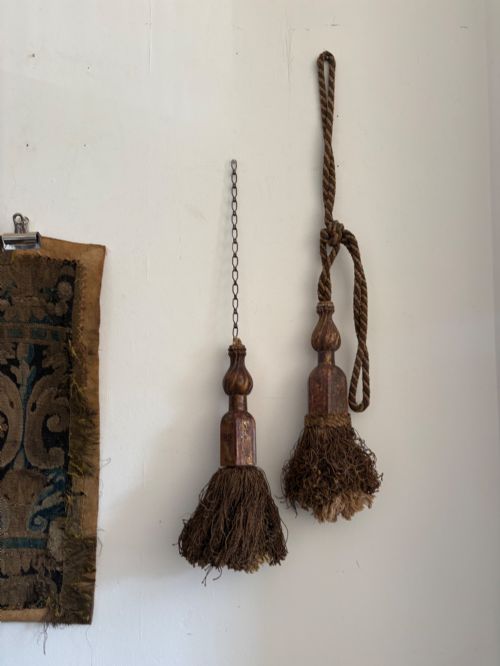
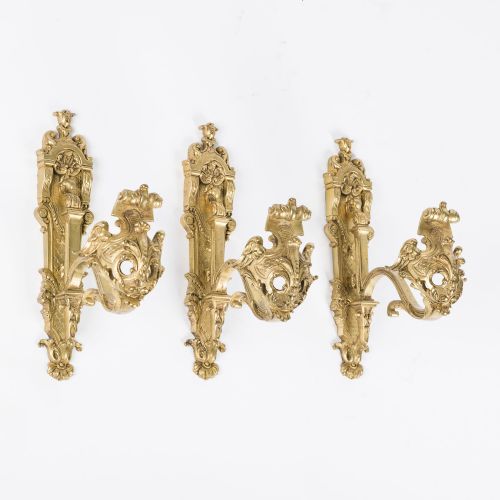
Vintage curtain tiebacks are functional window hardware designed to hold back heavy drapery panels, appearing in forms ranging from decorative wall hooks to substantial pull pieces. When exploring vintage curtain tiebacks on this page, buyers most frequently encounter matched pairs originating from the eighteenth and nineteenth centuries.
The selections span distinct European traditions, including French Rococo Revival, Louis XVI, French Baroque, and Venetian designs. Materials range from cast brass and ormolu to enamel, copper, and giltwood, reflecting the decorative priorities of grand domestic interiors.
How they were made
Metal pieces such as brass, ormolu, and copper are cast and chased to create intricate sculptural relief, often finished with applied gilding. Enamel elements add colourful glazed surfaces to metal backplates.
Wooden examples utilise carved giltwood shaped into elaborate scrolls and decorative motifs, coated in gold leaf to achieve a lustrous metallic sheen.
The listings span the eighteenth and nineteenth centuries, featuring periods such as Georgian, Victorian, and eighteen-eighty.
What varies in quality
The standard of chasing and surface finish largely separates standard hardware from superior examples. Finely detailed casting preserves sharp sculptural depth in floral, animal, or scroll motifs rather than smoothing into softened contours.
The integrity of the original gilding or enamel finish dictates visual richness. Intact fire gilding or well-preserved ormolu retains a warm, deep luminescence that lesser plated or painted surfaces fail to match.
The Vintage Curtain Tiebacks Glossary
- Ormolu
- Finely ground high-carat gold applied to a bronze base using a mercury amalgamation process. This technique creates a durable, warm metallic finish characteristic of fine French decorative hardware.
- Giltwood
- Timber, typically carved gesso-coated wood, treated with gold leaf or metallic paint. It provides a lightweight alternative to solid cast metal while offering a brilliant reflective surface.
- Rococo Revival
- A nineteenth-century design movement drawing on eighteenth-century asymmetrical scrollwork, naturalistic curves, and ornate shell motifs. Pieces in this style display exuberant, flowing ornamentation.
- Wall Hooks
- Protruding metal brackets fixed directly beside a window frame to secure drapery loops. They function alongside direct tiebacks to manage heavy fabric swags.
Vintage Curtain Tiebacks: Frequently Asked Questions
Are these tiebacks strong enough for heavy curtains?
Many examples are cast in solid brass, bronze, or ormolu, providing substantial structural strength for thick velvet or damask drapes. The mounting method ultimately determines weight capacity rather than the decorative front.
Check the rear fixing plate and projection length to ensure the hardware accommodates the volume of fabric without straining the wall attachment.
How should I clean antique ormolu and brass?
Dust the surfaces gently with a soft, dry cloth to remove accumulated particles. Avoid commercial metal polishes or abrasive cleaners, which strip delicate ormolu surfaces and historic gilding.
Preserve the patinated finish by applying only gentle, non-chemical dusting methods suited to antique metals and gilded wooden surfaces.
How do I distinguish French nineteenth-century styles?
French nineteenth-century pieces often revive earlier Baroque or Rococo motifs through crisp cast ormolu or gilded brass. Look for characteristic asymmetry, C-scrolls, and naturalistic flora that define Revival aesthetics. Nineteeth-century Venetian work frequently employs carved giltwood instead of cast metal, leaning towards grand scale and dramatic regional scrollwork.