
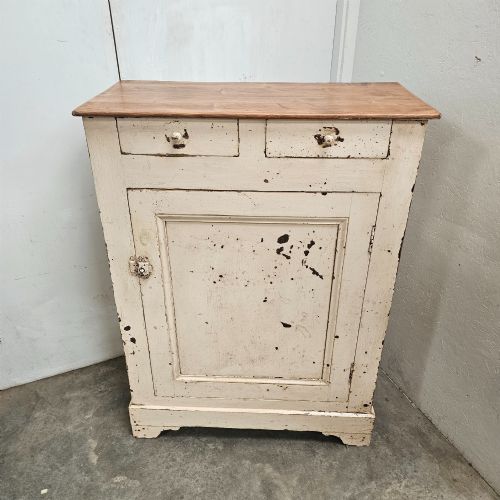
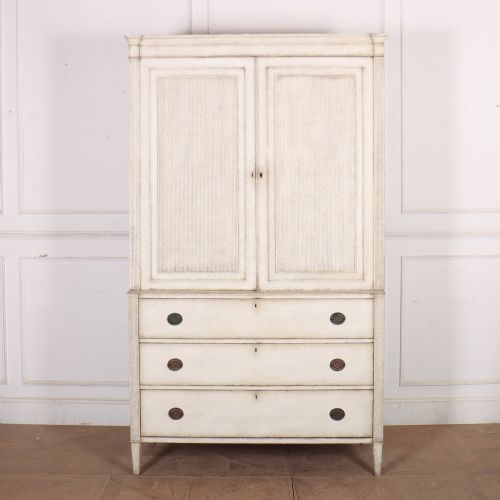
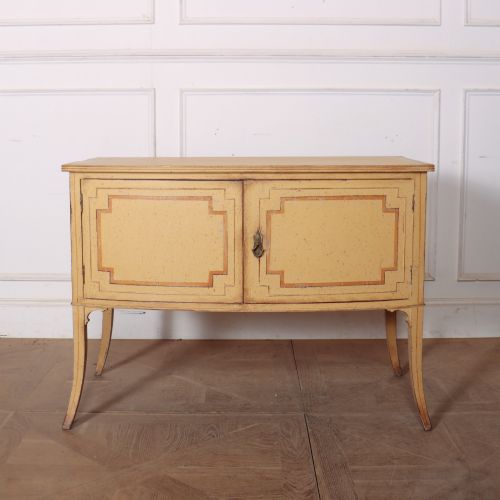
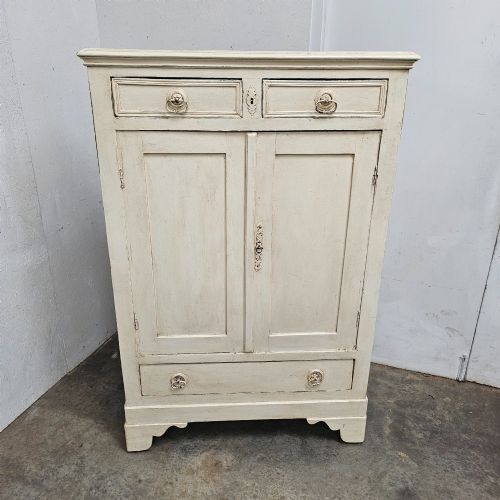
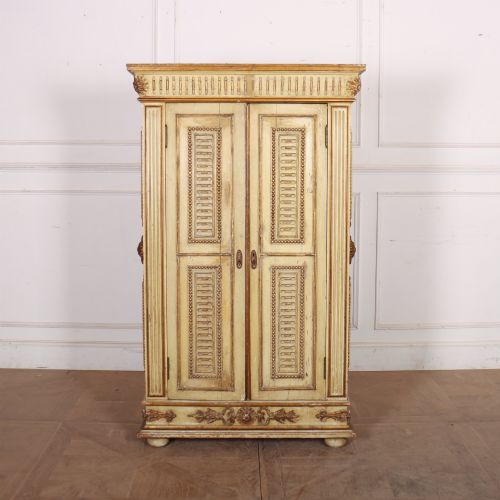
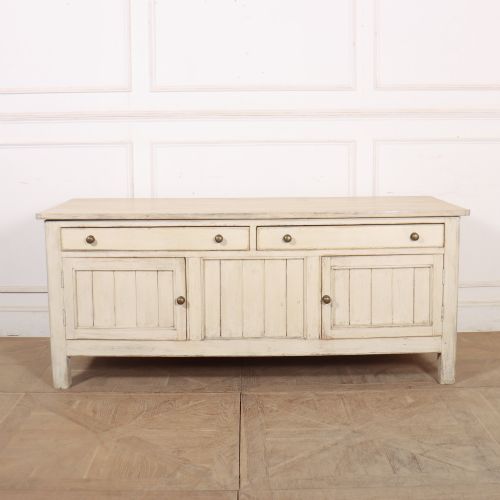


Vintage Cream Storage Cupboard
A vintage cream storage cupboard brings soft neutral warmth and honest utility to a room.
Vintage Cream Storage Cupboard
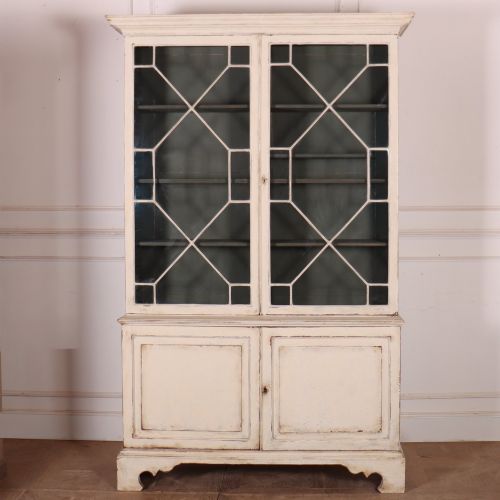
When searching for a vintage cream storage cupboard, you encounter a variety of practical forms ranging from tall linen cupboards and housekeepers cupboards to lower dresser bases, side cabinets, and glazed bookcases. These pieces originate across diverse regions including England, France, Italy, Hungary, and Scandinavia, reflecting distinct rural and provincial traditions.
You are most likely to meet painted pine and timber pieces spanning the eighteenth century through to the Victorian era and the late nineteenth century. Styles lean heavily towards English and continental country aesthetics, alongside provincial farmhouse designs and occasional neoclassical revival or shop fitting forms.
How they were made
Construction relies primarily on sturdy timber such as pine and painted wood or metal, shaped into functional storage furniture built for daily domestic use. Joinery and structural framing support heavy shelving, drawers, and doors designed to hold household linens, provisions, and tableware.
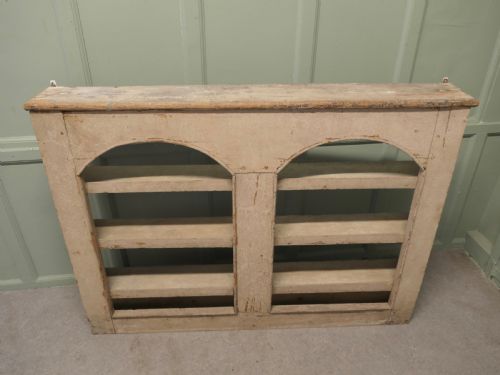
Surfaces are finished with paint, often historic or original cream treatments, sometimes complemented by brass or iron hardware and glass panels in glazed doors. Distressed patination develops naturally through decades of use, preserving the character of the underlying timber.
The inventory includes English country pieces alongside French provincial, Scandinavian, and Italian styles.
What varies in quality
Quality in these storage cupboards rests on the integrity of the original timber construction and the character of the painted surface. Pieces that retain authentic early paint layers offer a depth of visual texture that later repainting lacks.
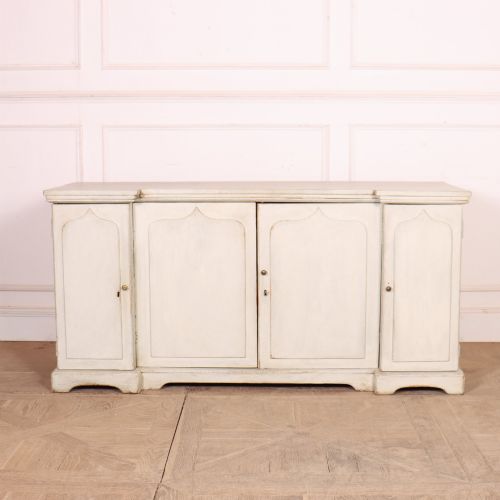
Proportion and scale also distinguish finer examples, particularly where architectural details like breakfront facades, glazed door panels, or numerous functional drawers are executed with balanced restraint.
The Vintage Cream Storage Cupboard Glossary
- Dresser base
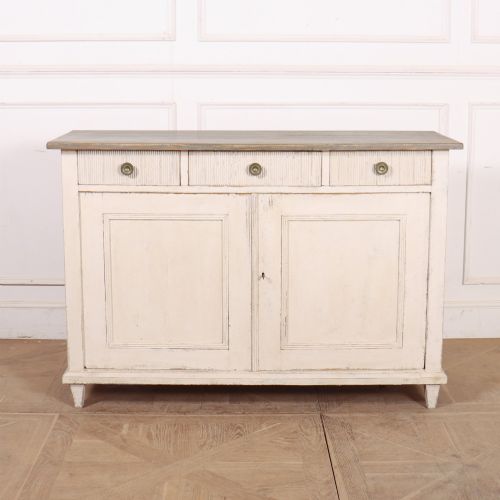
- The lower portion of a kitchen or dining room dresser, featuring drawers and cupboards beneath a solid top surface. These serve well as sideboards.
- Confiturier
- A small French jam cupboard designed to store jars and preserves. It usually has a single door and a compact footprint.
- Breakfront
- A cabinet design where the central section projects forward from the flanking wings. This creates visual depth and architectural interest.
- Glazed
- Fitted with glass panes in the doors. This allows contents to be displayed while remaining protected from dust.
Vintage Cream Storage Cupboard: Frequently Asked Questions
Where should I place a cream storage cupboard?
These cupboards suit dining rooms, kitchens, hallways, or living spaces where they provide substantial storage without overwhelming the room. Their neutral cream tones blend easily with various interior backgrounds.
Ensure you measure both floor space and ceiling height before choosing a tall linen or housekeepers cupboard, as provincial pieces can be surprisingly deep and tall.
How do I care for painted pine furniture?
Dust regularly with a soft, dry cloth and avoid harsh chemical cleaners that might damage historic painted surfaces. Keep the timber away from direct heat sources to prevent warping.
Wax or gentle soap can be used sparingly depending on the specific finish of the paint and wood underneath.
What is the difference between a buffet and a sideboard?
Buffets and sideboards both provide surface space and enclosed storage for dining utensils and servingware. Historically, buffets often stood slightly taller and were associated with serving food.
In practical modern use, the terms frequently overlap depending on the specific continental or English workshop tradition of the piece.
How can I tell the age of a painted cupboard?
Age is indicated by construction methods, timber choice such as solid pine, and the nature of the paint layers. Hand-cut joints and forged iron or brass hardware often point towards earlier periods.
Wear patterns around handles and hinges reflect genuine age and decades of household use.