
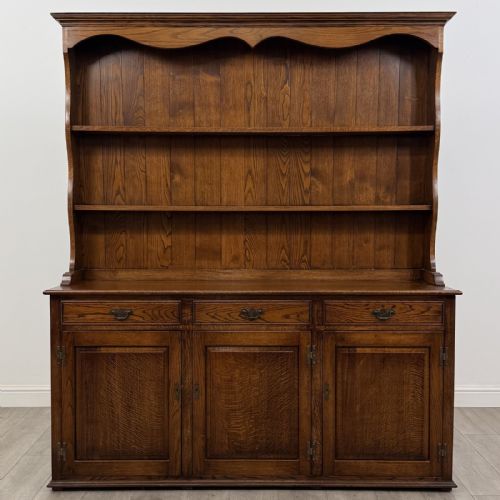
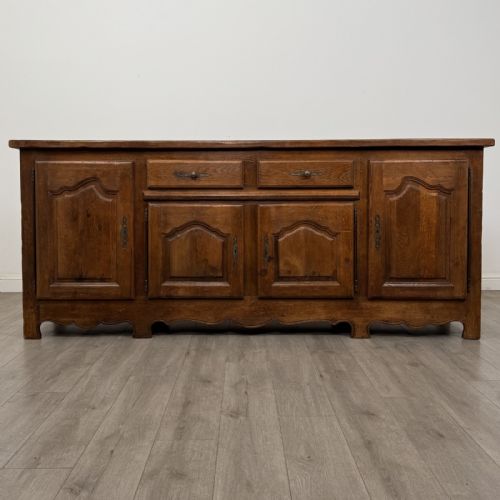
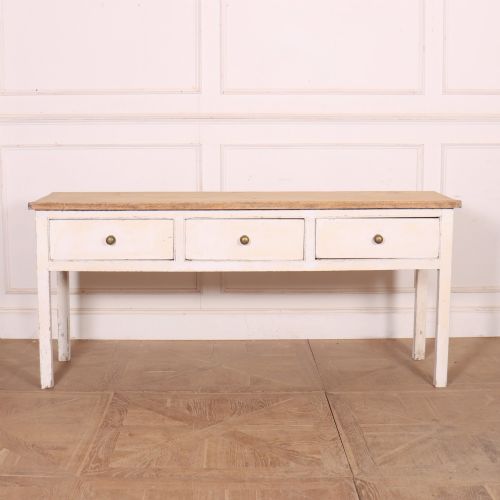
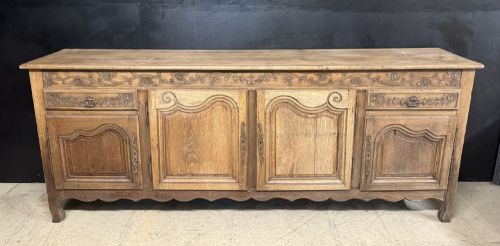
Vintage Country Buffet
A vintage country buffet anchors a kitchen or dining room with practical storage and honest utility, shaped by generations of domestic service.
Vintage Country Buffet
A vintage country buffet encompasses a range of robust storage furniture designed for food preparation and service in domestic settings, often categorised alongside dresser bases and sideboards. These utilitarian forms emerge most frequently in oak and pine from the eighteenth and nineteenth centuries, spanning English country workshops and continental provincial centres.
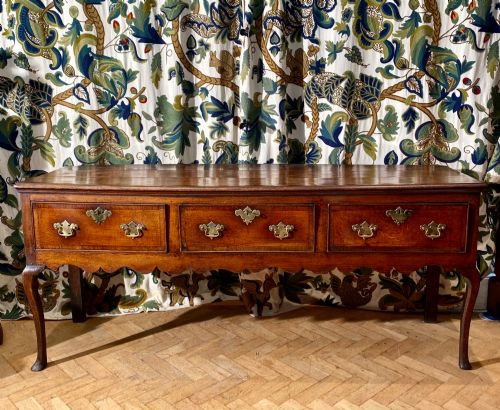
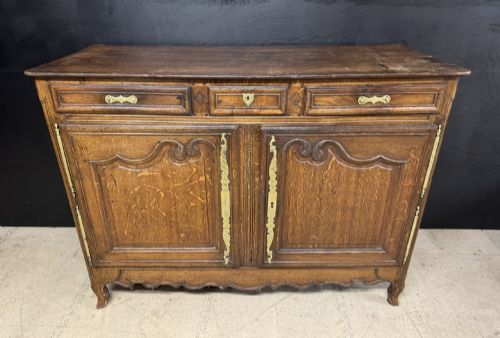
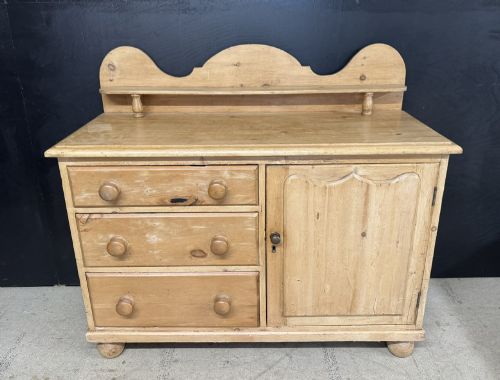
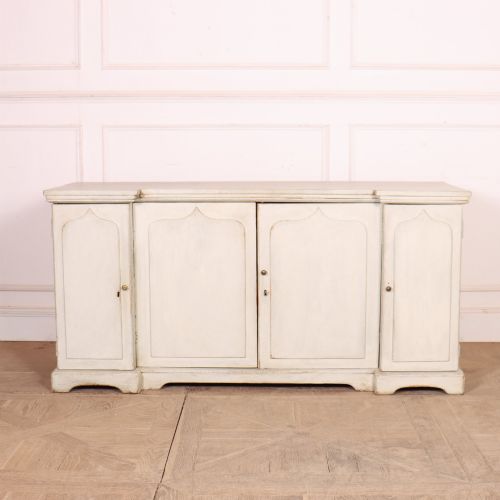
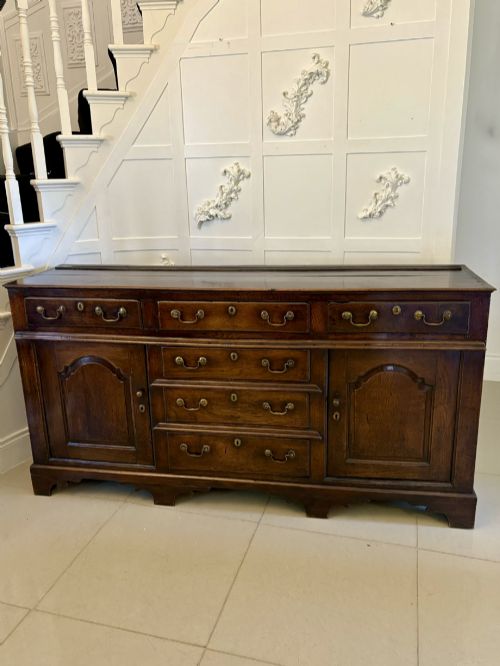
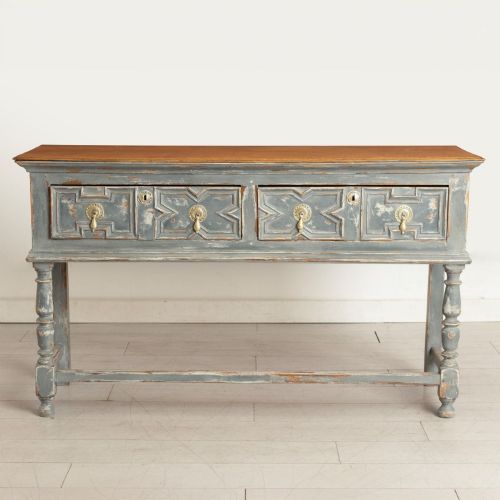
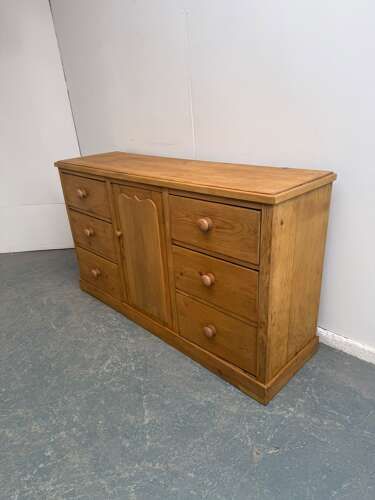
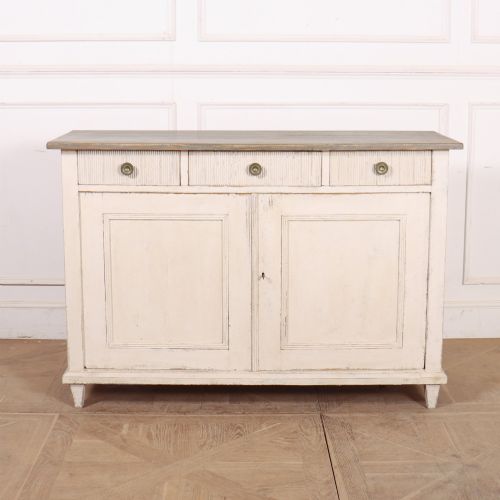
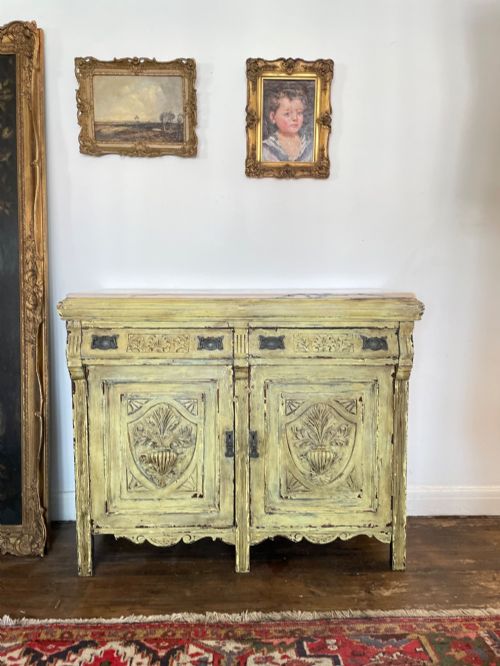
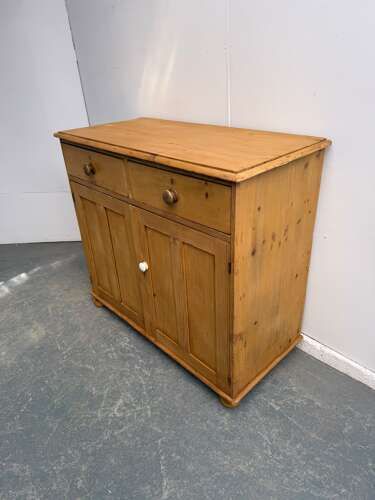
The pieces appearing on this page present as low cabinets with doors and drawers, potboard bases, and marble-topped enfilades from periods such as the Victorian era and the eighteenth century. Buyers encounter vernacular styles including French Provincial, Georgian Country, and English Country, reflecting regional domestic traditions.
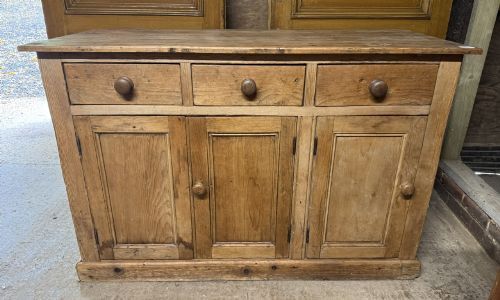
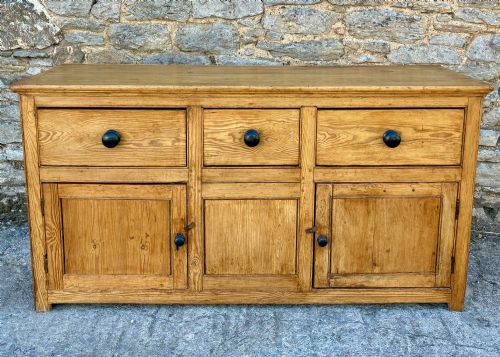
Forms vary from smaller pine cupboards to large breakfront dresser bases and carved oak sideboards. This selection offers substantial timber construction intended for daily use rather than formal display.
How they were made
Construction relies primarily on solid timbers such as oak, pine, cherrywood, and mahogany, assembled with traditional joinery suited to heavy daily domestic service. Carcases often feature pegged mortise and tenon joints, while drawer construction utilises hand-cut dovetails.
Surface treatments vary from waxed finishes that preserve natural grain to original paint applications and marble tops. Iron and brass hardware secure doors and drawers, contributing to the functional durability of each piece.
Several pieces arrive bearing the rustic charm of French barn finds, complete with generations of kitchen flour settled deep in the corners.
What varies in quality
Quality rests upon the integrity of the timber and the preservation of original surfaces, whether unpainted waxed grain or early painted finishes. Pieces retaining their original hardware and structural stability command greater interest.
Proportion and regional character distinguish simpler utilitarian items from finer examples attributed to specific provincial traditions. The integration of period elements, such as marble tops on continental enfilades, influences the overall character of the piece.
The Vintage Country Buffet Glossary
- Buffet
- A low sideboard or cabinet used for storing and serving food. These pieces typically feature a combination of doors and drawers beneath a flat top.
- Dresser base
- The lower section of a kitchen dresser, functioning as a standalone sideboard with drawers and cupboards. They frequently include potboards or open shelving space below.
- Enfilade
- A long sideboard or buffet common in French provincial dining rooms. They provide extensive low storage with multiple doors.
- Potboard
- An open slatted lower shelf incorporated into dresser bases and sideboards. Historically, this surface stored heavy pots and culinary vessels.
- Breakfront
- A cabinet design where the central section projects forward from the flanking cupboards. This configuration adds architectural depth to larger sideboards.
Vintage Country Buffet: Frequently Asked Questions
What is a vintage country buffet?
A vintage country buffet is a sturdy storage cabinet used historically for food preparation and serving in rural homes. These pieces combine cupboards and drawers in solid timbers like oak and pine.
They serve today as practical sideboards in kitchens and dining rooms, offering substantial surface space and internal storage capacity.
How do I identify the period?
Dating relies on construction methods, timber choice, and design characteristics associated with specific eras like the eighteenth century or Victorian period. Hand-cut dovetails and pegged joints indicate earlier vernacular manufacture.
Later nineteenth and early twentieth century pieces often display machine-sawn elements alongside traditional hardware. Regional styles also offer clues to the origin and date of the furniture.
Where were these buffets made?
These pieces originate from rural workshops across Britain and continental Europe, including French provincial regions and Scandinavian districts. Local timber availability dictated whether a maker used native oak, pine, or cherrywood.
Regional vernacular traditions shaped the specific proportions and decorative details found on English country house and continental pieces.
How do I care for waxed pine?
Waxed pine requires periodic application of natural beeswax to nourish the timber and maintain a protective barrier against moisture. Regular dusting with a soft cloth prevents accumulation.
Avoid placing these pieces near direct heat sources or strong sunlight, which can dry out the historic wood and cause the finish to crack.