
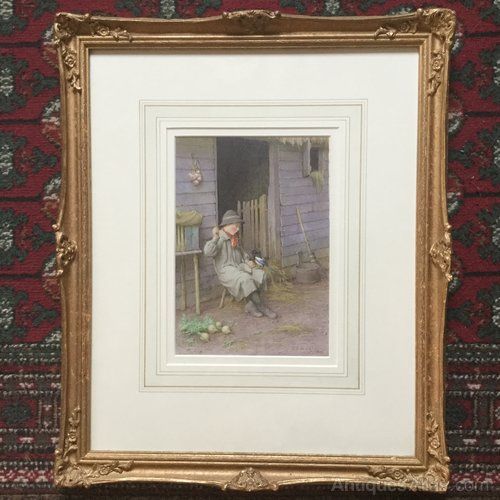


Vintage Cottage Scene Picture
A vintage cottage scene picture captures rural charm on paper or canvas, offering a warm window into traditional countryside life.
Vintage Cottage Scene Picture
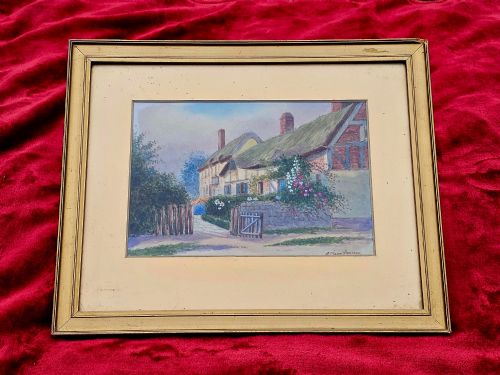
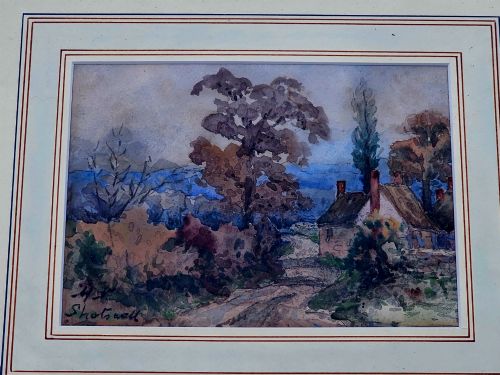
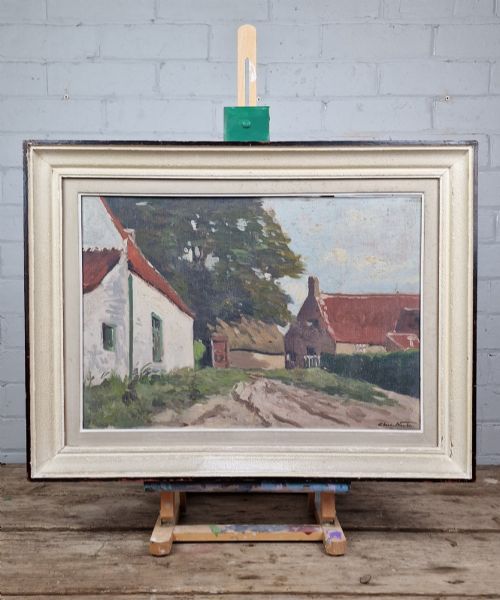
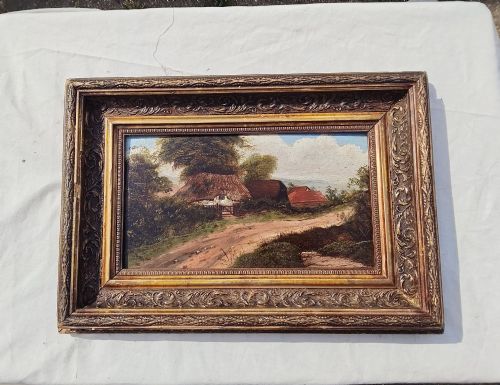
A vintage cottage scene picture represents rural domesticity through media ranging from delicate works on paper to textured oils. These artworks typically depict thatched houses, country gardens, and village streets rooted in past centuries.
The version most commonly met on this page is the watercolour painting originating from the Victorian or Edwardian periods, frequently framed under glass. Such pieces rely on soft washes to render pastoral tranquility and vernacular architecture.
Buyers also encounter oil paintings on canvas or board, alongside mixed media representations spanning into the mid-twentieth century. These later works maintain the rustic focus while employing bolder handling and varied colour palettes.
Materials and technique
Artisans applied watercolours to paper using layered translucent washes to capture natural light upon stone and thatch, often finishing details with fine ink or pencil. These watercolours require careful framing behind glass to protect the absorbent surface from atmospheric moisture.
Oil painters utilised ground pigments suspended in drying oils applied to canvas, wood panels, or card, building thick impasto or smooth glazes. Gilt wood frames frequently complement these oil works, adding a reflective boundary that isolates the rural subject.
The inventory combines fine art paintings, watercolours, and framed artwork depicting English and Welsh country scenes.
Distinctions in quality
Quality rests upon the sureness of the draftsmanship and the artist's ability to render light and spatial depth within a vernacular setting. Stronger compositions convey the texture of weathered stone and organic foliage with economy and precision.
The handling of atmospheric perspective separates accomplished regional works from generic decorative output. Superior examples demonstrate attentive brushwork that captures specific regional architecture rather than relying on formulaic pastoral clichés.
Charles Houben·Charles Edward Wilson·Lilian Stannard·David Woodlock·Arthur Claude Strachan·Walter Henry Sweet·Thomas Nicholson Tyndale·Henry Silkstone Hopwood
The Vintage Cottage Scene Picture Glossary
- Watercolour
- A painting method where fine pigment is suspended in a water-soluble binder. The resulting works are translucent and traditionally mounted under glass.
- Crystoleum
- A vintage method of applying a hand-coloured print to the inside of concave glass and dissolving the paper backing. This technique creates a luminous, three-dimensional photographic painting.
- Impressionism
- An art style focused on accurate depiction of light in its changing qualities. Practitioners use small, thin yet visible brush strokes to suggest movement and atmosphere.
- Gilt wood
- Wood coated with a thin layer of gold leaf or gold paint. Frames utilising this finish add warmth and historical context to traditional paintings.
Vintage Cottage Scene Picture: Frequently Asked Questions
How do I hang a watercolour safely?
Mount watercolours away from direct sunlight to prevent the pigments and paper from fading over time. Utilise professional framing with acid-free backing boards to protect the fragile paper.
Ensure the room maintains stable humidity levels to avoid warping the paper or encouraging mould growth behind the protective glass.
What periods do these artworks cover?
The selection spans from the nineteenth century through the Edwardian era and into the mid-twentieth century. Victorian and Edwardian examples predominate, showcasing traditional rural architecture.
Later pieces extend into the nineteen-fifties and sixties, reflecting shifting artistic interpretations of the English countryside.
Are these paintings original artworks?
The inventory consists primarily of original watercolours and oil paintings created by named and regional artists. Each piece reflects the individual hand of its creator through distinct brushwork.
Occasional lithographs or specialty items like crystoleums provide alternative vintage methods of reproducing or enhancing pastoral imagery.
How do I clean an old oil painting?
Dust surfaces gently with a soft, dry brush to remove loose particles without disturbing the pigment or canvas. Avoid using water, household cleaners, or chemical solvents on the paint layer.
Consult a professional conservator if the canvas requires deep cleaning or if the varnish shows signs of yellowing or cracking.