
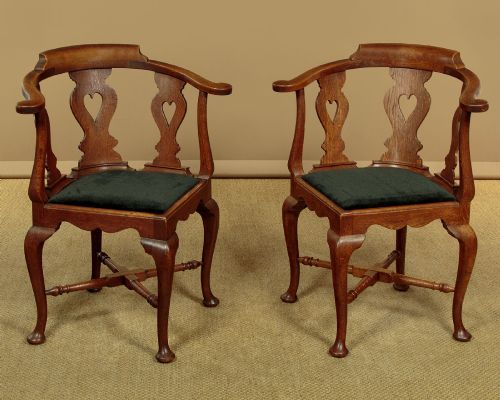


Vintage Corner Tub Chair
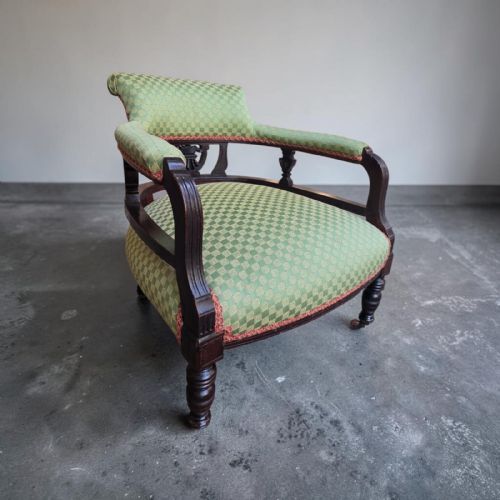
These vintage corner tub chairs wrap around a room in curved timber and sprung seats, offering a neat fit for awkward angles.
Vintage Corner Tub Chair
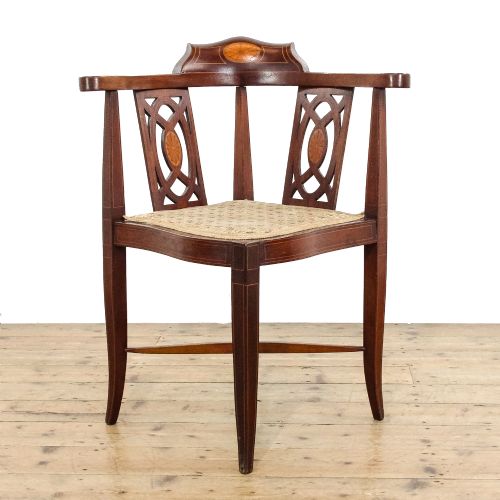
A vintage corner tub chair provides compact seating designed specifically to fit into room angles while offering a curved backrest that wraps around the user. These pieces appear across several periods, most commonly taking the form of Edwardian mahogany models or slightly earlier Victorian examples.
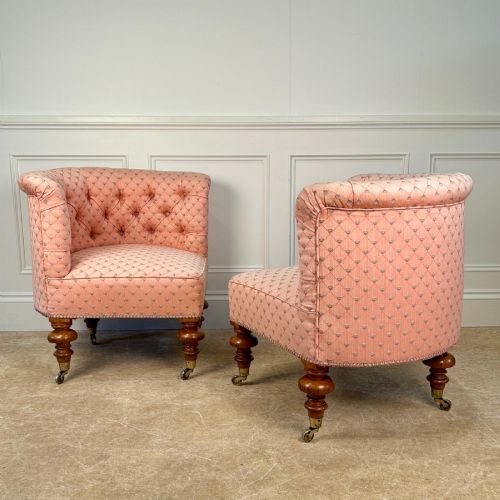
The selection here includes occasional chairs, accent armchairs, and matching pairs or sets intended for salons and parlours. Makers of the time utilised sturdy frames and curved rails to create a distinct silhouette that stands apart from standard square seating.
Most examples originate from the late nineteenth century and the early decades of the twentieth century. Buyers encounter variations in timber and upholstery, ranging from plain mahogany frames to intricately inlaid satinwood and boxwood details.
How they were made
Cabinetmakers constructed the frames using solid timbers such as mahogany and oak, often shaping the curved back rails from steam-bent wood or multi-layered construction. Inlaid versions frequently incorporate boxwood and satinwood stringing to decorate the crest rails and splats.
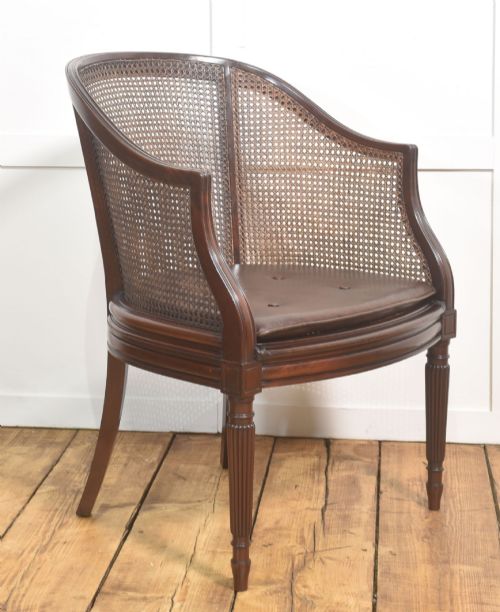
Support elements vary between solid wood panels, turned spindles, and woven cane inserts. Upholstered variants rely on traditional stuffing and textile coverings, while brass castors occasionally appear on the feet of heavier armchairs.
Some nineteenth century corner chairs arrive wearing rich purple velvet, proving that Victorians enjoyed a bold splash of colour.
What varies in quality
The standard of timber selection and the precision of the joinery set finer pieces apart from standard workshop output. Superior examples display crisp inlay work and carefully balanced proportions in the curved back assembly.
Original elements such as cane panels and decorative brass fittings indicate higher grade production. The integrity of the frame construction dictates the long-term stability of the chair.
Miles & Edwards
The Vintage Corner Tub Chair Glossary
- Tub chair
- A seating form featuring a continuous curved back and armrest rail that resembles the shape of a tub. This design provides enclosed support for the user.
- Corner chair
- An armchair designed with a diagonal orientation so the back fits directly into the corner of a room. The backrest typically forms a right angle supported by turned columns.
- Inlay
- A decorative technique where contrasting woods like satinwood or boxwood are inserted into recesses within the primary mahogany surface. This creates flat patterns and decorative borders.
- Cane
- Woven rattan material used to form openwork panels in seat backs and panels. It provides a lightweight and flexible surface.
- Bergere
- An enclosed upholstered armchair with wooden frames, sometimes featuring cane sides and back panels. French Provincial examples often utilise this style.
Vintage Corner Tub Chair: Frequently Asked Questions
Where should I place a corner tub chair?
These chairs find a natural home in unused room angles, entryways, and bedroom corners where standard furniture leaves empty space. Their curved backs allow them to tuck neatly into boundaries without blocking pathways.
They also function well as occasional seating in living rooms, pairing easily with small tables to create compact reading spots.
How do I date an Edwardian corner chair?
Edwardian pieces generally date between nineteen hundred and nineteen ten, often featuring lighter mahogany timbers and delicate boxwood stringing. They lean towards neoclassical revival motifs rather than the heavier carvings seen earlier.
Comparing the inlay patterns and leg turnings with known pieces from the period helps narrow down the decade of manufacture.
Are these chairs comfortable for daily use?
Most vintage tub chairs offer a supportive upright posture rather than deep lounging comfort. The curved wooden rail supports the lower back while the padded seat provides a firm base.
Upholstered variants with sprung seats offer more give than solid wood or cane panel versions, making them better suited for extended sitting.
How do I care for mahogany and cane?
Mahogany frames respond well to occasional applications of beeswax and gentle dusting with a soft cloth. Avoiding direct sunlight prevents the timber from fading over time.
Cane panels require light cleaning with a damp cloth to prevent the natural fibres from drying out and becoming brittle.