



Vintage Corner Shelving Unit
A vintage corner shelving unit turns neglected angles into display space, offering tiered timber tiers for books and ceramics.
Vintage Corner Shelving Unit
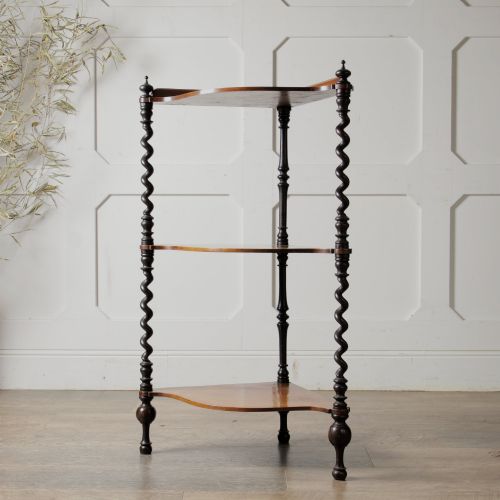
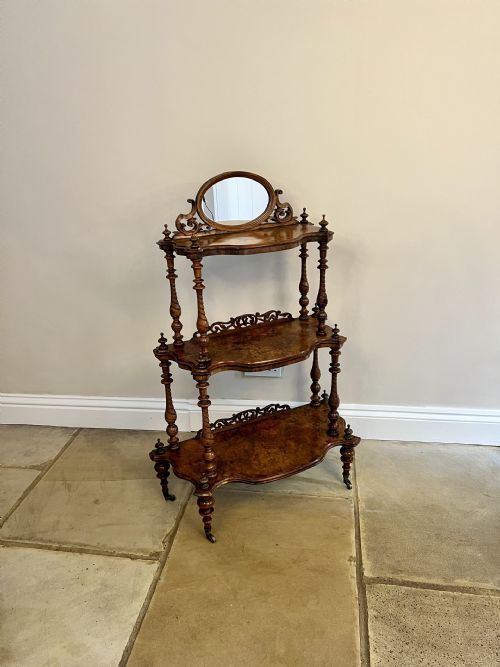
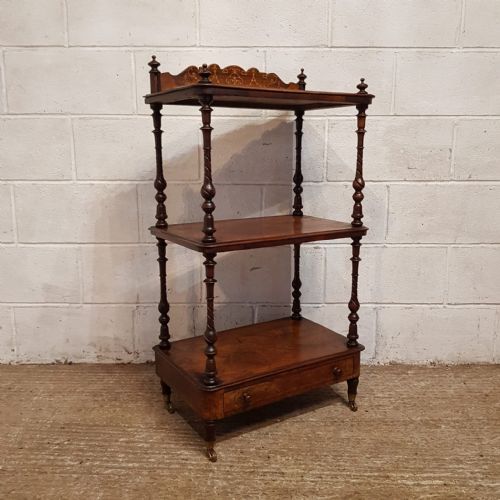
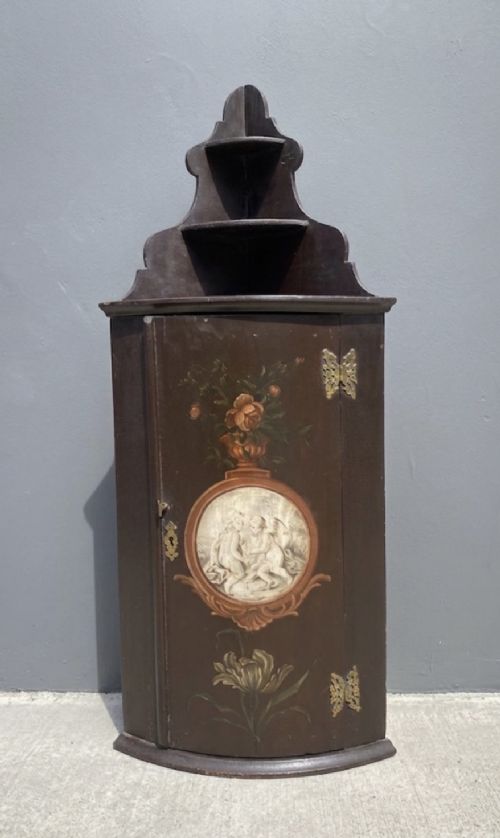
A vintage corner shelving unit appears in forms such as multi-tiered whatnots, open bookcases, and hanging cupboards designed to fit room angles. The pieces span periods from the eighteenth century through the Victorian era, Regency, and Edwardian times.
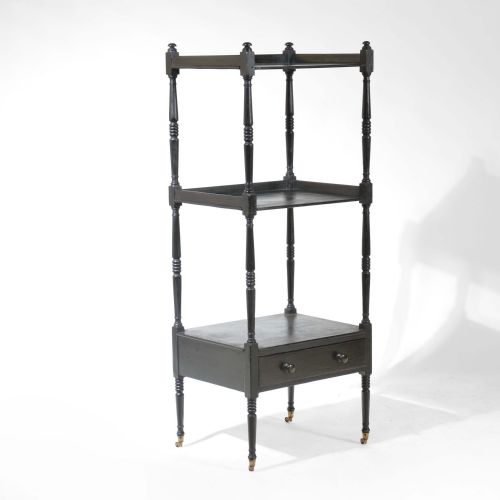
Mahogany and walnut predominate, often featuring burr veneers, inlay, or ebonised finishes that mark formal rooms. Simpler painted cupboards and bamboo frames also turn up among these corner forms.
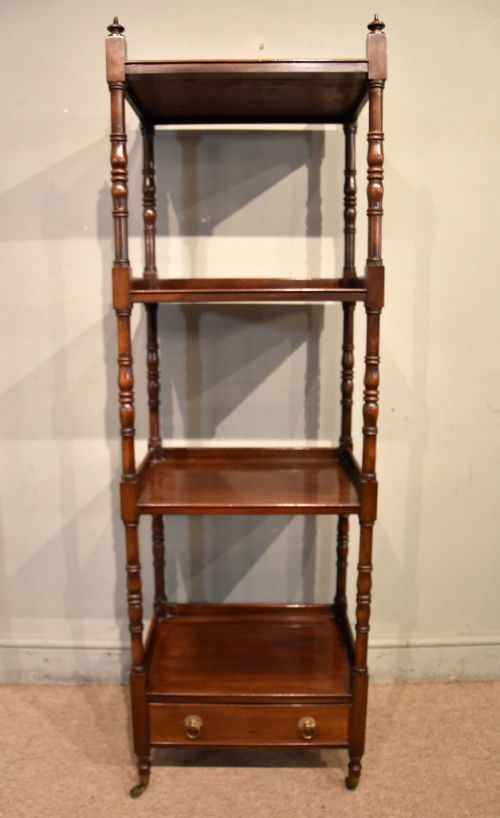
Tiered open shelves and standing whatnots dominate the current selection, supplying upright display space without crowding floor plans. Taller four and five-tier structures represent the most frequent format met here.
Materials and construction methods
Cabinetmakers utilised solid timbers and decorative veneers, applying mahogany and burr walnut across structural frames and shelves. Brass mounts, mirror glass panels, and painted finishes appear on select pieces.
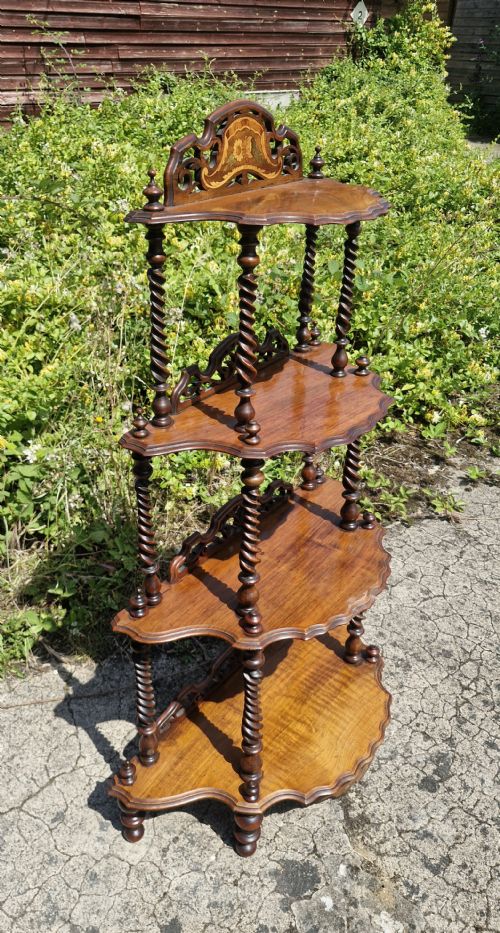
Turned uprights, barley twist supports, and inlaid stringing provide structural support and surface enrichment on nineteenth-century examples. Freestanding tiers rely on graduated depths to maintain stability as they rise.
A solitary bread rack mixes with the walnut whatnots, proving that French bakers and Victorian collectors shared a passion for tiered vertical storage.
Distinctions in quality and execution
Finer examples display carefully matched burr walnut veneers and precise wood inlay, whereas simpler items rely on plain mahogany boards. Timber selection and grain figure dictate the visual weight of each tier.
Joinery execution separates standard production from superior workshops, visible in the tightness of corner joints and the turning of upright supports. Integrated cupboards and balanced proportions elevate the status of individual pieces.
The Vintage Corner Shelving Unit Glossary
- Whatnot
- An open set of multi-tiered shelves used for displaying ornaments and small objects. It gained popularity during the Victorian period.
- Etagere
- A piece of furniture consisting of a set of open shelves for displaying small articles. It shares similarities with the whatnot format.
- Burr walnut
- Wood taken from the burl growth of a walnut tree, yielding highly decorative swirling grain patterns. Cabinetmakers used it for veneering high-status furniture.
- Barley twist
- A type of turned wooden support resembling a spiralling rope. It appears frequently on Victorian and seventeenth-century furniture legs and columns.
- Inlay
- A technique where pieces of contrasting material are inserted into depressions in a timber base to form decorative patterns. Common materials include light woods and brass.
Vintage Corner Shelving Unit: Frequently Asked Questions
Where should I place a corner shelving unit?
These units suit empty room angles, awkward junctions between walls, and small hallways where standard bookcases would block pathways.
Their triangular footprint draws the eye upward, making use of vertical space without jutting into the main floor area.
How do I clean and maintain polished walnut furniture?
Dust surfaces regularly with a soft, dry cloth to prevent grit accumulation on the polished timber and veneer.
Avoid placing pieces near direct heat sources or strong sunlight, which can dry out walnut and cause the polish to fade.
Can these shelves hold heavy books?
Open whatnots and tiered étagères suit lighter decorative objects, small ceramics, and select volumes rather than dense library collections.
Heavier items belong on the lowest tier where the structure meets the floor with maximum stability.
How do I distinguish Victorian pieces from Georgian ones?
Georgian pieces often display restrained lines, ebonised surfaces, or plain mahogany frames built for formal eighteenth-century interiors.
Victorian examples frequently introduce bolder turning, burr walnut veneers, and taller multi-tiered constructions designed for crowded nineteenth-century parlours.