
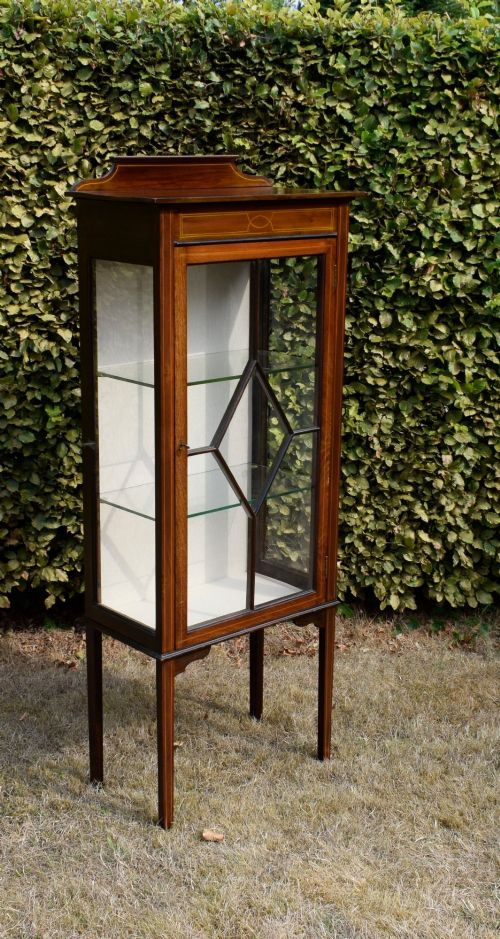
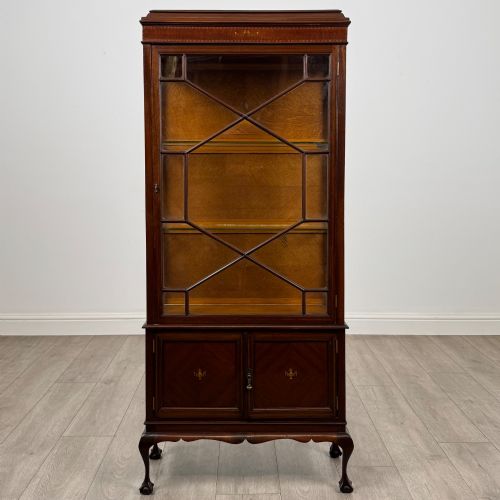
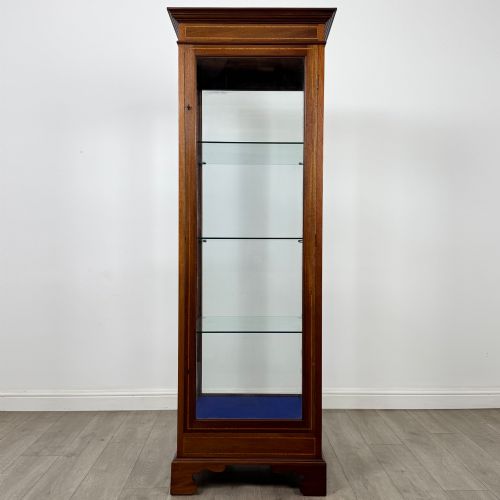


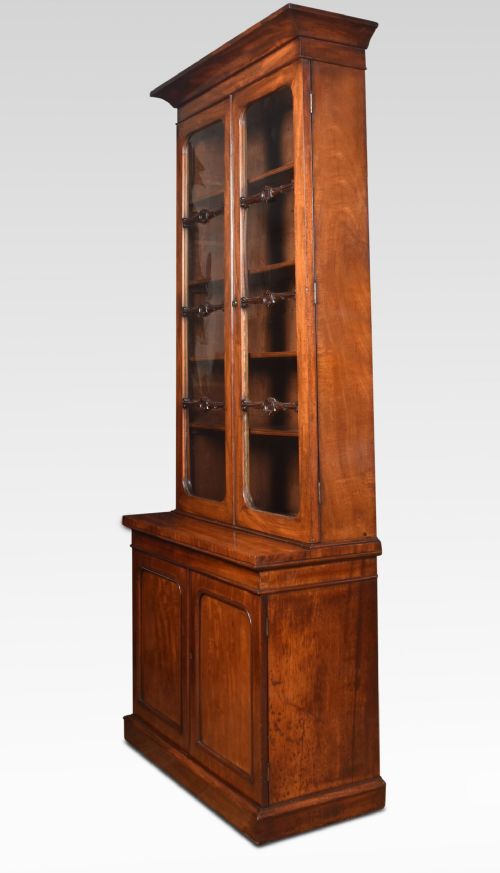

Narrow Mahogany Display Case
These narrow mahogany display case examples bring slender proportions and rich timber to compact rooms, holding collections safely behind glass.
Narrow Mahogany Display Case
A narrow mahogany display case provides vertical storage for books, china, and small objects while taking up minimal floor space in a room. These pieces span several distinct eras, appearing in Edwardian forms alongside 19th-century designs and mid-century interpretations.
Most examples found here date from the Edwardian period or the 19th century, often incorporating glazed doors and internal shelving. Cabinets take freestanding, tall, or corner formats to suit different domestic layouts.
Buyers frequently encounter Sheraton revival interpretations, glazed china cabinets, and tall freestanding shop display formats within this grouping. The underlying timber remains consistent, paired with glass panels for viewing contents.
How they were made
Construction relies heavily on solid mahogany and mahogany veneers, often enhanced with contrasting satinwood or fruitwood inlay. Glazing forms a central element, requiring skilled framing to house glass panels securely within narrow door structures.
Hardware such as brass hinges and escutcheons completes the construction, alongside fabric linings found in the interiors of cabinets and display bookcases.
Some Edwardian shop cabinets originally stood on high streets before retiring to domestic sitting rooms.
What varies in quality
Quality rests on the crispness of the fruitwood or satinwood inlay and the proportion of the timber grain. Finer examples show careful selection of mahogany veneers and balanced Edwardian Sheraton revival detailing.
Structural refinement separates standard utilitarian cupboards from more ambitious glazed display cabinets, particularly in the joinery of narrow framing and the finish of the timber surface.
The Narrow Mahogany Display Case Glossary
- Mahogany
- A durable tropical hardwood prized for its deep reddish-brown colour and stable grain. It serves as the primary structural and visual timber across these pieces.
- Inlay
- A technique where contrasting woods like fruitwood or satinwood are fitted into recesses in the primary timber surface to create decorative patterns.
- Corner cabinet
- A specialist storage form designed to fit neatly into the ninety-degree angle of a room. These pieces maximise vertical space in compact layouts.
Narrow Mahogany Display Case: Frequently Asked Questions
Where do I put a narrow cabinet?
Slender proportions allow these cabinets to sit comfortably in hallways, alcoves, or smaller reception rooms without dominating the floor space.
Corner formats make use of unused room angles while still offering glazed storage for collections.
How do I clean mahogany?
Dust the timber regularly with a soft, dry cloth to prevent buildup on the polished surface. Avoid silicone-based polishes that can degrade the traditional finish over time.
Keep glazed panels clear using a mild glass cleaner applied to a cloth rather than sprayed directly near the wood.
Are these cabinets secure?
Many include original brass locks and key mechanisms designed to keep glazed doors closed during daily use.
Internal shelving is generally fixed or supported on wooden cleats rather than adjustable tracks, reflecting older construction methods.
How do I date an Edwardian cabinet?
Edwardian pieces often feature lighter framing, satinwood stringing, and Sheraton revival influences typical of the period around nineteen hundred.
Construction details like machine-sawn backboards and lighter secondary timbers distinguish them from heavier 19th-century precedents.