


Traditional Corner Display Unit
A traditional corner display unit turns wasted room into focal depth, holding glassware and china against the panelled angles of a proper room.
Traditional Corner Display Unit
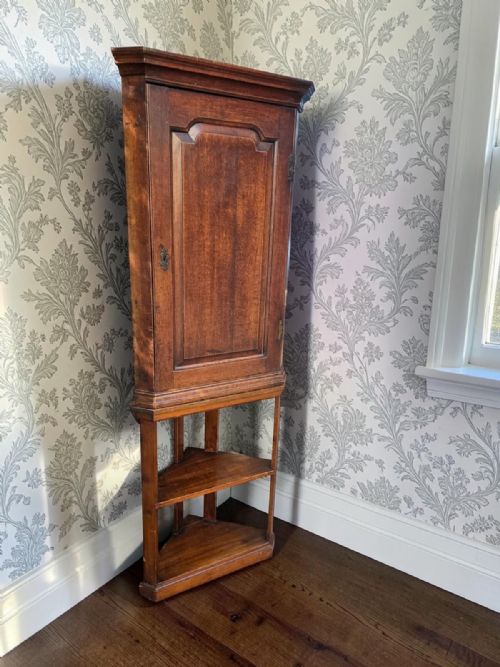
A traditional corner display unit brings architectural presence to unused room junctions, taking the form of standing cupboards or cabinets designed specifically to fit standard right-angled corners. These pieces provide enclosed shelving behind panelled or glazed doors, making efficient use of awkward spaces while exhibiting decorative wares.
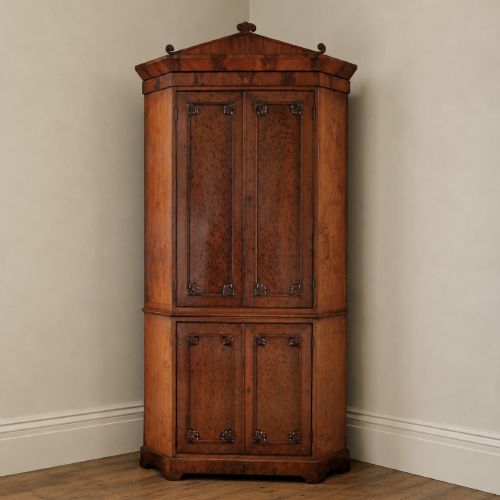
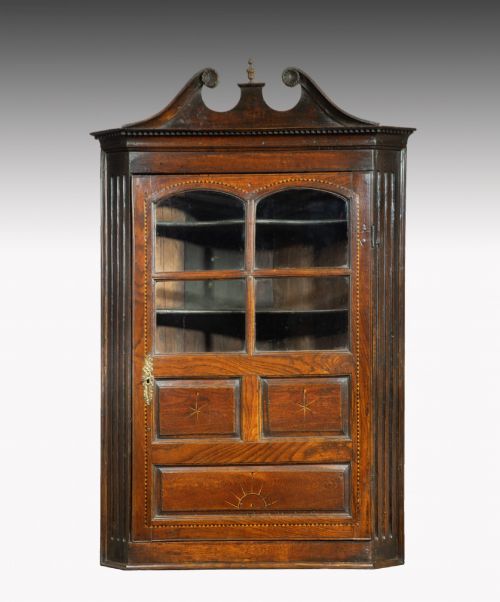
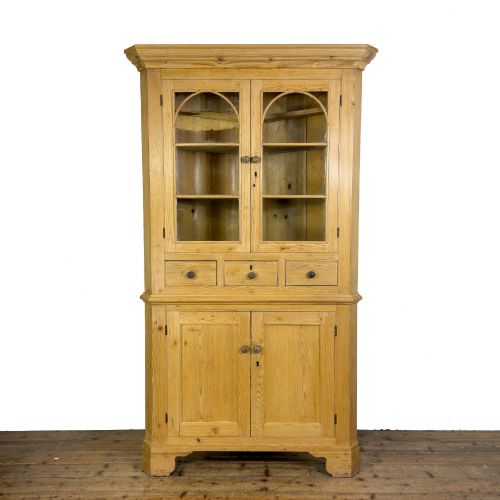
The selections span distinct periods, running from eighteenth-century Georgian oak and mahogany pieces through Victorian country pine and William IV examples up to Edwardian painted finishes and twentieth-century mahogany cabinets. Buyers encounter both standing floor models and smaller cupboards intended to sit on separate stands or counters.
Forming the core of the current offerings, mahogany and oak dominate the timber choices, appearing alongside stripped pine, painted surfaces, and fruitwood inlay. Examples range from simple rustic cupboards with iron hinges to larger four-door arrangements and refined Chinoiserie decorated pieces.
How they were made
Cabinet makers constructed these units predominantly from solid hardwoods and softwoods including oak, mahogany, plum pudding mahogany, fruitwood, and pine. Timber selection dictated whether the piece received a polished finish to highlight rich grain patterns or a painted coat suited to domestic interiors.
Joinery techniques relied on traditional panelled construction to ensure stability across wide timber faces that had to meet at strict right angles. Brass hardware, locks with keys, and fruitwood inlay provided structural security and surface ornamentation.
Some cupboards arrive with their original keys still turning ancient brass locks after two centuries of daily use.
What varies in quality
Quality shows in the choice of timber and the precision of the mitres and joints where the cabinet meets the wall. Finer pieces employ figured veneers like plum pudding mahogany or intricate fruitwood inlay, whereas simpler vernacular examples rely on solid oak or plain pine.
The sophistication of the internal shelving, door panels, and original hardware distinguishes standard utility cupboards from higher-status cabinet work. Surviving keys, precise door alignment, and intact glazing bars separate superior examples from those needing substantial intervention.
The Traditional Corner Display Unit Glossary
- Standing corner cupboard
- A tall piece of furniture built to rest directly on the floor and fill a room angle from base to cornice. These large units often feature upper display doors with lower enclosed storage.
- Plum pudding mahogany
- A decorative veneer harvested from the crotch or branch junctions of mahogany trees. It displays a dense, mottled grain pattern resembling the texture of a traditional Christmas pudding.
- Chinoiserie
- A European decorative style imitating Chinese artistic traditions. It involves painted motifs, often in gold or bright colours upon dark lacquered or painted backgrounds.
- Welsh corner cupboard
- A regional variant denoting furniture originating from Wales. These pieces frequently combine oak and mahogany timbers within a single vernacular carcase.
Traditional Corner Display Unit: Frequently Asked Questions
How do I fit a corner cabinet?
Measure the exact wall angles and ceiling height before selecting a unit, as older rooms rarely possess true ninety-degree corners. Standing models require level floors and adequate clearance for door swings.
Most tall pieces benefit from being secured directly to the wall studs to prevent tipping, particularly when loaded with heavy ceramics or glassware.
Are these units suitable for modern rooms?
These cabinets integrate effectively into contemporary interiors by utilising vertical wall space that typically remains empty. Their traditional forms provide a grounding contrast against minimalist modern decor.
They serve practical storage and display functions while introducing historical timber tones and architectural lines to a room.
How do I date an oak corner cupboard?
Dating relies on examining construction methods, timber preparation marks, and hardware styles. Eighteenth-century pieces typically feature hand-planed surfaces, pegged mortise and tenon joints, and heavy oak panels.
Later Victorian and Edwardian examples often incorporate machine-sawn timbers, standard brass hinges, and standardised locking mechanisms.