
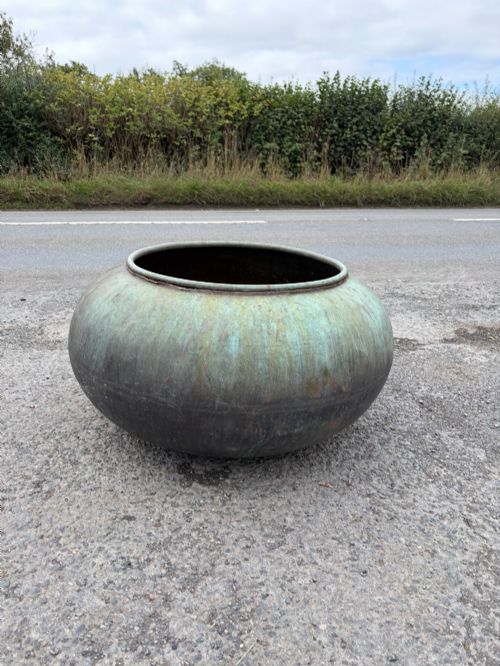
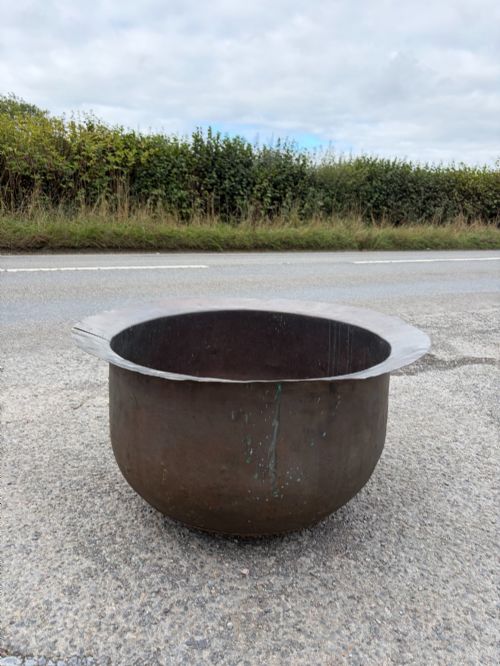
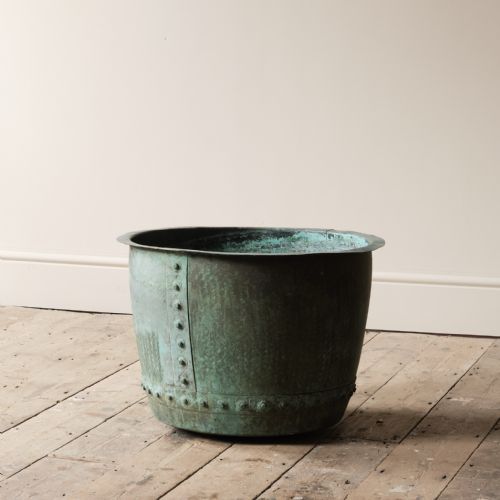
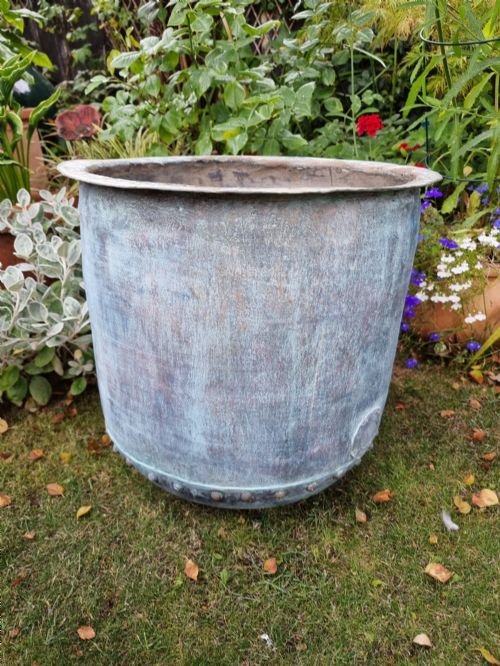


Vintage Copper Wash Boiler
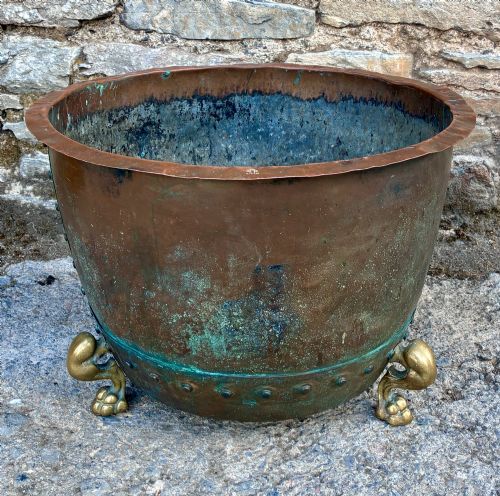
These vintage copper wash boiler pieces bring heavy utilitarian warmth into modern interiors as garden planters and log bins.
Vintage Copper Wash Boiler
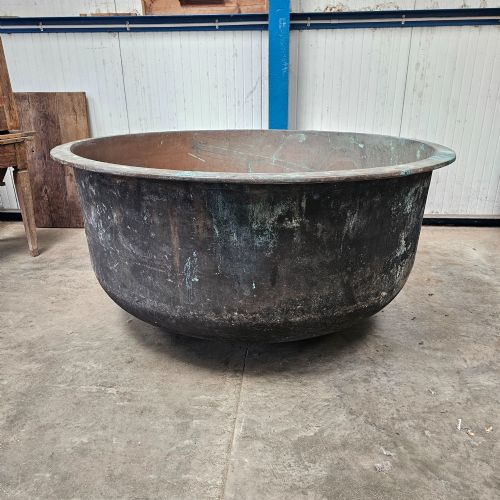
A vintage copper wash boiler represents heavy domestic utility reimagined for decorative display across interior and exterior spaces. When exploring this phrase, buyers encounter substantial vessels originating primarily from the nineteenth century and the Victorian era, including French provincial examples and rustic English pieces.
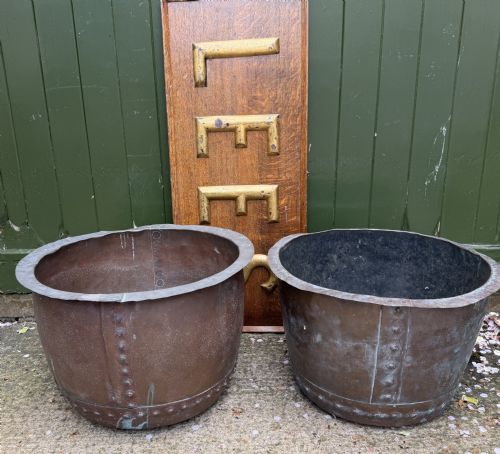
The forms span large pots, cauldrons, cheese vats, and wash tubs originally built for heavy labour. Today, these same vessels function widely as garden planters, log baskets, and indoor plant pots.
Most items on this page lean heavily into rustic farmhouse and utilitarian aesthetics, displaying the generous scale typical of nineteenth-century country equipment. Their robust proportions suit contemporary hearths and garden settings equally well.
What varies in quality
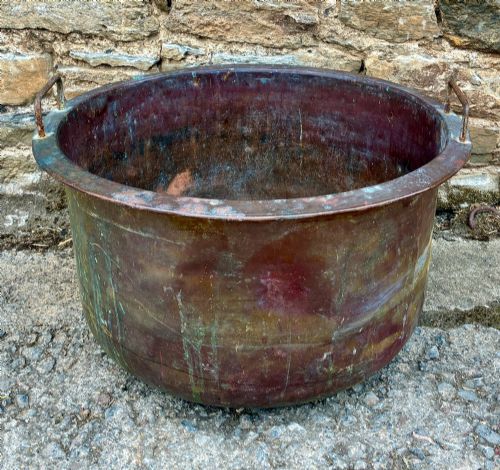
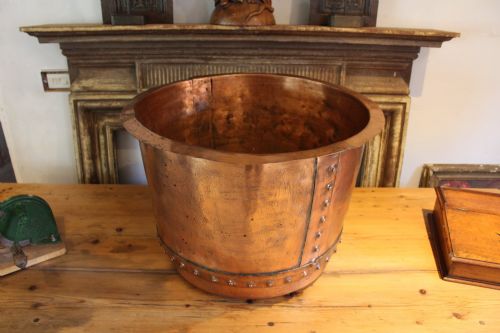
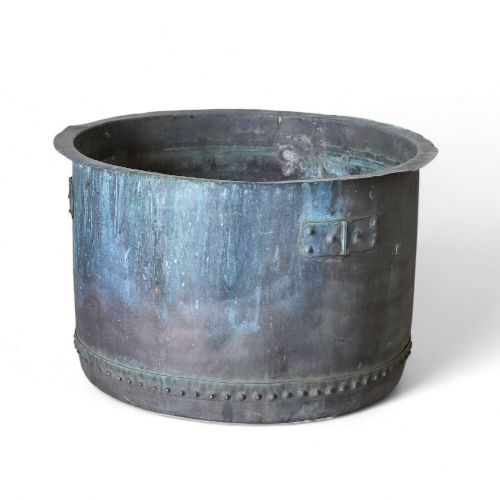
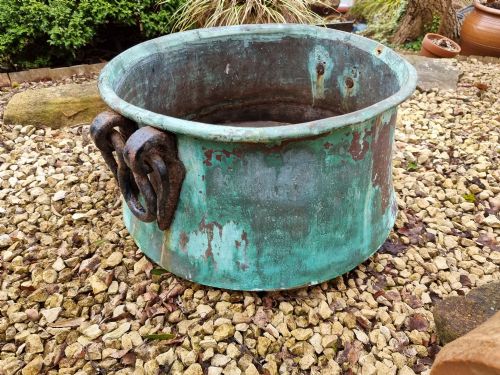
Quality rests in the integrity of construction, specifically the weight of the copper sheet and the strength of the hand-riveted joints. Vessels featuring intact wrought iron swing handles and stable bases stand apart from simpler utility items.
The character of the surface patina dictates visual appeal, separating uniform modern copies from pieces bearing genuine age, verdigris, and weathering. Depth of form and original maker reinforcement also distinguish superior specimens.
Some nineteenth-century cheese vats survived industrial dairies to spend their retirement holding hearth logs.
The Vintage Copper Wash Boiler Glossary
- Verdigris
- A green patina formed naturally on copper through atmospheric weathering over long periods. This surface layer acts as an indicator of age and environmental exposure.
- Riveted
- A method of joining sheet metal using metal pins hammered flat to secure overlapping seams. Hand-riveted construction marks older utilitarian copperware before modern welding techniques.
- Cauldron
- A large metal pot with a wide opening and frequently a swing handle, designed for boiling contents over a fire. These deep vessels form a distinct category within heavy copper antiques.
- Patina
- The surface texture and colour developed on metal through age, use, and oxidation. Good patinas show varied tones from deep bronze to bright copper highlights.
Vintage Copper Wash Boiler: Frequently Asked Questions
How do I clean a copper wash boiler?
Wash the surface gently with warm soapy water and a soft cloth to remove surface dirt without disturbing the historical patina. Avoid harsh chemical polishes that strip away the aged verdigris finish prized by collectors.
Dry the vessel thoroughly after washing to prevent water spotting. Preserving the natural oxidation maintains the character earned over centuries of use.
Can these pots be used outside?
These robust metal vessels adapt easily to outdoor environments as garden planters and display pieces. Copper withstands exposure well, developing further weathering and verdigris when left in the elements.
Ensure adequate drainage if planting directly inside the vessel to prevent standing water. Iron components may rust over time if exposed to continuous dampness.
What is the difference between a boiler and a log bin?
Wash boilers were manufactured as heavy-duty vessels for heating water and laundering textiles in domestic or institutional settings. Log bins share similar cylindrical or cauldrons forms but serve primarily as dry storage containers for firewood.
Many pieces listed under this search phrase perform secondary roles as planters or log storage today regardless of their original utilitarian purpose. The physical construction remains identical across these overlapping functional categories.
How do I date a nineteenth-century copper vessel?
Examine the construction methods, noting hand-riveted seams and wrought iron fittings typical of early production before industrial standardisation. The thickness of the metal sheet and the presence of makers' marks or specific handle styles provide further chronological clues.
Compare the surface wear and patination against documented examples from the Victorian period. French provincial items often display distinct regional shaping techniques compared to English counterparts.