


Brass Footed Planter
A brass footed planter brings heavy metal warmth and a refined interior garden display into a room.
Brass Footed Planter
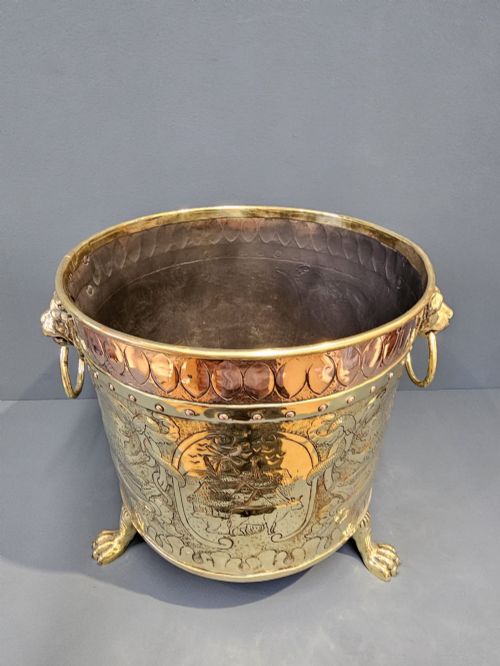
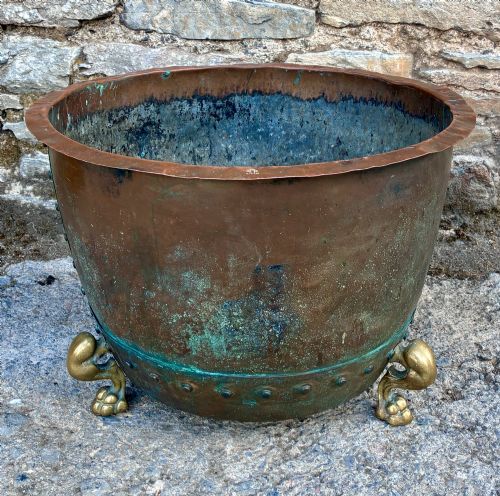
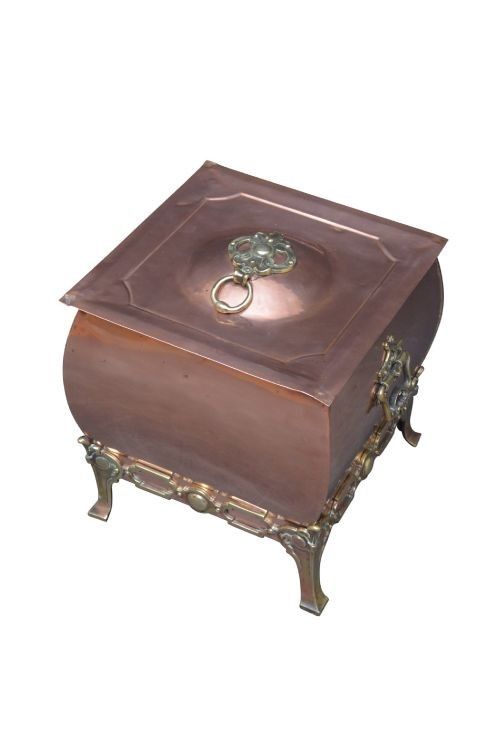
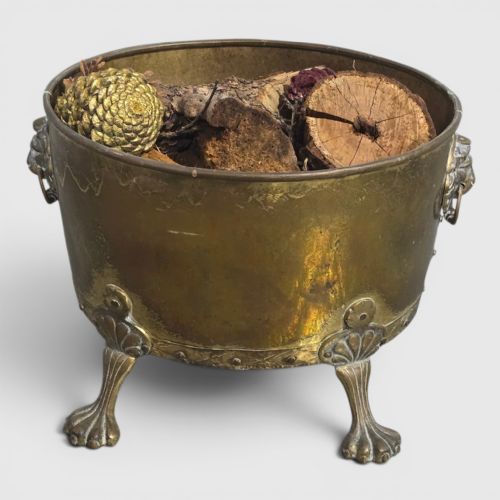
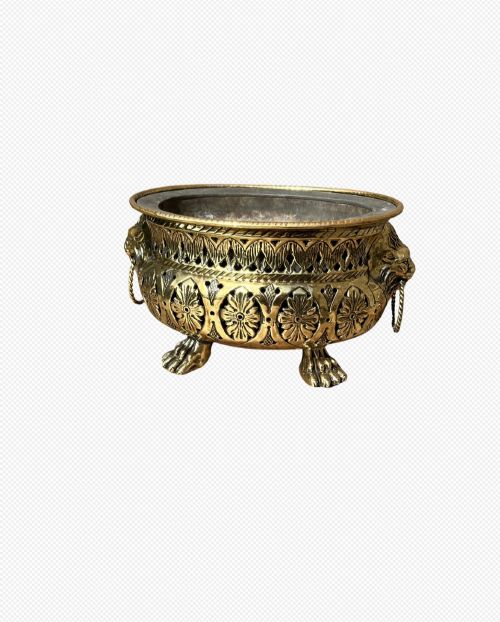
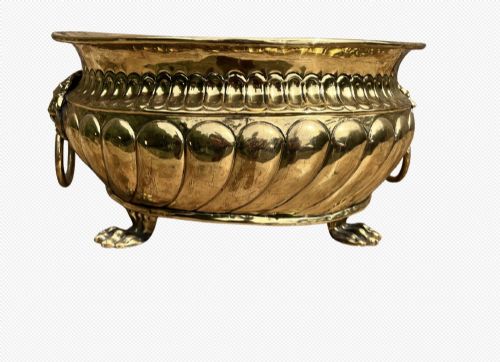
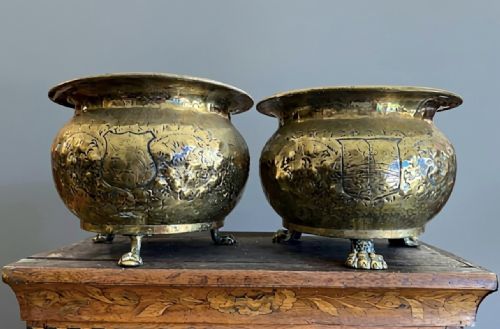
A brass footed planter takes the form of a heavy metal vessel, jardiniere, log bin, or coal bucket designed to hold plants, foliage, or fuel beside a hearth. These items span the eighteenth, nineteenth, and early twentieth centuries, drawing on Victorian, Edwardian, Regency, and Dutch traditional styles.
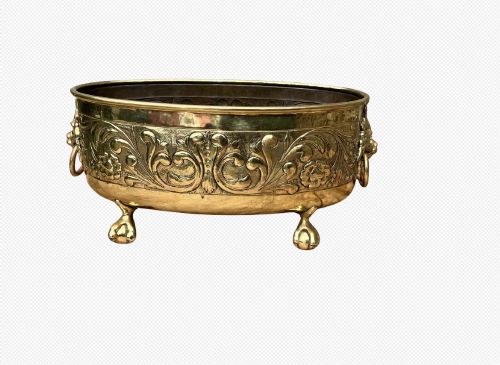
The version most commonly met on this page is the nineteenth century Victorian or Edwardian brass jardiniere or log bin, frequently paired with copper bands, lion mask handles, or repoussé decoration. Pieces range from cylindrical pierced vessels to coopered mahogany and walnut bowls supported on dedicated feet.
How they were made
Metals such as brass, copper, and iron form the primary structure, often shaped by handbeating, riveting, and embossing. Dinanderie techniques bring surface pattern to the metal body, while timber species like box, mahogany, and walnut provide coopered wooden frames for specific planter designs.
Decorative elements include repoussé animal heads, lion masks, copper banding, and pierced metalwork galleries. These construction methods combine structural metal strength with detailed surface ornamentation.
Object forms span jardinieres, log bins, coal scuttles, cauldrons, and wine coolers originating from English, French, Belgian, and Dutch makers.
What varies in quality
The distinction between ordinary utility items and finer examples rests on the depth of hand-working in the metal and the integrity of the joins. Deep repoussé relief, crisp piercing, and substantial gauge metal separate standard utilitarian coal buckets from decorative display pieces.
Detailing on handles, feet, and rim mounts dictates overall execution. Cast brass lion masks, neatly fitted copper bands, and well-preserved surface patination indicate superior craftsmanship.
The Brass Footed Planter Glossary
- Jardiniere
- An ornamental pot or stand for holding plants or flowers. These vessels often feature decorative metalwork and raised feet for interior display.
- Repoussé
- A metalworking technique where the metal is hammered into relief from the reverse side. This method creates textured pictorial or abstract surface designs.
- Dinanderie
- Medieval and later brass or bronze art objects produced in the Meuse Valley region. The term describes various types of beaten and engraved ornamental metalware.
- Coopered
- Woodwork constructed from vertical staves bound together with metal hoops. This technique appears in wooden log bins and planters.
- Coal scuttle
- A metal container used to hold and transport coal for a fireplace. Many survive as decorative fireside planters.
Brass Footed Planter: Frequently Asked Questions
What is a brass footed planter used for?
These vessels serve primarily as indoor plant holders or decorative containers for hearth accessories. Their water-resistant metal construction makes them practical for housing potted greenery.
Historically, many of these containers functioned as coal bins, log buckets, or wine coolers before finding new life as interior planters.
How do I care for antique brass and copper?
Maintenance requires occasional dusting with a dry cloth to protect the surface patination. Harsh chemical cleaners strip the aged finish that develops over decades.
Using a plastic liner inside the metal vessel prevents moisture contact and protects the interior from corrosion.
How can I tell the period of a planter?
Dating relies on construction methods, handle fixings, and decorative styles such as Regency, Victorian, or Edwardian motifs. Hand-beating marks and rivet types offer clues to age.
Stylistic details like lion mask handles and repoussé panels often align with specific nineteenth and early twentieth century design movements.
Are these planters suitable for outdoor use?
Most antique brass and copper vessels are intended for interior display in domestic rooms or conservatories. Exposure to weather accelerates corrosion and alters the historic metal surface.
Keeping the pieces indoors preserves the structural integrity and the patinated finish of the metal.