






Vintage Coloured Wine Glass
A vintage coloured wine glass brings rich hues and distinctive form to the table, spanning Georgian, Victorian, and Edwardian periods.
Vintage Coloured Wine Glass
A vintage coloured wine glass represents a range of drinking vessels produced across the Georgian, Victorian, and Edwardian eras. These pieces include single stems, pairs, and full sets designed for wine, dessert wine, liquor, and hock.
The most frequent examples on this page are Victorian cranberry glass wine glasses, often found in sets of six. Alongside these, buyers encounter Bristol green, aqua green, turquoise blue, amethyst, and emerald green items.
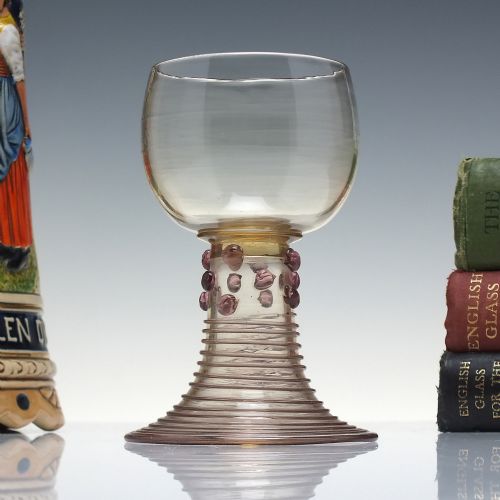
Forms extend from traditional wine glasses to rummers, roemers with amber bowls, and colour-over-crystal hock decanters. Origins stretch from English workshops to Bohemian and Venetian glasshouses.
Factors of quality
Quality rests on the depth and evenness of the colour distribution within the glass body. Hand-blown pieces with uniform thickness, crisp wheel-cut facets, and well-balanced stems sit higher in the range than simpler moulded examples.
The presence of matching sets, particularly sets of six or fifteen in consistent shades like cranberry or Bristol green, elevates desirability. Intricate details such as colour twists and engraved motifs indicate skilled artisan execution.
Vintage Coloured Wine Glass Retail Price Guide 2026
Typical asking prices for vintage coloured wine glass among the pieces listed under this phrase on Sellingantiques today, from the lower quarter to the upper quarter. They describe what is for sale here now, not the wider market.
Some Victorian wine glasses share their striking cranberry hue with fine ruby port.
The Vintage Coloured Wine Glass Glossary
- Cranberry glass
- A rich red-pink glass coloured with gold chloride, highly prevalent in Victorian stemware. It creates a warm, translucent hue when held to the light.
- Roemer
- A traditional Germanic drinking vessel featuring a wide bowl on a cylindrical, prunt-decorated stem. These often appear in amethyst with contrasting amber bowls.
- Overlay glass
- A technique where a vessel is formed with two or more distinct glass layers. Cutting away portions of the outer layer creates a multi-coloured decorative pattern.
- Colour twist
- A decorative stem formation enclosing threads of coloured glass within the transparent stem interior. This technique appears primarily on 18th-century pieces.
- Hock
- A tall-stemmed wine glass traditionally used for German white wines. These often display vibrant shades such as turquoise blue or emerald green.
Vintage Coloured Wine Glass: Frequently Asked Questions
Are these vintage coloured wine glass sets usable today?
Most of these drinking glasses remain fully functional for serving wine and liqueurs at the table. Handle them with care during gatherings due to their age and delicate hand-blown stems.
Hand-washing after use keeps them in suitable condition for ongoing dining and display.
How can I tell a Victorian piece from a Georgian one?
Georgian pieces often display heavier lead glass construction, engraved bowls, or intricate colour twist stems. Victorian examples frequently lean towards vibrant cranberry hues and matched sets of hand-blown stemware.
Examining the pontil mark on the base helps determine the period and manufacturing method used.
What does overlay glass mean?
Overlay glass consists of two or more distinct layers of coloured glass fused together during production. Craftsmen then cut away sections of the outer layer to expose the contrasting colour underneath.
This method produces striking visual depth on hock decanters and large goblets.