



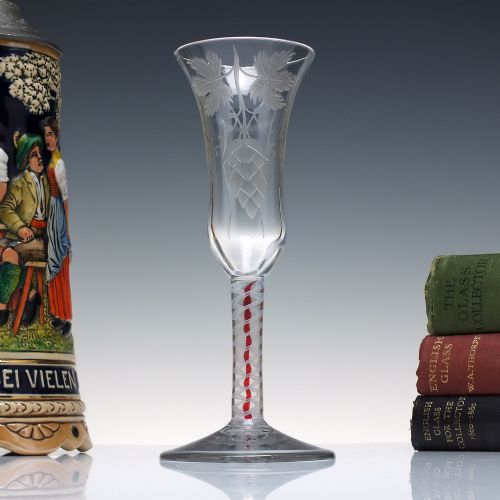


Vintage Coloured Glass Stemware
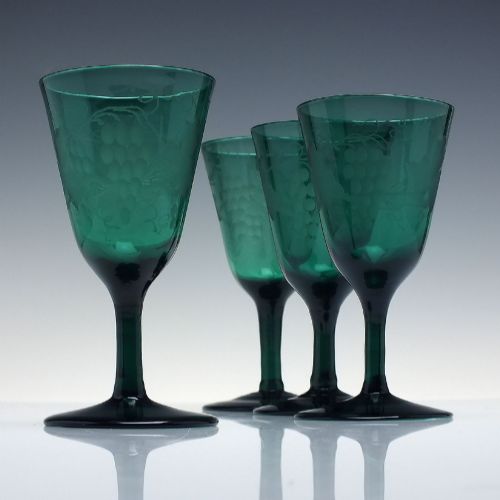
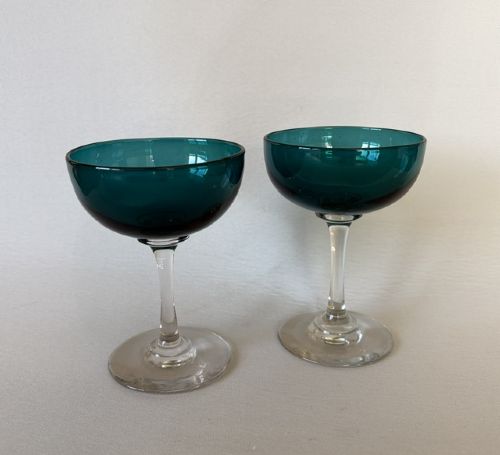
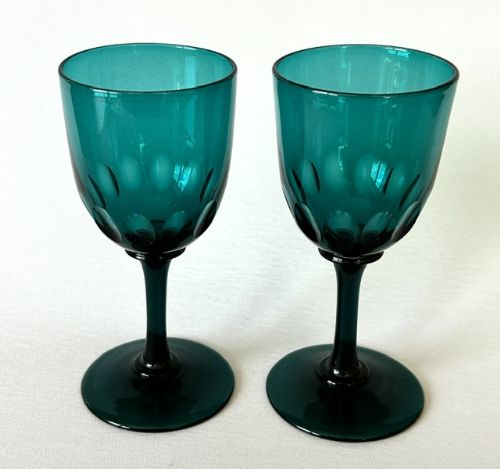
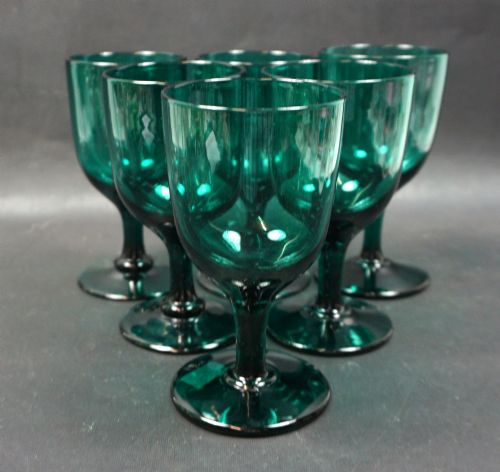
These vintage coloured glass stemware pieces bring vibrant hues and hand-crafted character to the table, offering a rich historical palette from Georgian to Edwardian periods.
Vintage Coloured Glass Stemware
Most items appear as matched sets of six, though pairs and individual goblets also emerge. Forms range from dessert wine glasses and liquor glasses to tall goblets and colour twist ale glasses, reflecting diverse entertaining traditions across the nineteenth and early twentieth centuries.
How they were made
The material foundations rely on lead glass and hand-blown glass, shaped by traditional glassmakers who integrated metallic oxides to achieve deep cranberry, green, blue, and amethyst colourations. Artisans utilised techniques such as hand-blowing and cutting to form the bowls, stems, and bases of each drinking vessel.
Detailing often includes enamel work and fine engraving, particularly evident on Georgian colour twist ale glasses and Venetian Revival productions. These methods required precise temperature control during blowing and finishing to maintain structural integrity and colour saturation.
Vintage Coloured Glass Stemware Retail Price Guide 2026
Typical asking prices for vintage coloured glass stemware among the pieces listed under this phrase on Sellingantiques today, from the lower quarter to the upper quarter. They describe what is for sale here now, not the wider market.
Victorian diners loved deep cranberry hues so much they matched their wine to the tablecloth.
What varies in quality
Quality rests upon the uniformity of the glass batch, the depth and consistency of the colour, and the finesse of the hand-blowing or cutting technique. Matched sets display evenness across all pieces in wall thickness, height, and hue intensity.
The crispness of engraved details on items like colour twist glasses and the precision of applied enamel define the upper tier of craftsmanship. Superior examples show balanced proportions between the bowl, stem, and foot without distracting bubble inclusions or surface distortions.
Salviati
The Vintage Coloured Glass Stemware Glossary
- Cranberry glass
- A rich red-pink glass created by adding gold chloride to the molten batch. It became extremely popular during the Victorian period for tableware and stemware.
- Colour twist
- A stem form on drinking glasses featuring internal threads of coloured glass twisted within a clear glass stem. This technique dates back to the eighteenth century.
- Lead glass
- Glass containing lead oxide, which increases the weight, refractive index, and clarity of the material. It allows for sharper cutting and ringing tones.
- Hand-blown glass
- Glass shaped through the manipulation of molten metal on a blowpipe rather than pressed in a mechanical mould. This method leaves subtle individual variations on each piece.
Vintage Coloured Glass Stemware: Frequently Asked Questions
Are these glasses safe for daily use?
Many people enjoy using their antique stemware for special dinners or quiet evenings. However, due to their age and delicate hand-blown construction, they require careful handling and are best kept away from modern dishwashers.
Hand-washing protects the rims and stems from chipping against other kitchenware. Storing them upright on stable shelving prevents accidental tipping.
How can I tell Georgian glass from Victorian pieces?
Georgian stemware often displays lighter weights, distinct tool marks on the pontil, and sophisticated air twist or colour twist stems. The forms tend to focus on ale glasses, wine flutes, and early Cordials.
Victorian production frequently introduced intense hues like cranberry and turquoise, alongside pressed or heavier mould-blown forms. Sets of six became far more common during the later nineteenth century.
Why do some glasses in a set differ slightly?
Hand-blown stemware from the eighteenth and nineteenth centuries was shaped individually by craftsmen using hand tools. Small variations in height, wall thickness, and colour depth indicate authentic human craftsmanship rather than industrial uniformity.
These minor discrepancies confirm that each piece passed through a maker's hands. They add distinct character to matched sets without affecting their functional use.