


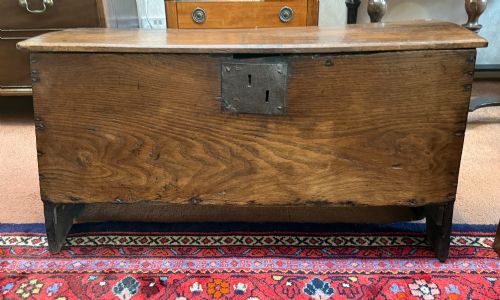
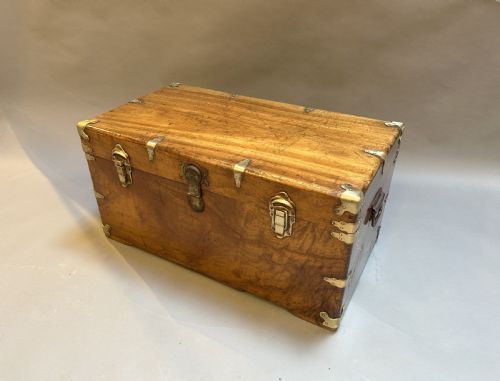
Vintage Coffer Chest
A vintage coffer chest provides sturdy storage with centuries of practical domestic history built into its timber and metal frame.
Vintage Coffer Chest
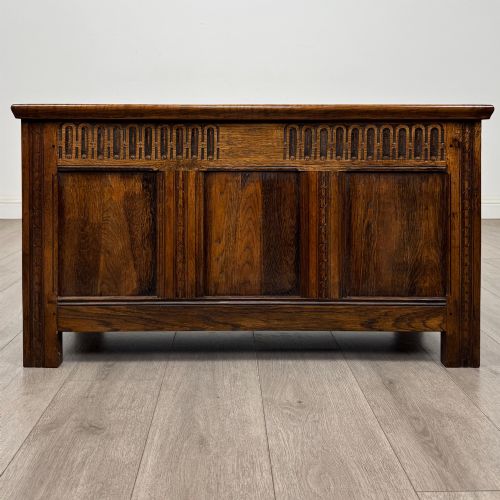
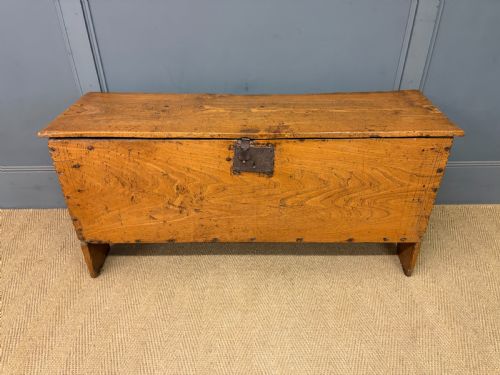
When you examine a vintage coffer chest, you encounter robust storage vessels designed to hold blankets, personal possessions, or travel equipment across generations. These pieces range from heavy oak and elm coffers dating to earlier centuries down to lighter pine blanket boxes and steamer trunks from the Victorian and Edwardian eras.
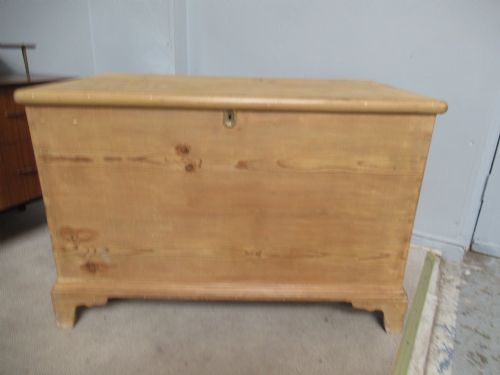
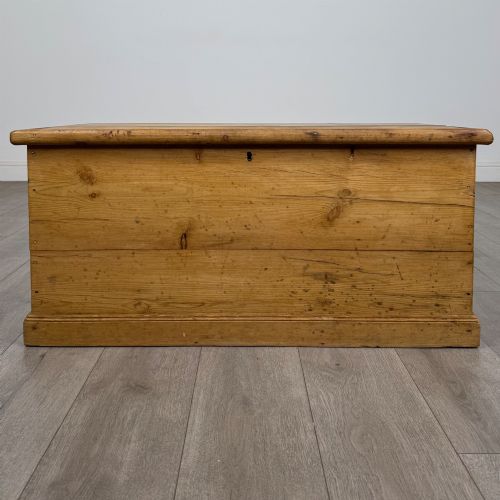
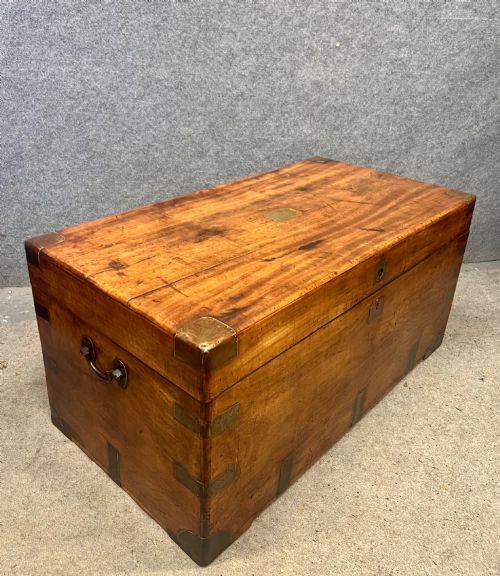
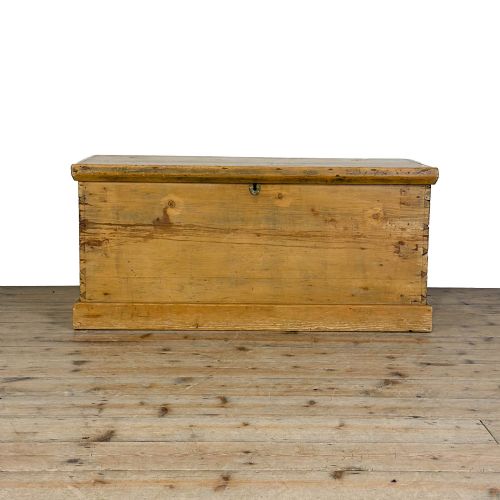
The version you are most likely to meet on this page is the pine blanket box or camphor wood campaign chest from the nineteenth century. These utilitarian forms combine hinged lids with practical interior spaces, reflecting their origins in travel, military service, and everyday household storage.
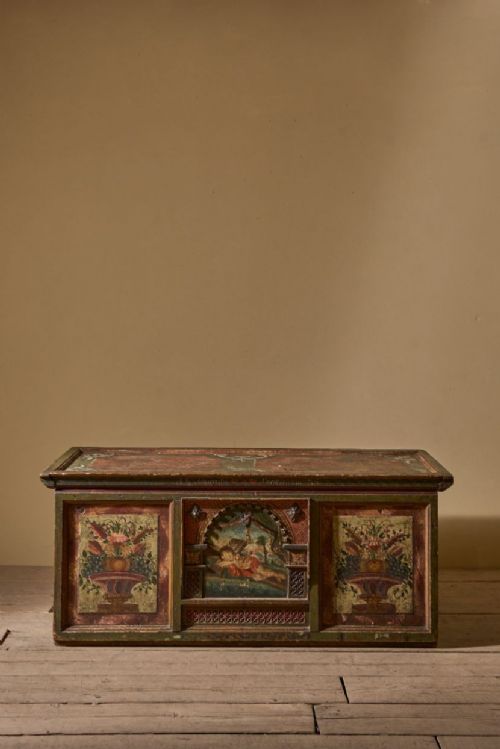
Beyond simple domestic boxes, the selection includes specialised forms such as sword chests, monks benches, and heavily bound travel trunks. Their origins span British workshops, Scandinavian folk traditions, and colonial trade routes, bringing diverse regional joinery into a single category of storage furniture.
How they were made
Makers relied primarily on solid timbers such as oak, pine, elm, and exotic woods like camphor and teak, selected for durability and grain pattern. Construction techniques involved traditional joinery, including dovetail joints, pegged mortise and tenon frames, and hand-planed panels.
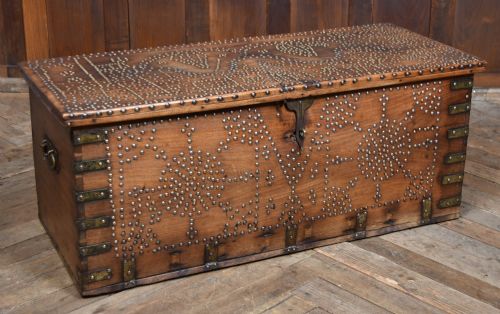
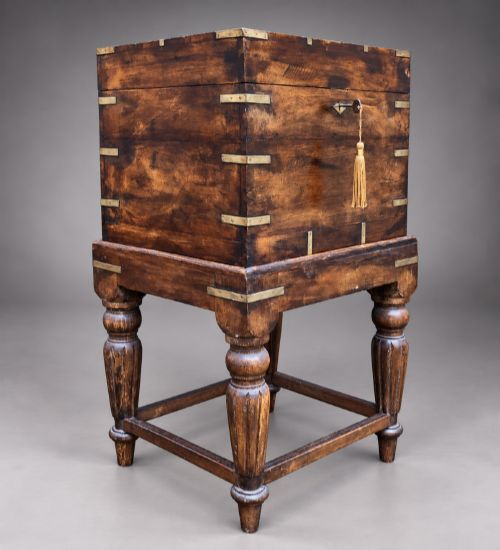
Metal reinforcement defined many pieces, utilising hand-forged iron strapwork, brass corners, and studded leather coverings to withstand rigorous travel. Iron handles, locks, and strap hinges secured the heavy lids and reinforced the structural corners of campaign trunks and dowry chests.
Listings feature structural timbers spanning oak, pine, elm, camphor wood, and teak alongside iron, brass, and leather coverings.
What varies in quality
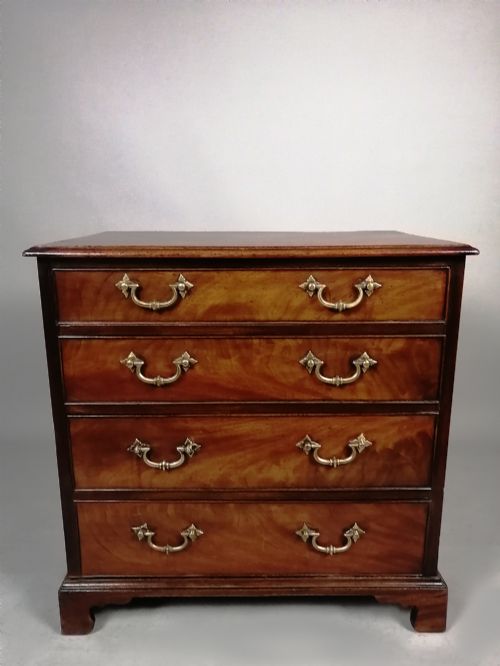
The standard of timber selection and joinery marks the division between standard utility boxes and finer household pieces. Solid hardwood construction with precise dovetailing and well-fitted internal compartments indicates superior craftsmanship compared to plain nailed crates.
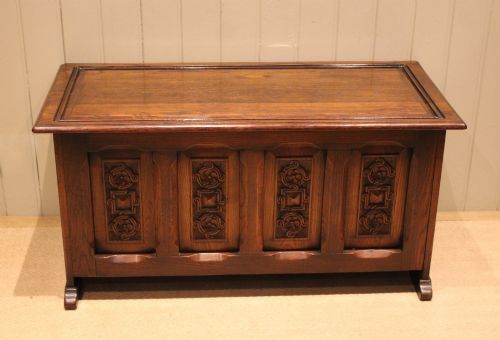
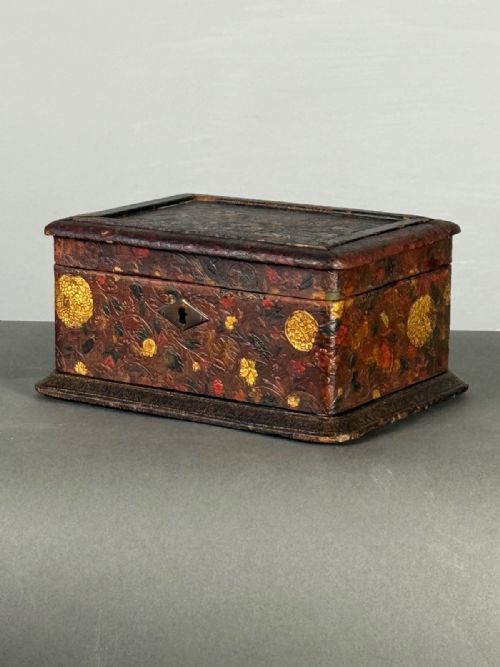
Hardware integrity and decorative treatment further separate pieces across the range. Heavy brass binding, hand-forged ironwork, carved panels, and original leather or mother-of-pearl inlay elevate a simple storage box into a piece of decorative art.
Susse Freres Paris·Samuel Pratt·Wm Insall of Bristol·Tanns Defiance London
The Vintage Coffer Chest Glossary
- Cofer
- A large wooden chest used for storing valuables, garments, or provisions. Early examples often featured heavy plank construction and iron locking mechanisms.
- Campaign trunk
- A portable storage chest designed for military officers or travellers on the move. These pieces typically incorporated brass binding, recessed handles, and robust corner brackets.
- Camphor wood
- An aromatic timber prized for campaign furniture and travel chests. Its natural scent repelled insects, making it ideal for protecting textiles during long sea voyages.
- Strapwork
- Ornamental metal bands or strips applied across the surface of a chest for reinforcement and decoration. Hand-forged iron strapwork is frequently found on Scandinavian and folk art trunks.
- Monks bench
- A convertible piece of furniture functioning as a table and a coffer or bench seat. The hinged back folded down over the arms to create a flat table surface.
Vintage Coffer Chest: Frequently Asked Questions
What is a coffer chest used for?
These chests served primarily for storing household textiles, personal garments, valuables, and provisions. In earlier centuries, they functioned as secure travel luggage and domestic storage before fitted wardrobes became common.
Today, they adapt easily to modern living rooms and bedrooms as practical storage furniture for blankets and everyday items while serving as coffee tables or decorative focal points.
How do I date an antique chest?
Dating relies on examining the timber species, construction methods, and hardware style. Hand-forged ironwork, hand-cut dovetails, and pegged joints usually indicate earlier periods, while machine-cut elements and pine point toward the Victorian era and later.
Makers' marks, brass labels, and historical inscriptions left by former owners also help narrow down the decade of manufacture.
Are camphor wood chests safe for clothes?
Camphor wood is traditionally prized for storing textiles because its natural aromatic oil repels moths and other pests. This scent protects woolen blankets and garments without chemical mothballs.
The fragrance naturally softens over decades of exposure to air while retaining its protective qualities for stored fabrics.
What is a campaign chest?
Campaign chests were modular storage trunks built for military officers and officials on active service overseas. They featured durable hardwoods like camphor or teak, protective brass corners, and flush handles for efficient stacking and transport.
These pieces were engineered to endure rough handling during nineteenth-century colonial travel and military campaigns.