



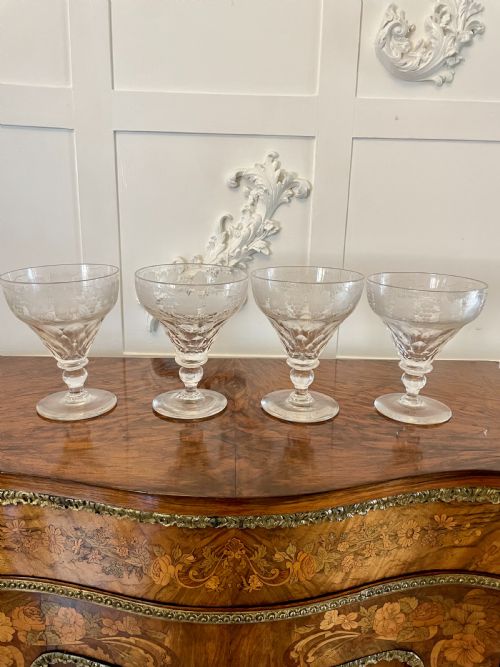


Vintage Cocktail Stemware
These vintage cocktail stemware pieces bring period elegance to modern bars through genuine nineteenth and twentieth-century craftsmanship.
Vintage Cocktail Stemware
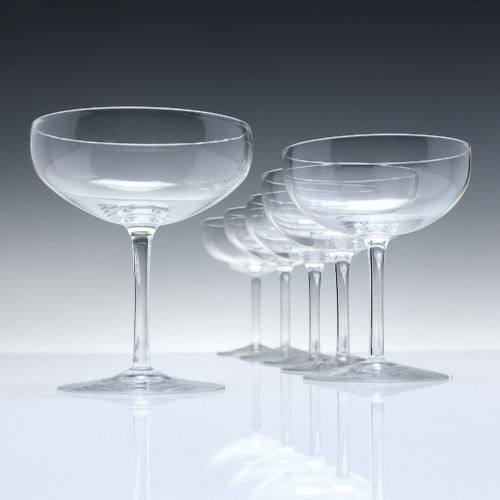
When you search for vintage cocktail stemware, you are looking at drinking vessels designed for champagne, liqueurs, and mixed drinks across the Victorian, Edwardian, and Art Deco periods. The selection spans single pairs to large suites of matching glasses.
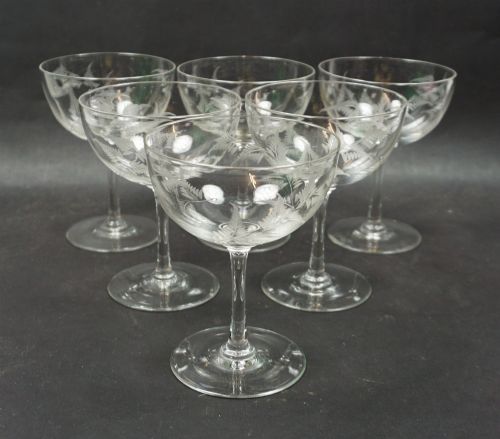
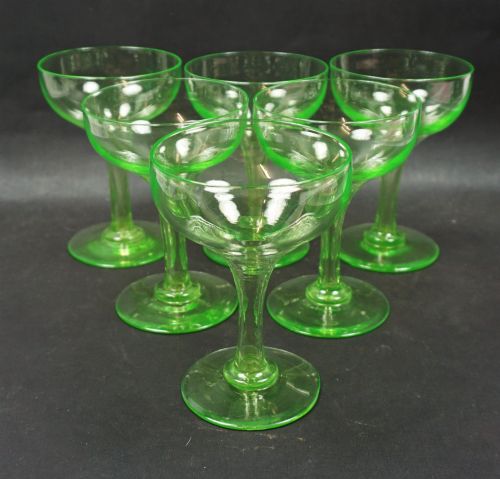
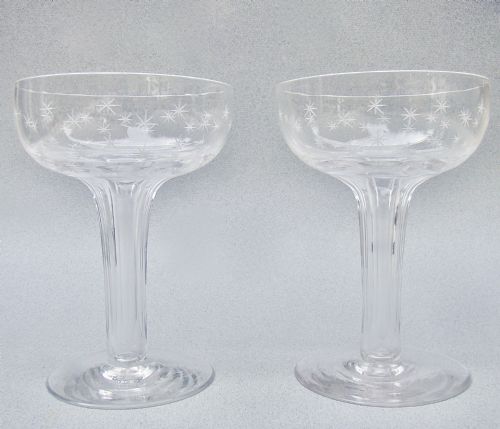
Champagne coupes and hollow-stem glasses form the core of what you will meet on this page. These pieces date from the mid-nineteenth century through the 1930s, incorporating styles from Regency to Taisho.
How they were made
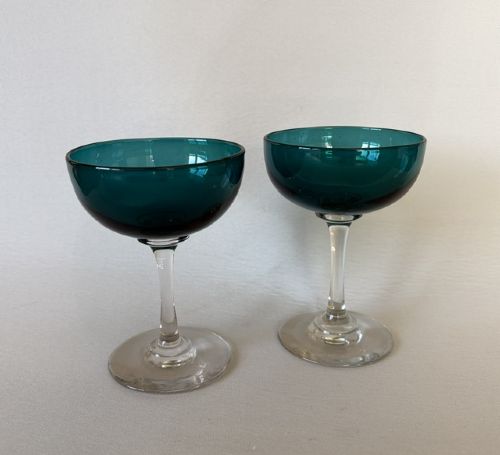
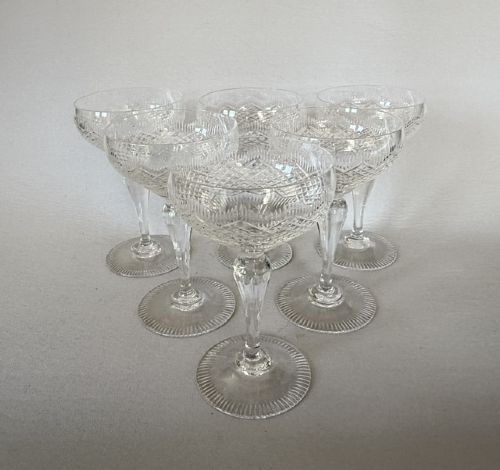
Glassmakers shaped these pieces using clear glass, lead crystal, and coloured overlayers of glass. Techniques such as cutting, star-etching, and vine-etching created decorative patterns across bowls and stems.
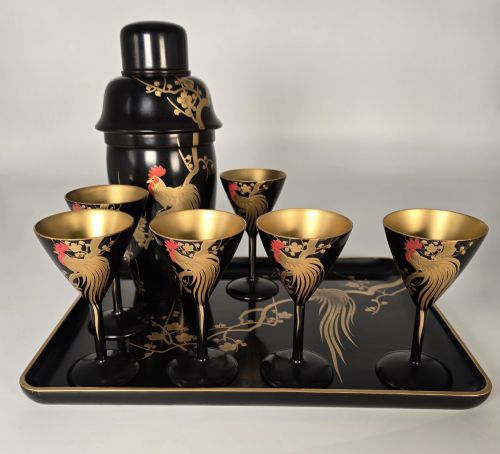
Certain sets feature hand-painted lacquer finishes on wood or specialised engraving on the foot and bowl. These methods reflect the diverse workshop traditions of English, French, Austrian, and Japanese makers.
Vintage Cocktail Stemware Retail Price Guide 2026
Typical asking prices for vintage cocktail stemware among the pieces listed under this phrase on Sellingantiques today, from the lower quarter to the upper quarter. They describe what is for sale here now, not the wider market.
Materials represented include traditional lead crystal, green and red over crystal, and Japanese lacquer.
What varies in quality
Quality rests in the crispness of the cut or engraved decoration and the clarity of the crystal. Weight and balance in the hand distinguish standard production from finer suites.
Completeness of a matching service and the complexity of colour overlayers influence the standing of a piece within its period.
The Vintage Cocktail Stemware Glossary
- Champagne coupe
- A shallow saucer-like glass traditionally used for champagne and cocktails. The wide bowl allows the drink to open up quickly.
- Lead crystal
- Glass containing lead oxide which increases brilliance and weight. This material rings when struck gently and allows for deep, sharp cutting.
- Over crystal
- A technique where a layer of coloured glass is cased over clear crystal. Artisans cut through the outer colour to reveal the clear glass beneath.
- Hollow stem
- A stem design where the interior of the stem is open to the bowl. Victorian makers utilised this form to create visual lift and lightness.
Vintage Cocktail Stemware: Frequently Asked Questions
Are these glasses safe for modern drinks?
Most vintage drinking vessels can hold cold beverages safely for daily use or special occasions. Hand washing protects the delicate lead crystal and engraved surfaces from thermal shock.
Avoid placing antique glass in dishwashers or using harsh detergents. Warm water and mild soap preserve the polish and prevent clouding over time.
How do I date an antique glass?
Dating relies on the manufacturing technique, the depth and style of the cut, and the overall silhouette. Victorian pieces often feature heavy star-etching, while Art Deco items show geometric engraving.
Matching the stylistic markers against known periods like the Edwardian era or the 1930s helps narrow down the origin.
Why buy a large suite of glasses?
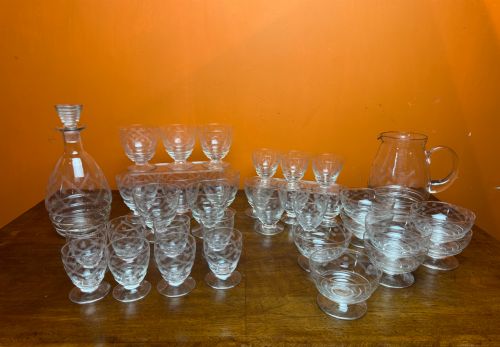
Large suites of thirty or more pieces provide uniformity for hosting gatherings. Matching sets from the French Art Deco period or Victorian era maintain a cohesive aesthetic on a bar or dining table.
Finding a complete service reduces the challenge of mixing mismatched patterns when serving guests.
What is the difference between crystal and glass?
Crystal contains mineral additives like lead oxide that increase its weight and refractive index. This composition permits finer wheel-cutting and clearer transparency than standard soda-lime glass.
Historic pieces often specify crystal to denote higher manufacturing standards and superior acoustic ring.