
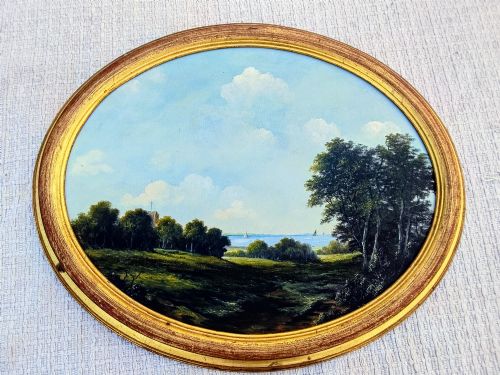


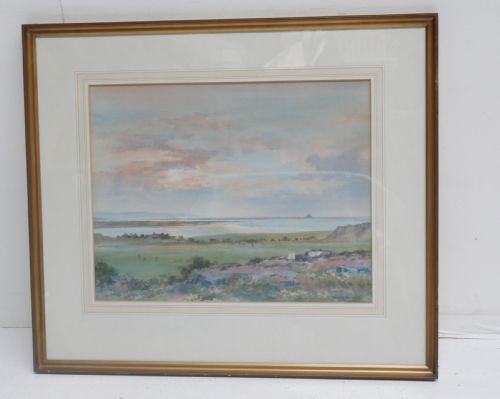


Vintage Coastal View Picture
A vintage coastal view picture captures harbours and shorelines in oil and watercolour across British and European schools.
Vintage Coastal View Picture
A vintage coastal view picture brings maritime scenes and seaside harbours into a room through framed fine art. Buyers seeking a vintage coastal view picture will encounter watercolour paintings and oil paintings spanning from the nineteenth century into the mid-twentieth century.
The works record British coastal towns such as Whitby, Mevagissey and Bamburgh alongside overseas views including Italy and Wales. Most examples arrive framed behind glass or mounted on canvas within wood surrounds.
These pieces encompass traditional maritime subjects and impressionist landscapes by recorded painters. The selection ranges from compact watercolour studies to larger canvases of harbours and docks.
How they were made
Artists painted these coastal scenes using oil paint or watercolour pigment applied to canvas, paper or panel. Oil paintings on canvas provide rich texture and depth, while watercolour paintings utilise fluid pigments on paper for luminous light.
Finished works received wooden frames, occasionally paired with glass protection for watercolours to safeguard the paper surface from atmospheric moisture.
Subsequent restretching or reframing occurred as pieces passed through decades, leaving original wooden mouldings alongside later framing choices.
Listings span periods from the nineteenth century through to nineteen sixty, utilising canvas, paper, oil paint and watercolour.
What varies in quality
Quality rests upon the handling of light and atmosphere by the painter, distinguishing fluent brushwork from rigid recording. The strength of composition and the specific rendering of water, sky and harbour architecture determine the standing of each artwork.
Material preservation also sets works apart, from crisp paper holding vibrant watercolour pigment to stable canvas retaining secure oil paint without extensive restoration. The character of the original wood frame contributes further to the integrity of the piece.
Alfred George Morgan·Gyrth Russell·William Tuck·William Raymond Dommersen·Frank Wood·Frederick William Booty·Alfred Henry Vickers·Albert Robert Quinton·Owen Bowen·S J Lamorna Birch·Rowland Henry Hill
The Vintage Coastal View Picture Glossary
- Watercolour painting
- A work created with water-soluble pigments on paper. This medium relies on the white of the paper to provide luminosity and light.
- Oil painting
- A composition executed with pigments bound in a drying oil medium. It offers deep tones and visible brush texture upon canvas or panel.
- Framed artwork
- A picture enclosed within a protective and decorative border, usually constructed from wood. It often includes glass for works on paper.
- Impressionism
- A style focused on accurate depiction of light and its shifting qualities. It emphasises loose brushstrokes and ordinary subject matter.
Vintage Coastal View Picture: Frequently Asked Questions
How do I hang a heavy oil painting?
Heavy canvas works require secure wall fixings suited to the masonry or plaster of your room. Utilise appropriate picture hooks screwed directly into wall studs or solid anchors.
Ensure the hanging wire or cord at the back of the wood frame is strong and properly secured to the stretcher bars. Balance the weight evenly to keep the coastal scene level.
Can I place watercolours in direct sunlight?
Watercolour pigment on paper remains sensitive to bright daylight and ultraviolet rays. Direct sun exposure causes fading and discolouration over time.
Position these framed pieces on walls away from windows or use protective glass with UV-filtering properties. Regular rotation away from strong light preserves the tones.
How do I clean an old wood frame?
Dust the wood mouldings gently with a dry, soft cloth or a clean artist brush. Avoid liquid cleaners or chemical sprays that might damage antique finishes and gilding.
Inspect the corners and joints for stability before handling. Keep moisture away from the rabbet where the canvas or paper meets the frame.
What is the difference between oil and watercolour?
Oil paint uses drying oils to bind pigments on canvas or panel, yielding thick textures and deep saturation. Watercolour employs water-soluble pigment on paper, creating translucent washes of light.
Oils are generally displayed without glass protection, whereas watercolours require glass to shield the paper from dust and humidity.