


Beige Wall Art Canvas
These beige wall art canvas pieces are oil paintings on canvas and board spanning periods from the nineteenth century to the mid twentieth century, offering collectors traditional European, impressionist, and neoclassical scenes.
Beige Wall Art Canvas
When you search for beige wall art canvas, you are looking at oil paintings executed on canvas or board that capture historical scenes, landscapes, and portraits. The selections here range from nineteenth century works to mid twentieth century examples, reflecting enduring artistic traditions.
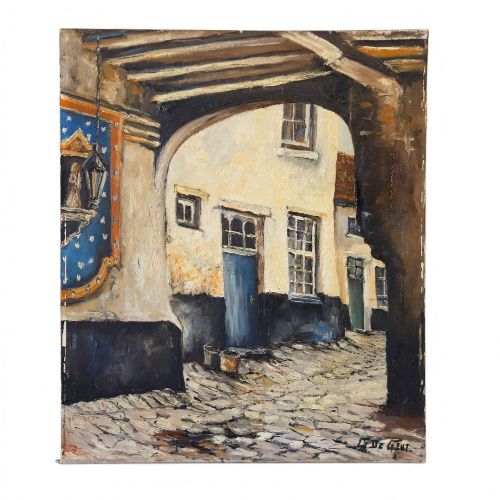
You will most frequently meet oil paintings on canvas depicting coastal views, street scenes, and still lifes. These works span Flemish impressionism, post-impressionism, and mid-century realism, showing varied approaches to composition and tone.
The subjects include European cityscapes, desert landscapes with bedouin figures, and traditional summer landscapes. Each piece offers a window into the period of its creation, utilising oil paint on wood, board, or stretched canvas.
How they were made
These works are executed in oil paint applied to canvas, board, or wood supports. Artists layered pigments to build depth and texture, particularly in impressionist and traditional European compositions.
Canvas supports are stretched over wooden frames, while board and wood panels provide rigid foundations for detailed brushwork. The interaction of oil medium with these grounds determines the surface character of each painting.
Cherubs playing in a nineteenth century trompe l'oeil painting share space with mid-century desert bedouins.
What varies in quality
Quality rests in the handling of brushwork and the cohesion of the composition. Works demonstrating assured application in impressionist or realist styles show greater artistic command.
The sophistication of the palette and the treatment of light distinguish finer pieces. Masterful tonal control elevates works from simple decorative items to accomplished historical examples.
L De Gent·Freda Marston·William Greaves·Maurice Codner
The Beige Wall Art Canvas Glossary
- Canvas
- A heavy woven fabric used as a surface for oil painting. It is typically stretched over a wooden frame before application of the ground and pigments.
- Impressionism
- A nineteenth century style characterised by relatively small, thin, yet visible brush strokes and an emphasis on accurate depiction of light.
- Trompe l'oeil
- An art technique involving extremely realistic imagery in order to create the optical illusion that the depicted objects exist in three dimensions.
- Post-Impressionism
- A predominant style extending impressionism while rejecting its limitations, using vivid colours and thick application of paint.
- Neoclassical
- A style inspired by the classical art and culture of ancient Greece or Rome, prioritising proportion, simplicity, and symmetry.
Beige Wall Art Canvas: Frequently Asked Questions
What periods do these paintings come from?
The works span from the nineteenth century through the 1920s, 1930s, 1940s, and 1960s. This range encompasses diverse artistic movements from neoclassical to mid-century realism.
Each period brings distinct stylistic conventions, materials, and thematic focuses to the canvas.
What materials were used?
Artists used oil paint applied to stretched canvas, board, or wood panels. These traditional materials ensured longevity and stability for the pigments.
The combination of oil medium and rigid or flexible supports defines the physical structure of each artwork.
How do I identify impressionist works?
Impressionist pieces feature visible brush strokes, loose handling of paint, and an emphasis on natural light. Subjects often include landscapes, cityscapes, and everyday scenes.
Flemish and post-impressionism variants offer further stylistic nuances within this broader category.
How were these pieces framed or displayed?
Paintings on canvas are typically stretched over wooden frames, while board and wood panels provide alternative rigid supports. These configurations allowed for straightforward wall mounting.
Display methods reflect the period norms of the nineteenth and twentieth centuries.