


Vintage Coastal Fine Art
Vintage coastal fine art captures harbours, cliffs, and open waters through the eyes of painters working across the nineteenth and twentieth centuries.
Vintage Coastal Fine Art
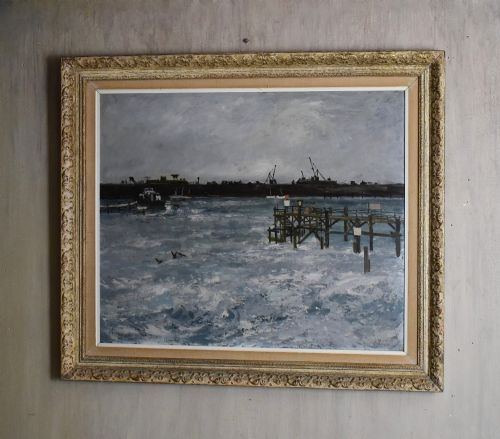
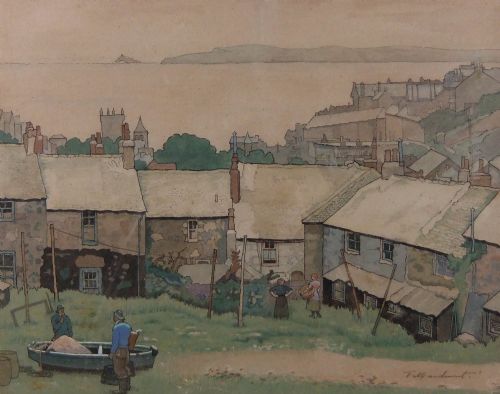
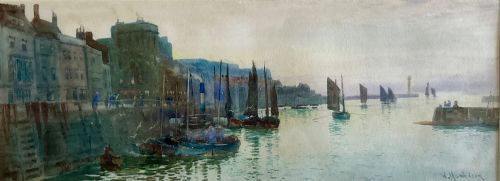
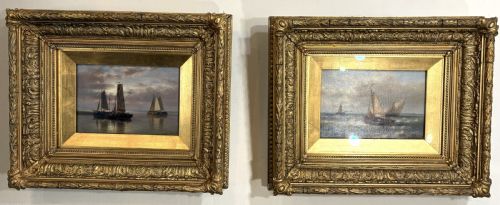
Vintage coastal fine art encompasses paintings and works on paper recording maritime scenes, fishing ports, and coastal landscapes. These pieces range from nineteenth-century academic watercolours to mid-century impressionist canvases capturing light on water.
The selections available here lean heavily toward early-to-mid twentieth-century oils and watercolours, with strong representation from British, French, and European regional schools. Buyers encounter harbour views, cliffside studies, and open shorelines executed in distinct impressionist and post-impressionist idioms.
Materials and Techniques
Artists working in this genre relied primarily on oil paint applied to canvas or wood panels, alongside watercolours worked on paper. Oil mediums allowed for textured impasto capturing the weight of sea spray and clouds, while watercolours offered swift, transparent washes suited to changing coastal light.
Support materials varied from traditional stretched canvas to heavy paper and card, often framed in period timber mouldings that reflect the aesthetic of the painting's era.
Listings span works dated from the nineteenth century through the 1960s, employing canvas, wood, paper, oil, and watercolour.
Distinctions in Quality
Quality in these works rests on the artist's command of light, atmosphere, and spatial depth rather than the mere recording of a geographic location. Superior examples demonstrate confident brushwork and a coherent tonal balance that conveys the actual movement and air of the shore.
Lower-tier works often slip into formulaic repetition, lacking the specific atmospheric observation that distinguishes a direct study from a commercial souvenir painting.
Peter Brannan·Thomas Maidment·William Matthison·Abraham Hulk I·Raymond Moritz·Jean-Baptiste Olive·Herbert Royle·Eugene Joseph Verboeckhoven·Stephen J Renard·William Pitt·John Douglas Perrett·Sir William Russell Flint·James Torrington Bell·Frank Wasley·Hirst Walker·Owen Bowen·H Hadfield Cubley·John Sanderson Wells·Ernst Louizor·Charles Euphrasie Kuwasseg·Walter Holmes·James Ward·Fred Stead·William Kay Blacklock·John W Gilroy
The Vintage Coastal Fine Art Glossary
- Impressionism
- A nineteenth-century painting style focusing on the accurate depiction of light in its changing qualities. Artists used small, thin, yet visible brush strokes.
- Impasto
- The process of applying paint thickly on a canvas so that it stands out from the surface. This technique adds tactile dimension to waves, sails, and clouds.
- Post-Impressionism
- A movement extending impressionism while rejecting its limitations. Painters sought to express deeper emotional resonance through vivid colour and geometric forms.
- Provenance
- The chronology of the ownership or location of a historical object. Documented history aids in confirming an artwork's attribution and authenticity.
Vintage Coastal Fine Art: Frequently Asked Questions
How do I identify the period of a coastal painting?
Examine the materials, stretcher frames, and stylistic markers such as brushwork and clothing styles of any figures present. Pigments and canvas types also offer reliable clues to a work's decade of creation.
Compare the handling of light and colour against documented movements like British Impressionism or Post-Impressionism. Signatures, exhibition labels, and inscriptions on the reverse often confirm the exact period.
Were these works painted outdoors or in studios?
Many nineteenth and twentieth-century coastal painters embraced plein air practice, carrying boards and watercolours directly to cliffs and harbour walls. This direct engagement captured transient weather and shifting tides.
Larger exhibition pieces were frequently developed in studios using smaller plein air oil sketches and charcoal drawings gathered on site.
How should I frame and display vintage coastal art?
Select frames that complement the period of the artwork, as original or period-appropriate wood mouldings enhance the historical context. Avoid overly ornate modern frames that clash with vintage aesthetics.
Keep paintings away from direct sunlight and damp environments to protect nineteenth and twentieth-century canvases and watercolours from pigment degradation and paper foxing.
What distinguishes British coastal art from French works?
British coastal painting often emphasises atmospheric weather, moody grey waters, and the daily toil of fishing communities in locations like Whitby and St Ives. The palette tends toward subdued, tonal harmonies.
French coastal art, particularly works from Provence and the Riviera, frequently employs brighter, unblended pigments to capture intense Mediterranean sunlight and vibrant port activity.