
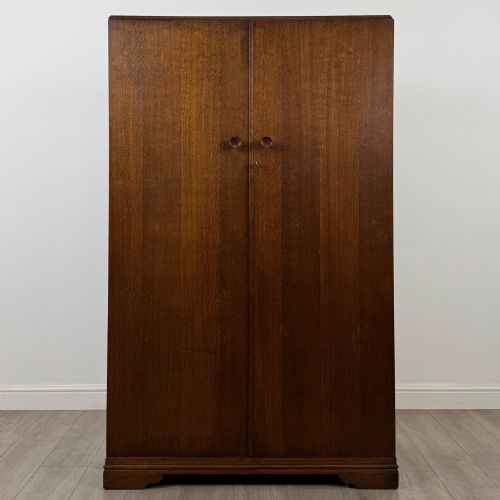
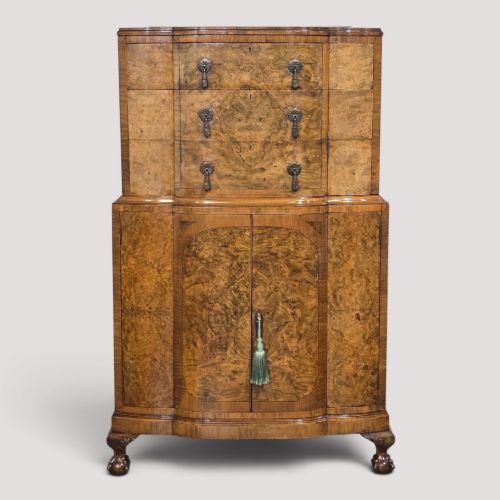
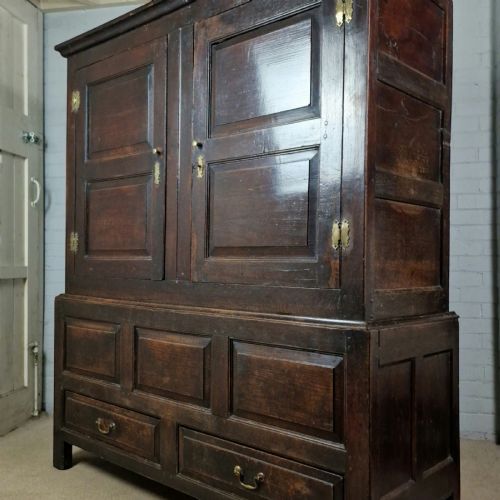
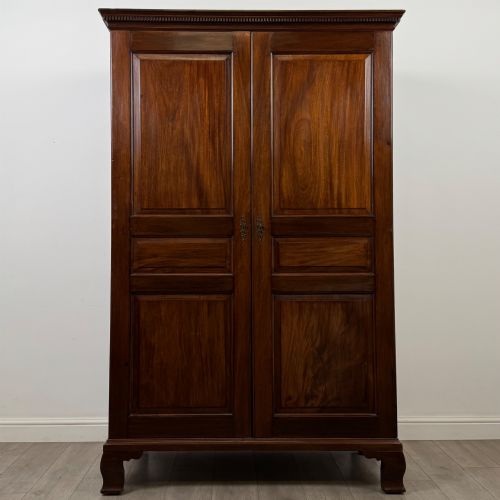
Vintage Clothes Press Cupboard
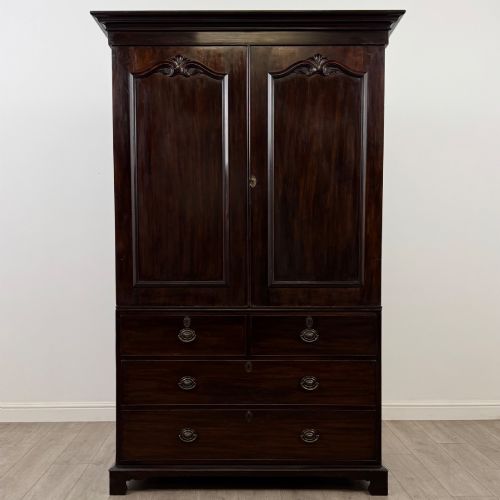
A vintage clothes press cupboard brings substantial timber presence and traditional compartmentalised storage to a bedroom.
Vintage Clothes Press Cupboard
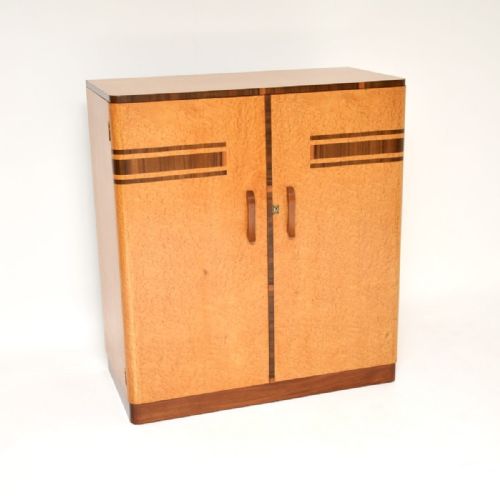
When a buyer searches for a vintage clothes press cupboard, they encounter large timber storage furniture designed to hold folded linens and hanging garments alike. The selection on this page draws heavily from Georgian, Victorian, and Edwardian eras, spanning utilitarian pine pieces to formal mahogany designs.
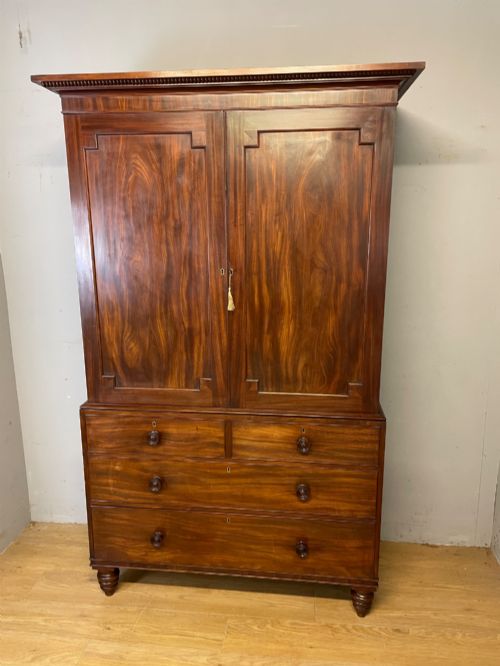
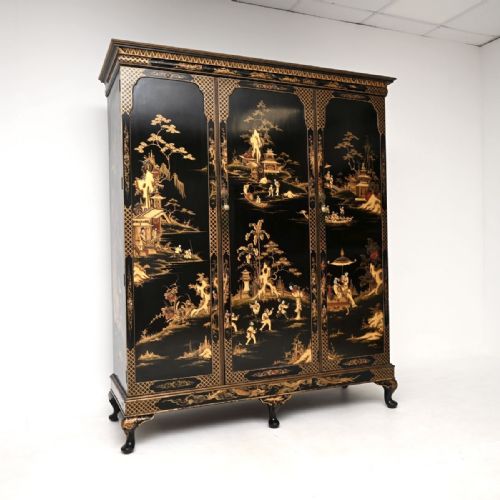
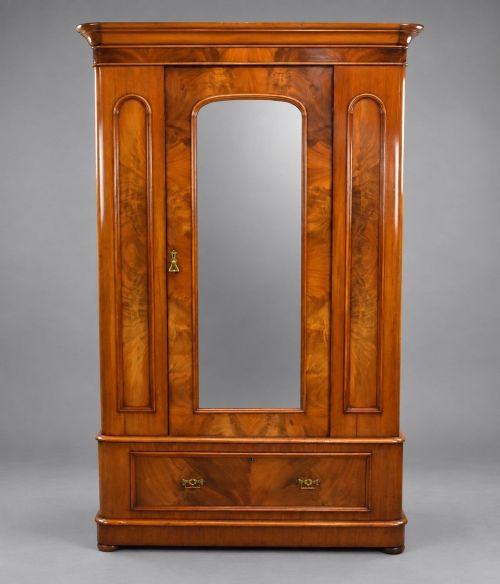
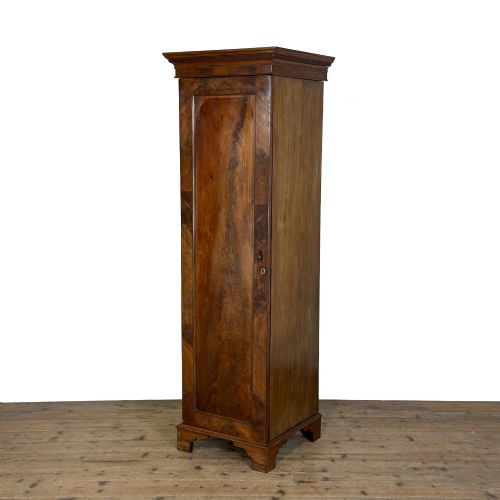
The predominant forms combine upper sliding trays or cupboard doors with lower banks of drawers, alongside dedicated wardrobes and compactums. Pieces range from modest single-door pine cupboards to massive triple-door mahogany and walnut armoires built for substantial town and country houses.
Materials and Construction
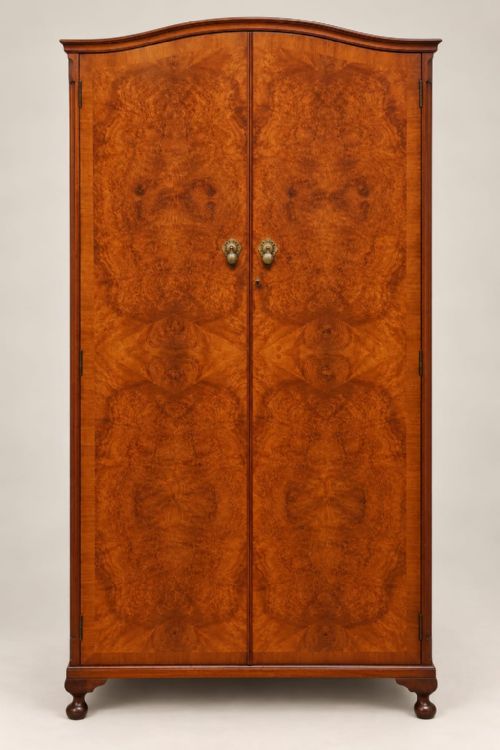
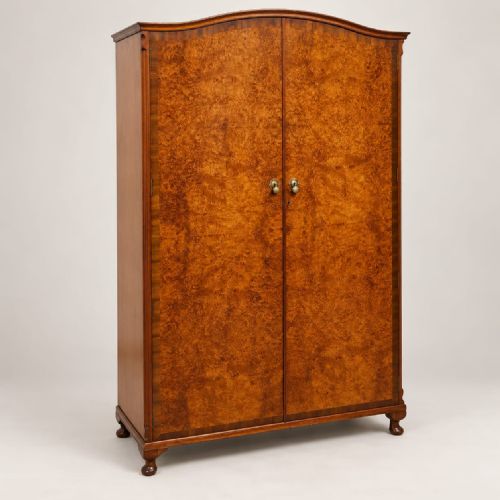
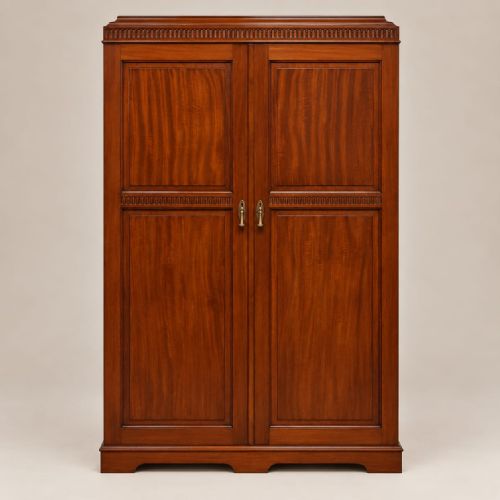
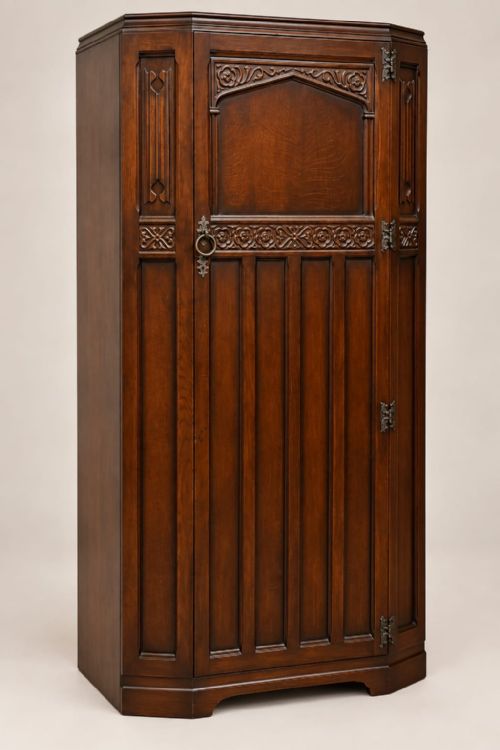
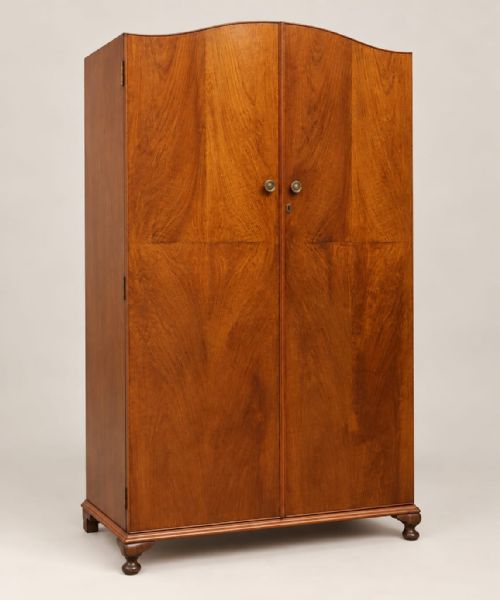
Cabinet makers utilised dense hardwoods such as mahogany, walnut, and oak, alongside more accessible softwoods like pine. Finer pieces incorporate satinwood inlay, flame mahogany veneers, burr walnut figuring, and hand-carved blind fretwork cornices.
Internal construction relies on traditional joinery, dovetail drawer boxes, and panelled doors, sometimes supplemented by brass hardware and mirrored glass panels. Painted finishes, ebonised surfaces, and scumble faux oak paintwork also appear across the selection.
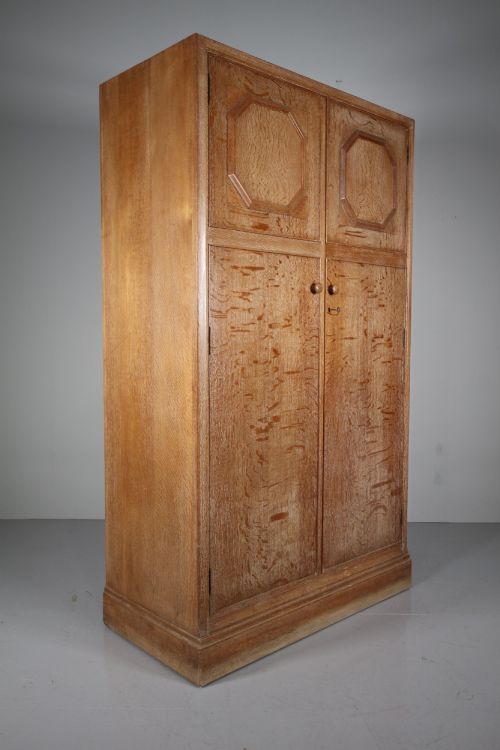
Several cupboards retain hand-brushed scumble paintwork, proving that Victorian domestic thrift could look remarkably like fine oak.
Evaluating the Build
Quality rests in the selection of timber veneers, the crispness of inlaid banding, and the precision of the cabinet joinery. Superior examples maintain stability across large panel doors and incorporate well-fitted internal linen slides that glide smoothly.
The distinction between standard utility items and finer commissions lies in secondary timbers, the thickness of drawer linings, and the retention of original brass fixtures, locks, and cornicing.
maples & co·Harris Lebus·Druce & Co.
The Vintage Clothes Press Cupboard Glossary
- Linen Press
- A tall storage piece traditionally used for storing folded linen in sliding trays behind upper doors, positioned above a chest of drawers.
- Compactum
- A multi-functional wardrobe combining hanging space, linen shelves, and drawers within a single unified cabinet.
- Blind Fretwork
- Carved decorative geometric woodwork applied to cornices or friezes without cutting all the way through the timber.
- Scumble
- A decorative painting technique used to create artificial wood grain or texture over a base coat of paint.
Vintage Clothes Press Cupboard: Frequently Asked Questions
What is a clothes press cupboard?
A clothes press cupboard is a traditional tall storage unit designed with upper compartments for folded textiles and lower drawers for apparel. These pieces serve as practical bedroom furniture while offering distinct period character.
They evolved from simple linen storage into comprehensive wardrobes as domestic fashions changed. Today they provide deep, compartmentalised storage that suits modern bedroom layouts.
How do I tell a Georgian press from a Victorian one?
Georgian presses typically display classical proportions, restrained mahogany or satinwood veneers, and formal architectural cornicing. Victorian examples often utilise heavier timbers, burr walnut, or figured mahogany with bolder mouldings and mirrored doors.
Construction details also help distinguish the eras, as earlier pieces rely on hand-cut dovetails and solid secondary woods. Later 19th-century items frequently introduce larger glass panels and more eclectic revival styles.
Can these large cupboards be dismantled for transport?
Many larger wardrobes and presses from the Victorian and Edwardian periods were built as knockdown furniture designed to be taken apart. These pieces use bolted corner posts and modular sections to ease movement through tight spaces.
Solid Georgian and earlier carcase pieces, however, often remain as single rigid units that require careful measurement of stairwells and doorways before delivery.
How should I care for timber surfaces?
Maintain the timber by applying traditional beeswax periodically to nourish the wood grain and preserve the finish. Avoid placing antique cupboards near direct heat sources or in fluctuating humidity to prevent timber movement.
Dust regularly with a soft, dry cloth and protect surfaces from moisture by using coasters or felt pads beneath objects placed on top.