


Vintage Claret Pitcher
A vintage claret pitcher brings poured wine to the table in cut glass and silver plate, combining function with period design.
Vintage Claret Pitcher
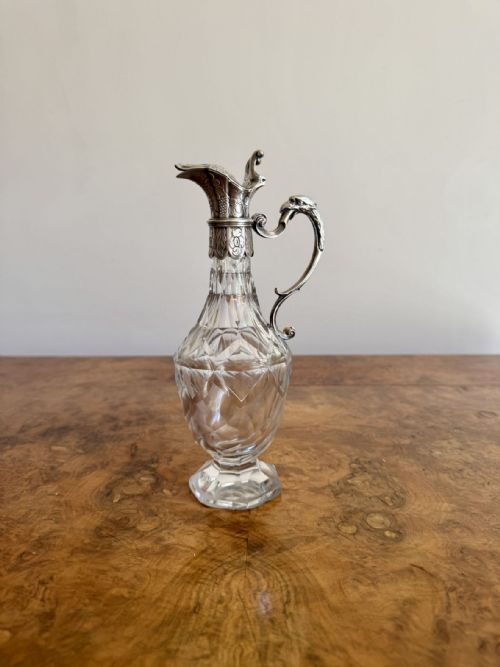
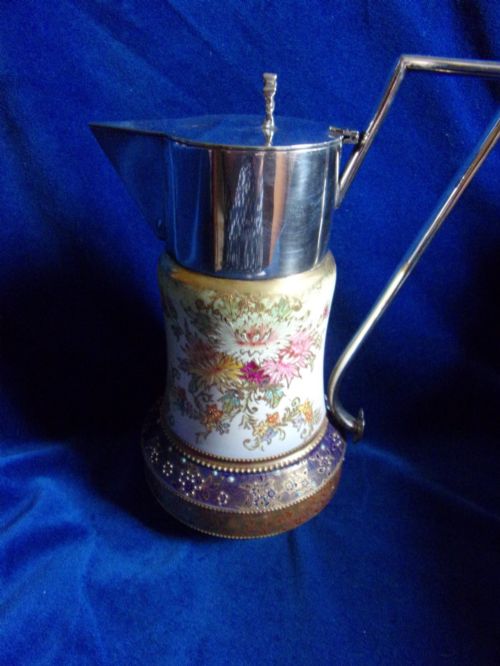
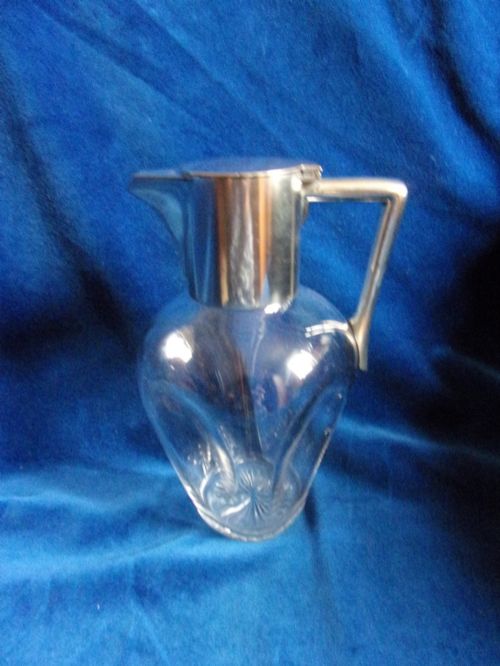
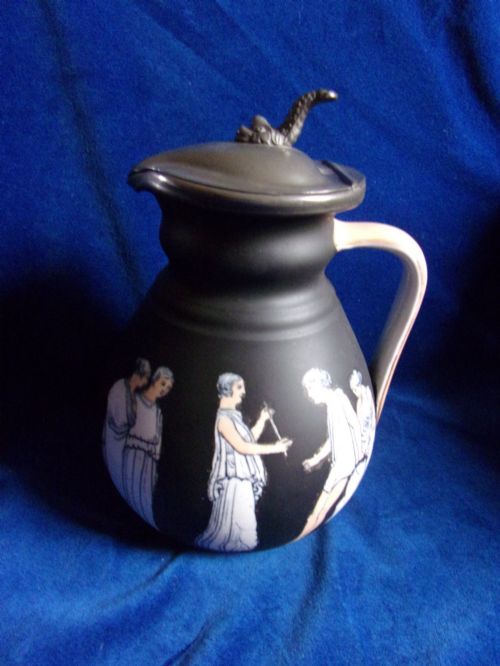
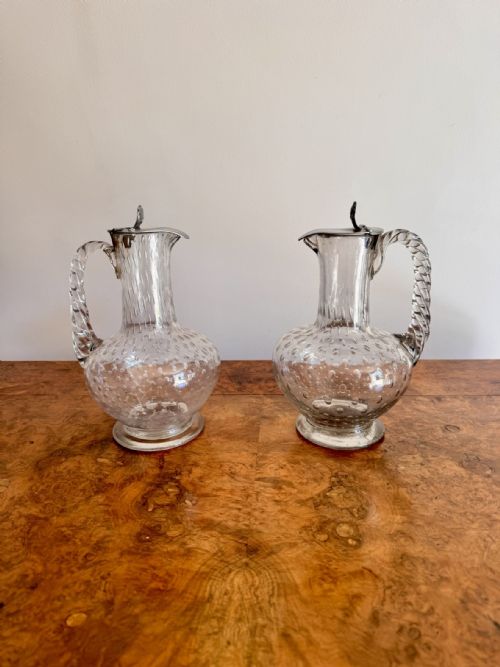
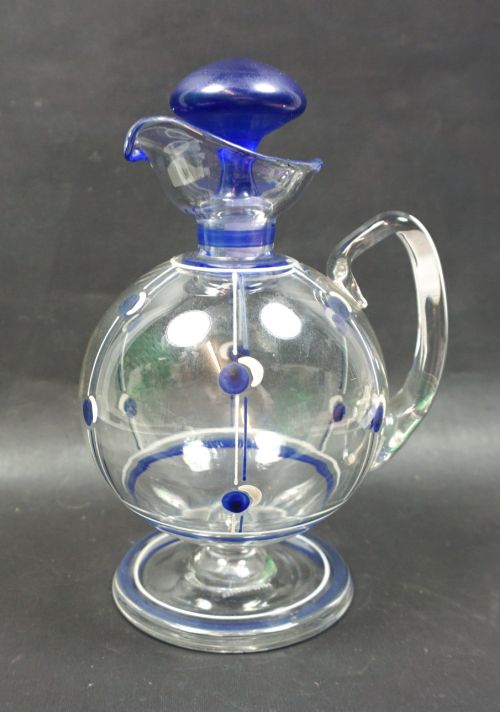
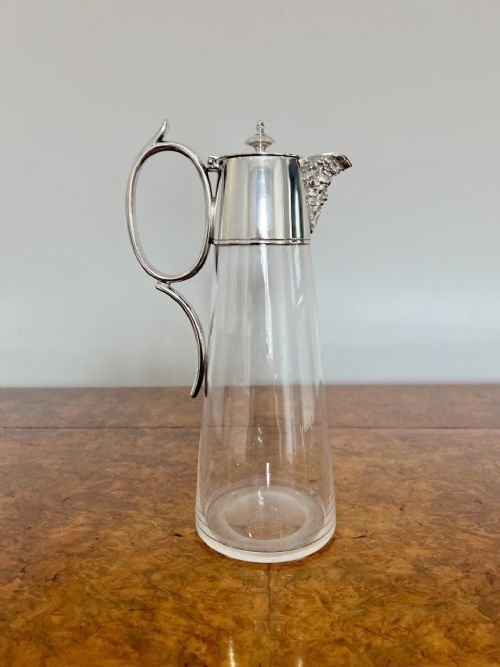
A vintage claret pitcher is a vessel designed specifically for serving wine, appearing most frequently on this page in Victorian and Edwardian iterations. These pieces combine glass bodies with metal mounts, drawing from styles that range from Victorian Neoclassical and Arts and Crafts to Art Nouveau and Art Deco. Collectors encounter forms described variously as claret jugs, decanters, ewers, and water jugs.
The materials span clear and coloured glass paired with silver plate, sterling silver, pewter, and enamel decoration. Production dates cluster around the nineteenth and early twentieth centuries, encompassing the 1860s through the 1920s. Makers and designers utilised traditional methods to shape heavy glass and cast metal mounts for table service.
How They Were Made
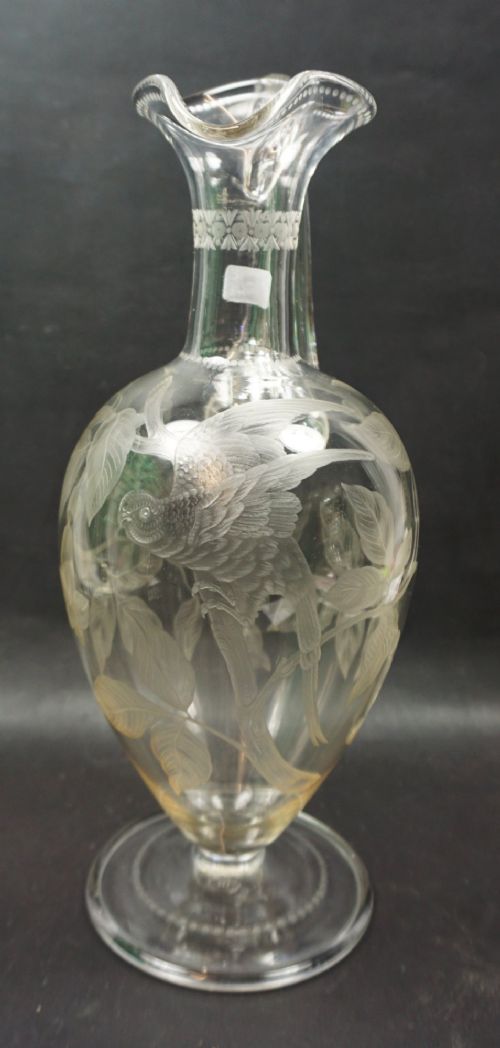
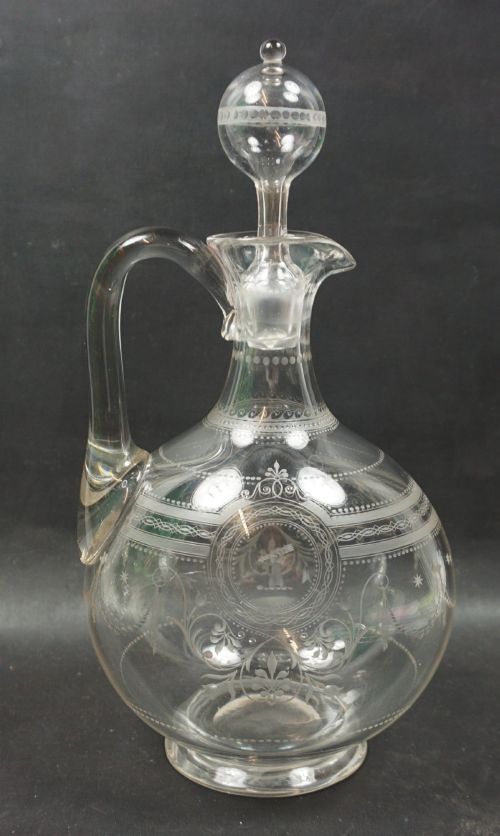
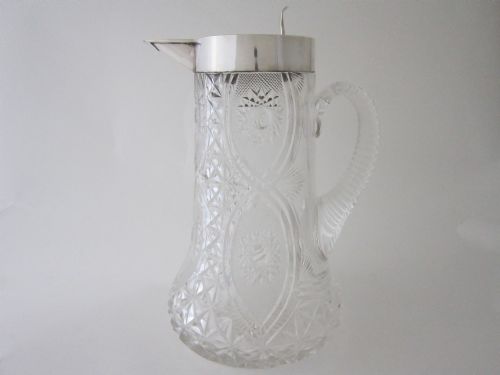
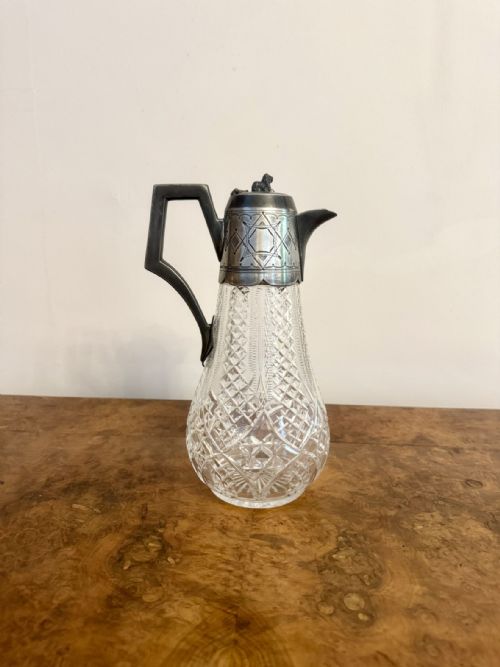
Glass bodies were formed by blowing and moulding, often finished with deep facet cutting or wheel engraving to catch the light. Coloured glass variants incorporate cranberry, green, amber, and red crystal.
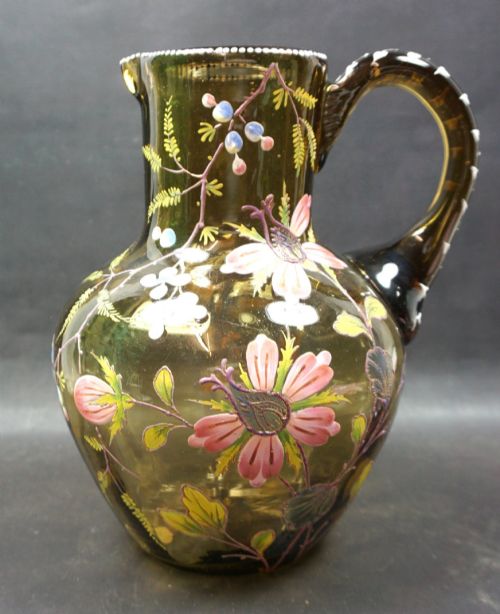
Metal mounts, lids, and handles utilised silver plate, sterling silver, or pewter, shaped via casting and soldering to fit the glass neck securely. Enamel work and gilding frequently provide surface detail on the glass or metal components.
Vintage Claret Pitcher Retail Price Guide 2026
Typical asking prices for vintage claret pitcher among the pieces listed under this phrase on Sellingantiques today, from the lower quarter to the upper quarter. They describe what is for sale here now, not the wider market.
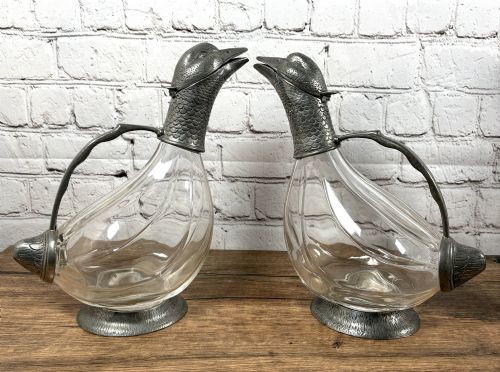
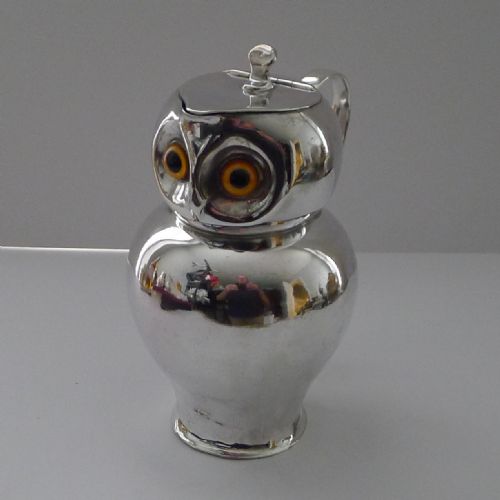
Some Victorian glass pitchers took the form of a dog or an owl with glass eyes, pouring wine from unusual creatures.
What Varies in Quality
The distinction between tiers rests upon the weight and clarity of the glass, alongside the crispness of the cutting and engraving. Heavier crystal bodies paired with substantial metal mounts indicate superior output.
Detailing in the metalwork, such as cast handles, fitted hinged lids, and applied enamel or novelty motifs, separates standard utility vessels from more ambitious decorative examples.
Carltonware·Mappin and Webb·Archibald Knox for Liberty and Co·Richardsons·Tiffany
The Vintage Claret Pitcher Glossary
- Claret jug
- A vessel specifically intended for serving red wine at the dining table. They typically feature a handle, a hinged lid, and a pouring spout.
- Silver plate
- A base metal coated with a thin layer of silver using electrochemical or mechanical methods. This technique provided the appearance of solid silver at a lower cost.
- Cranberry glass
- A rich pinkish-red glass coloured by the addition of gold chloride to the molten batch. It gained popularity during the Victorian period for tableware.
- Ewer
- A large jug with a wide spout and a bulbous body, historically used for water or wine. Many Victorian examples functioned as decorative claret pitchers.
- Cut glass
- Glass decorated by grinding facets or patterns into the surface using rotating wheels. Deeper cuts produce sharper refractions of light.
Vintage Claret Pitcher: Frequently Asked Questions
What is a vintage claret pitcher used for?
These pitchers served to decant and pour wine, particularly claret, at the dining table during the Victorian and Edwardian eras. The addition of a lid kept contents covered between pours.
Today, collectors utilise them for serving drinks or display them as decorative table objects that reflect period craftsmanship.
How do I date a claret pitcher?
Dating relies on the stylistic markers of the mounts and the manufacturing techniques of the glass body. Victorian pieces often display heavy Neoclassical or ornate cut glass designs, while Edwardian and later examples lean towards simpler forms or Art Nouveau curves.
Hallmarks on silver or silver-plated mounts provide definitive year codes and maker marks for accurate chronological placement.
What is the difference between a claret jug and a decanter?
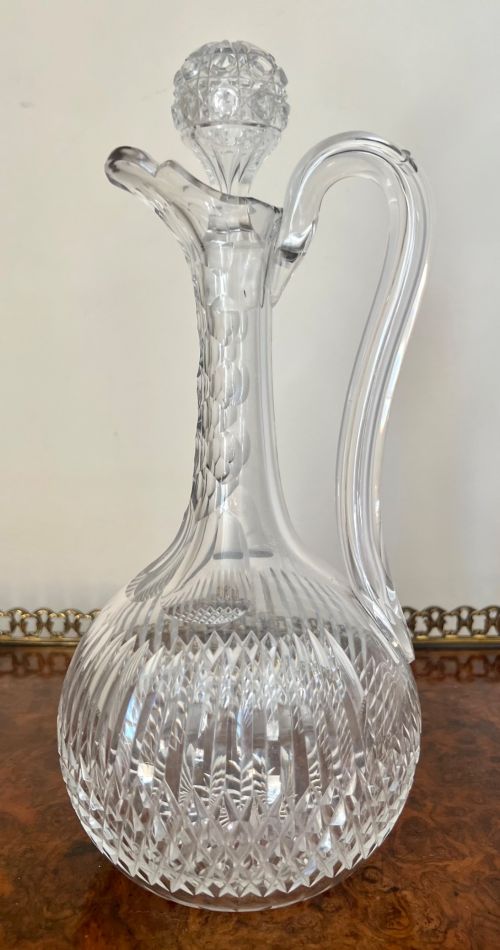
A claret jug invariably incorporates a handle, a hinged lid operated by a thumbpiece, and a spout designed for immediate pouring at the table. Decanters typically feature a stopper rather than a hinged lid and handle mechanism.
Pitchers and ewers bridge these categories, often sharing the handled, spouted silhouette of the claret jug.
How should I clean a vintage claret pitcher?
Gentle hand washing with warm water and mild detergent preserves both the glass and the metal mounts. Abrasive sponges should be avoided to protect silver plating and enamel decoration.
Silver components benefit from occasional polishing with a suitable cloth, taking care to keep polish away from glass surfaces.