


Vintage Cityscape Artwork
These vintage cityscape artwork selections capture streets, canals and squares in oil and watercolour from the nineteenth century to the mid-twentieth century.
Vintage Cityscape Artwork
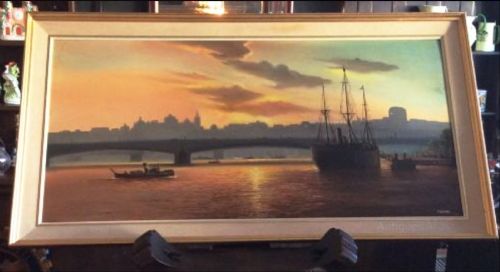
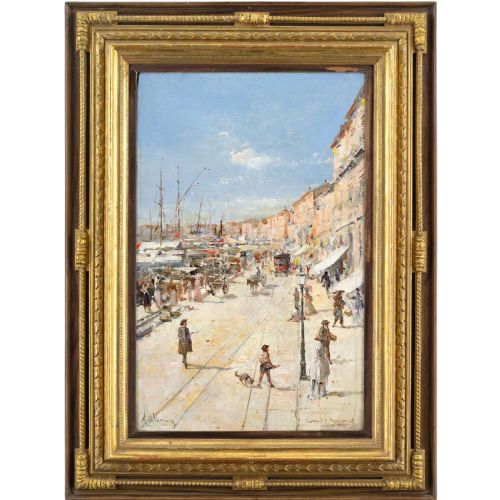
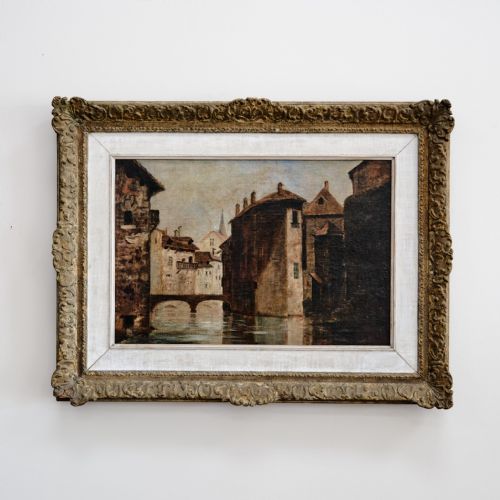
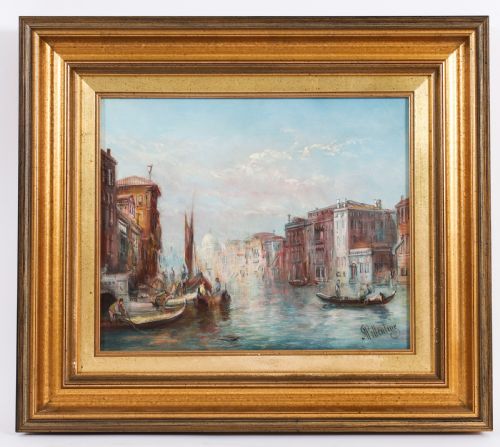
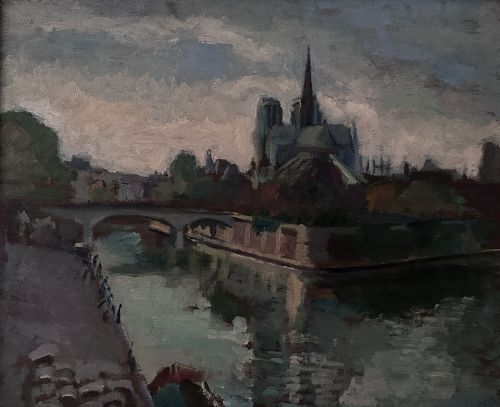
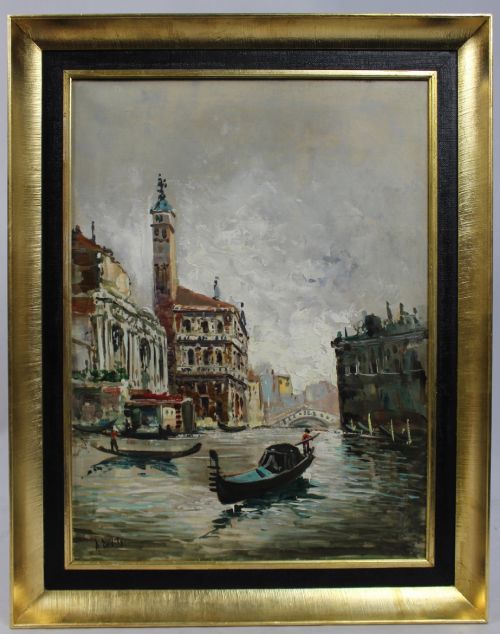
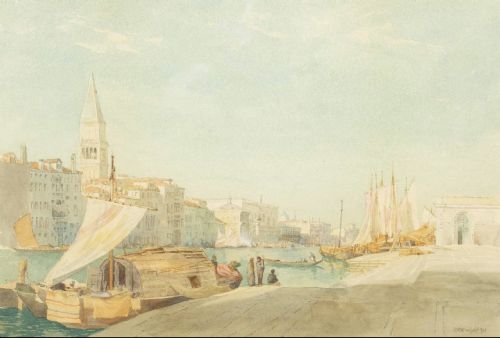
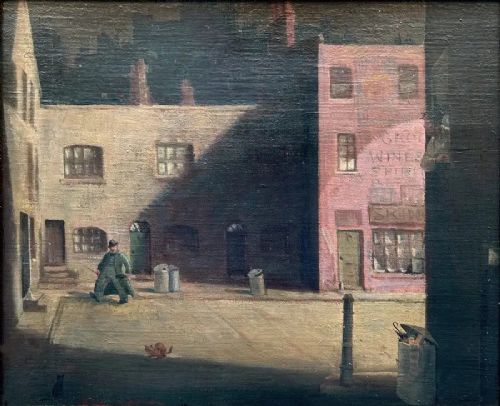
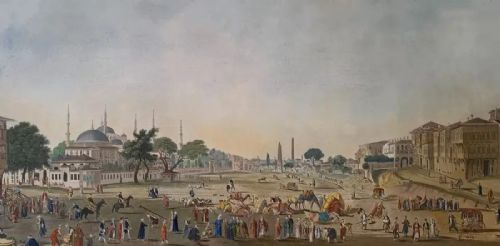
Vintage cityscape artwork encompasses painted and drawn views of urban environments, spanning major European capitals like London, Paris, Venice and Constantinople. The selection centres heavily on mid-century creations from the 1950s and 1960s, alongside nineteenth-century and early twentieth-century examples.
The dominant formats on this page are oil paintings on canvas and board, accompanied by watercolours and framed wall art. Subjects range from tranquil Venetian canals and bustling Parisian street scenes to panoramic river views.
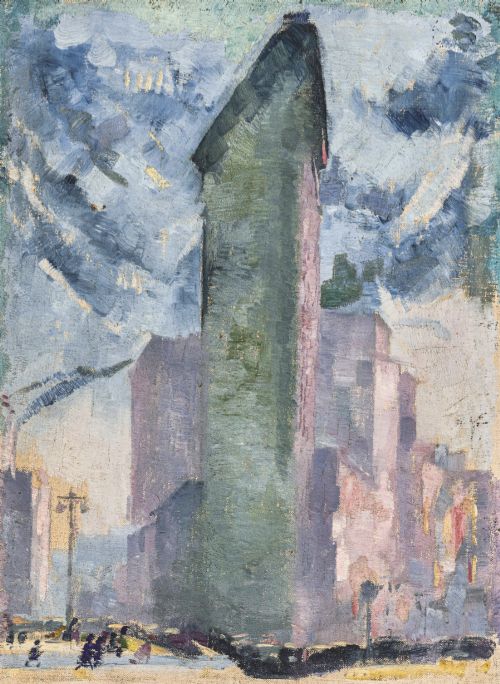
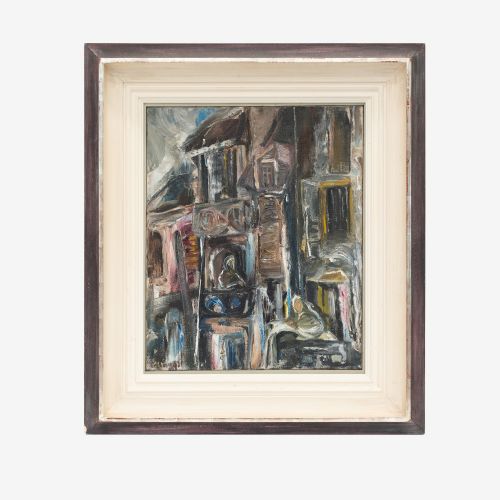
Stylistically, the works draw upon Impressionism, Post-Impressionism, Mid-Century Modernism and Victorian traditions. Pieces vary from detailed topographical records to expressive, textured impasto interpretations of urban light and atmosphere.
How they were made
Artists built these compositions primarily using oil paint on canvas or board, applying pigments either in smooth, measured strokes or through thick impasto that creates tangible texture on the surface. Watercolours on paper provide a lighter, more translucent alternative for architectural details and washes of sky.
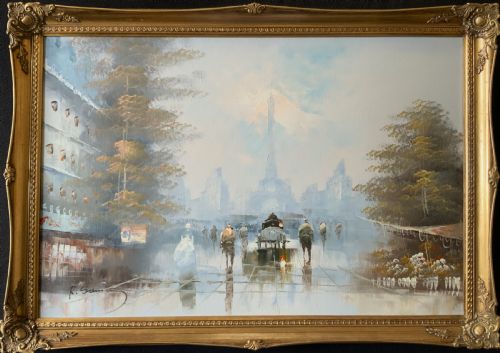
Supporting these works, wooden frames often feature gilded wood or giltwood finishes that complement the period aesthetic. Many pieces retain their original framing choices, ranging from simple mouldings to ornate nineteenth-century profiles.
Harlequin and Pierrot occasionally wander out from the imaginary quays of Paris into the urban traffic.
What varies in quality
Quality rests in the artist's command of light, perspective and atmospheric depth within the urban setting. Stronger works capture the bustling movement of crowds and the specific quality of light on stone buildings, whereas weaker examples rely on formulaic repetition.
The handling of medium also dictates distinction, as seen in the confident application of thick impasto versus flat, uninspired washes. Material integrity, including the preservation of the original canvas and complementary wooden frames, further defines the standard.
Augusto Alberici·Alfred Pollentine·Antonio DeVity·Richard Henry Wright·Francisco Sancha·Anton Ignaz Melling·Alfred Wolmark·Lilian Colbourn·Caroline Burnett·Paul-Jean Anderbouhr·Victor Gabriel Gilbert·Gabriel Dauchot·Fred Lawson·Charles James Lauder·Ron Folland·Merio Ameglio·E A Minardo·J W Hogley·Claude Jousset·Hein Hoppmann·William Raymond Dommersen
The Vintage Cityscape Artwork Glossary
- Impasto
- Paint applied thickly to a canvas or board, leaving visible brush or palette knife marks that stand proud of the surface. This technique adds physical dimension and tactile quality to urban scenes.
- Post-Impressionism
- An art movement extending French Impressionism while rejecting its limitations, favouring bolder colours and distinct geometric forms. Artists in this style focused on emotional resonance over pure visual recording.
- Giltwood
- Wood carved and covered with a thin layer of gold leaf or gold paint. It frequently appears on antique and vintage frames surrounding canvas paintings.
- Grand Tour
- A traditional trip through Europe undertaken by upper-class Europeans during the eighteenth and nineteenth centuries. Paintings and watercolours gathered along the route often documented famous cityscapes and antiquities.
- Mid-Century Modern
- A style in design and art that developed roughly from the mid-1930s through the mid-1960s. Works from this period often embrace simplified forms and expressive interpretations of everyday city life.
Vintage Cityscape Artwork: Frequently Asked Questions
What periods do these cityscapes cover?
The works span from the nineteenth century through the 1960s, encompassing Victorian, Edwardian, and mid-century eras.
Mid-century creations from the nineteen-fifties and sixties appear most frequently across the collection.
Which cities are commonly depicted?
London, Paris, Venice and Constantinople feature prominently among the urban scenes recorded by the artists.
Views also extend to regional European market squares, cathedrals and lesser-known continental streets.
How should I care for these paintings?
Keep the artworks away from direct sunlight and maintain stable indoor humidity levels to protect canvas and wood.
Dust gilded wooden frames gently with a dry, soft cloth without applying liquid cleaners.
Are these works framed?
Many pieces arrive in period frames, including gilded wood and giltwood configurations chosen to match the era of the art.
Specific framing details are noted individually for each piece within its listing.