


Vintage Citrine Jewellery
Vintage citrine jewellery brings golden quartz stones from the nineteenth century, Art Deco and mid-century decades into modern wear.
Vintage Citrine Jewellery
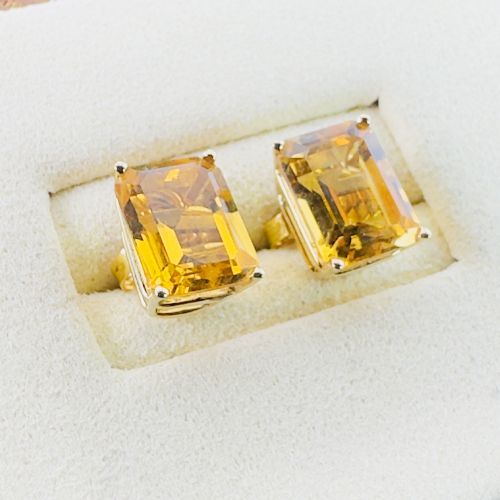
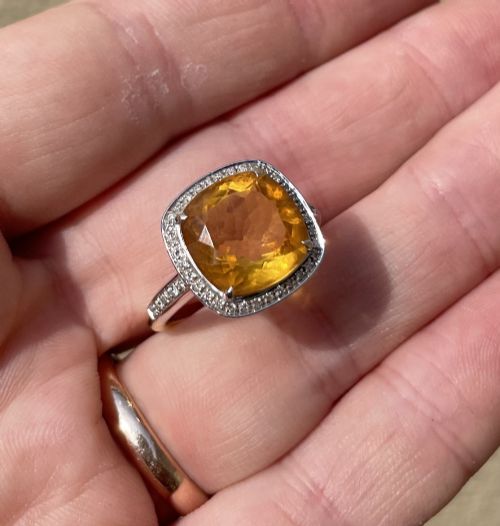
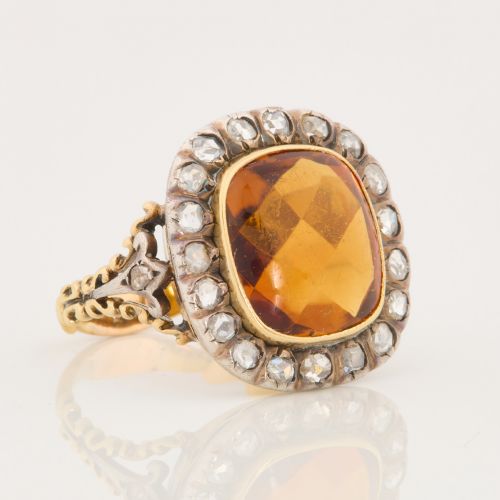
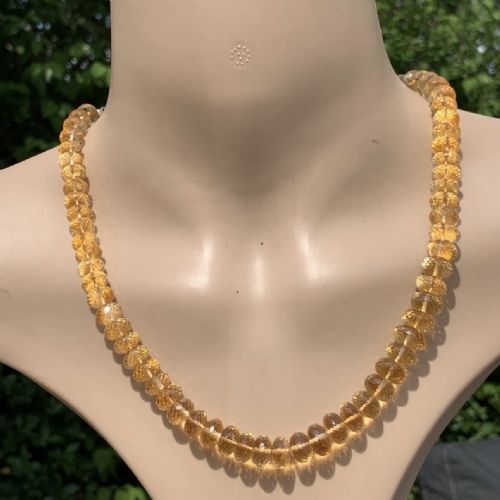
Vintage citrine jewellery encompasses rings, necklaces, earrings, brooches and charms spanning periods from the Victorian era through the 1960s. These pieces showcase yellow quartz stones shaped into emerald, cushion, oval, pear and trillion cuts, often mounted alongside diamonds, pearls or marcasite.
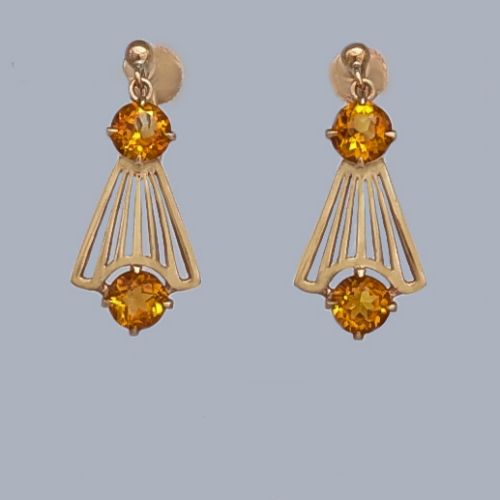
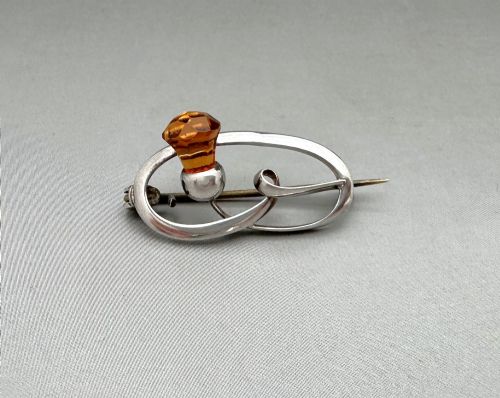
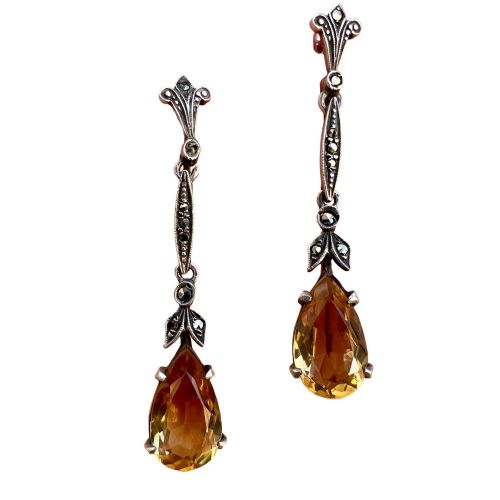
The selections available range from delicate Edwardian drop necklaces and Art Deco drop earrings to substantial mid-century cocktail rings and heavy yellow gold spinner fobs. Buyers encounter Scottish revival motifs, Celtic designs and intricate floral metalwork alongside clean geometric twentieth-century settings.
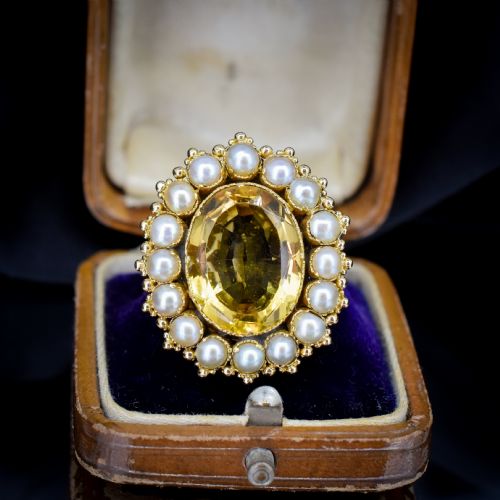
The forms reflect distinct historical preferences, moving from ornate nineteenth-century cluster rings and pearl-bordered halos toward the streamlined geometry of the 1920s and the bold, oversized stone settings of the 1950s.
Materials and construction
Metals span sterling silver, silver gilt, and gold varieties including nine-carat, fourteen-carat, fifteen-carat and eighteen-carat yellow gold. Stones are secured in claw settings, bezels or detailed cluster arrangements, sometimes paired with seed pearls, diamonds or plique-à-jour enamel work.
Craftsmen utilised traditional techniques such as hand-faceting large quartz crystals, hinging lever-back earrings, and mounting stones in pierced or engraved galleries. Brooches and pendants often incorporate secure safety catches, hinged bails or specialised findings appropriate to their specific decades.
Several items double as functional curiosities, including a sterling silver whistle charm and a rotating spinner fob.
Factors of quality
Quality rests in the clarity and saturation of the citrine crystal, the weight and purity of the gold or silver mount, and the precision of the stone cutting. Superior examples combine deeply saturated golden quartz with secure, finely articulated settings and well-matched accent stones like diamonds or pearls.
The distinction between standard commercial pieces and finer items depends upon the handwork involved in the metal gallery, the originality of the design, and the overall balance of stone size to precious metal weight.
Charles Horner·Heinrich Levinger·Liberty and Co
The Vintage Citrine Jewellery Glossary
- Citrine
- A yellow variety of quartz valued for its warm golden and amber hues. It serves as the primary gemstone across Victorian, Art Deco and mid-century designs.
- Cluster ring
- A ring featuring a central prominent gemstone surrounded by a border of smaller stones, typically diamonds or pearls. This arrangement maximises visual presence on the hand.
- Plique-à-jour
- An enamelling technique where enamel is applied within a wire framework without a backing, creating a translucent stained-glass effect. It appears on fine Edwardian and Art Nouveau pendants.
- Spinner fob
- A rotating pendant, often mounted in nine-carat gold, designed to turn within its outer frame. They frequently house large faceted quartz stones.
- Marcasite
- Small faceted pyrite stones set closely together in silver to resemble cut steel and provide metallic sparkle. These are typical accents in twentieth-century drop earrings.
Vintage Citrine Jewellery: Frequently Asked Questions
How do I clean vintage citrine jewellery?
Clean these pieces using warm soapy water and a soft brush to remove dirt from beneath the stone settings. Avoid harsh chemical dips or ultrasonic cleaners, particularly when pearls or enamel are present in the mount.
Dry the metal and stones thoroughly with a soft cloth after washing. Store each item individually to prevent scratching between softer gold settings and harder gemstones.
What periods are common for these pieces?
The pieces span the Victorian era, the Edwardian period, the Art Deco 1920s and 1930s, and mid-century 1950s and 1960s production. Each era brings distinct metal colours and stone-cutting styles to the jewellery.
Victorian items often feature closed-back foils or heavy gold settings, whereas 1950s examples lean towards large, unhindered gemstone weights in yellow gold mounts.
Are citrine and topaz the same stone?
Citrine is a yellow quartz, whereas topaz is a distinct and chemically different mineral species. Both appear in vintage pieces with warm yellow tones.
Jewellery descriptions specify the exact material used, as topaz carries different refractive properties and historical valuation compared to quartz.
How can I tell an Art Deco ring from a Victorian one?
Art Deco rings prioritize strict symmetry, geometric lines, and white metals or sharp yellow gold bezels. Victorian examples lean toward organic motifs, cluster halos with pearls, and heavier gold weights.
Examining the gallery construction and the cut of the citrine reveals the manufacturing standards of the respective decade.