
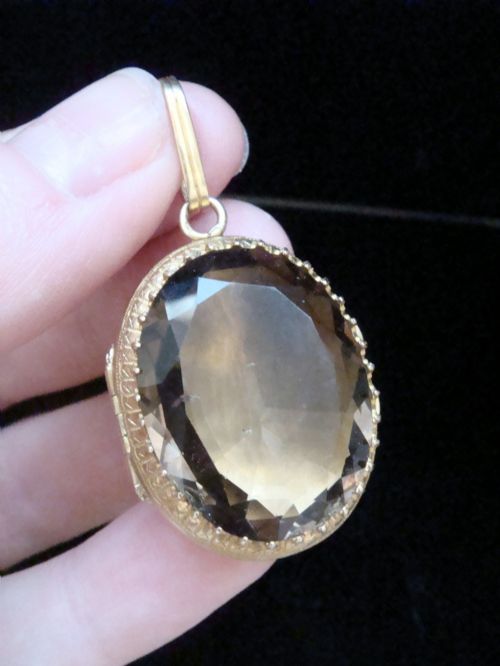


Citrine Gold Necklace Pendant
A citrine gold necklace pendant brings together rich yellow quartz and precious metal to create a striking focal point for the neckline.
Citrine Gold Necklace Pendant
When you search for a citrine gold necklace pendant, you encounter pieces that span from the Georgian and Victorian eras through the mid-twentieth century and into contemporary designs. These items take the form of drops, lockets, spinner fobs, heart charms, and multi-gem cluster necklaces.
Earlier examples from the Victorian and Georgian periods appear alongside French antique charms and twentieth-century modern classics. The selection ranges from delicate chased floral lockets to large chunky spinner fobs.
How They Were Made
The construction relies on precious metals such as nine-carat yellow gold, eighteen-carat yellow gold, and occasional fourteen-carat variants shaped into chains, settings, and lockets. Goldsmiths mount faceted citrines and yellow quartz alongside supporting stones including diamonds, rubies, garnets, pearls, and seed pearls.
Techniques recorded in the pieces include hand-faceting large quartz stones, chasing floral motifs into gold surfaces, and incorporating swivel mechanisms for spinner fobs. Stones are secured in claw settings, bezels, and cluster arrangements designed to catch the light.
One French charm from 1930 takes the unmistakable shape of a witch's heart, twisting gold into an enduring token of affection.
What Varies in Quality
The distinction between standard examples and the finest pieces lies in the clarity and saturation of the citrine, alongside the weight and purity of the gold. Heavier eighteen-carat gold settings and exceptionally large faceted quartz stones elevate a piece above simpler nine-carat versions.
The presence of supplementary gems such as diamonds, rubies, or pearls, as well as the complexity of period handwork like chased floral motifs, separates simpler items from more elaborate collector pieces.
The Citrine Gold Necklace Pendant Glossary
- Citrine
- A yellow variety of quartz valued for its transparent golden and amber hues. It serves as the primary gemstone in these necklace pendants.
- Spinner Fob
- A rotating pendant mounted in a swivel ring, allowing the wearer to display two sides. These often feature a large faceted citrine stone.
- Locket Pendant
- A hinged hollow pendant designed to open and enclose a small portrait or keepsake. Victorian examples frequently incorporate chased floral motifs.
- Witch's Heart Charm
- A pendant shaped like a heart with an upturned, twisted tail, originating in French antique jewellery. This form appears in yellow gold with citrine.
- Trillion Cut
- A triangular gemstone cut with three straight or slightly curved sides and multiple facets. This cut maximises the brilliance of yellow quartz.
Citrine Gold Necklace Pendant: Frequently Asked Questions
How do I wear a citrine gold necklace pendant?
These pendants suspend from chains to sit against the collarbone or lower on the chest depending on the weight and length of the piece. They pair easily with both casual everyday attire and evening wear.
Heavier items like spinner fobs and large locket pendants command attention on their own, while smaller drop necklaces layer well with simpler gold chains.
What periods do these pendants come from?
The selection includes pieces from the Georgian and Victorian eras, alongside 1930s designs and mid-twentieth century items from the 1950s and 1960s. Later twentieth-century and contemporary styles also feature.
Victorian and Georgian pieces often display hand-chased motifs or higher-carat gold, whereas 1950s and 1960s items frequently utilise nine-carat yellow gold alongside multi-gem clusters.
How do I tell Victorian pieces apart from later ones?
Victorian and Georgian items often display distinct characteristics such as hand-chased floral motifs, lockets, and higher-carat gold like fifteen or eighteen-carat yellow gold. They reflect the romantic and sentimental design conventions of the nineteenth century.
Mid-century and later pieces from the 1950s and 1960s typically utilise nine-carat yellow gold and incorporate modern classic or abstract cluster arrangements with diamonds and rubies.
Are citrine and yellow quartz the same thing?
Citrine is a natural variety of quartz, though the evidence specifically names both citrine and yellow quartz across different items. Both present the characteristic yellow and amber coloration seen in these necklace pendants.
Jewellery descriptions may use either term depending on the origin and period of the specific necklace or pendant.