

Vintage Church Pew
A vintage church pew brings honest, communal seating into a modern room through sturdy timber and simple ecclesiastical lines.
Vintage Church Pew
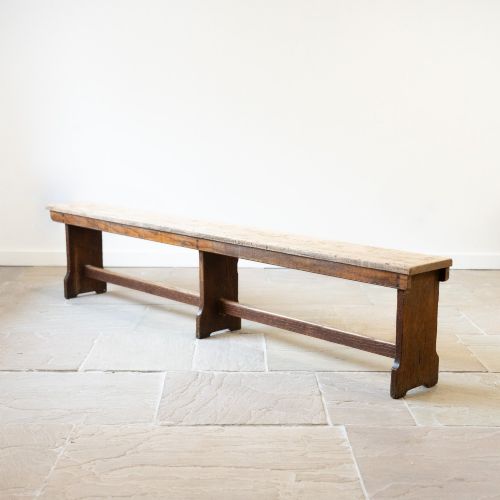
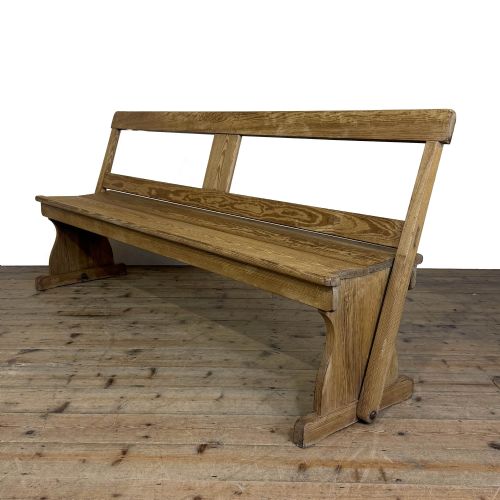
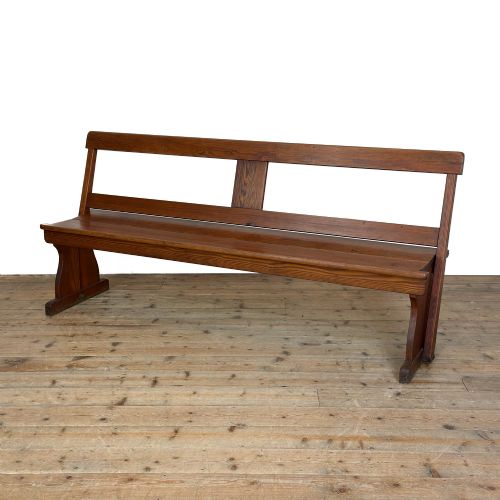
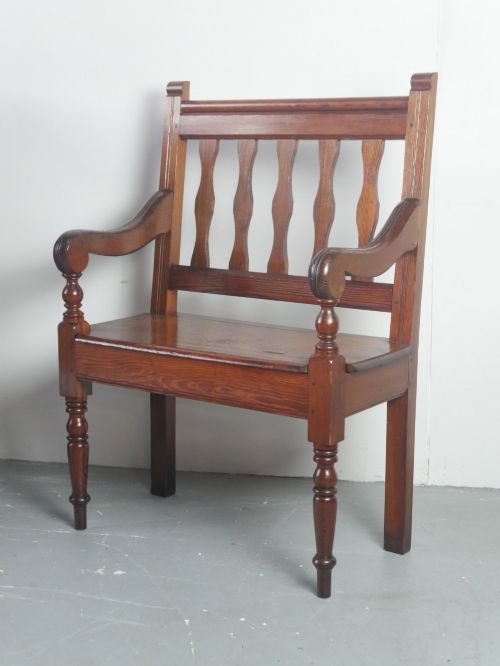
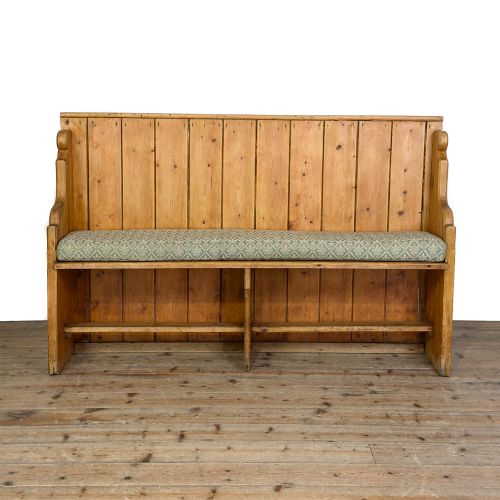
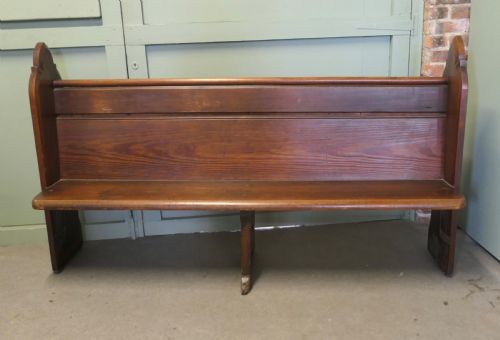
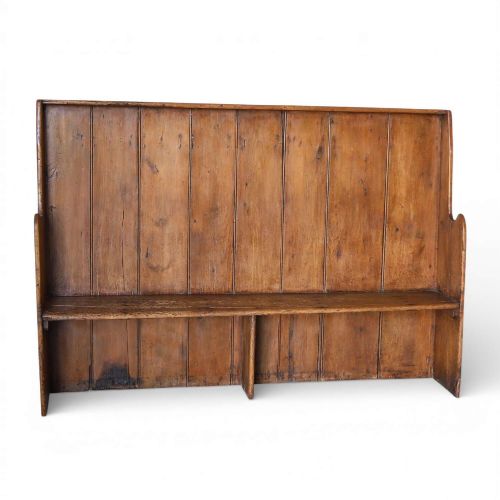
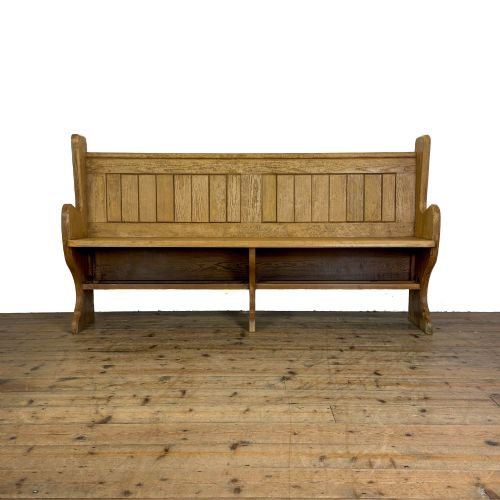
A vintage church pew is a long wooden bench originally designed for religious seating, often repurposed for domestic hallways, kitchens and dining rooms. When you search for a vintage church pew, you will find sturdy timber forms built to seat multiple people in communal spaces.
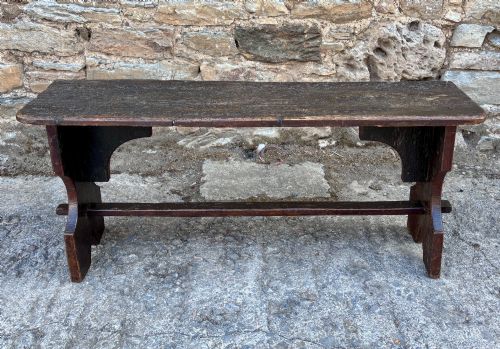
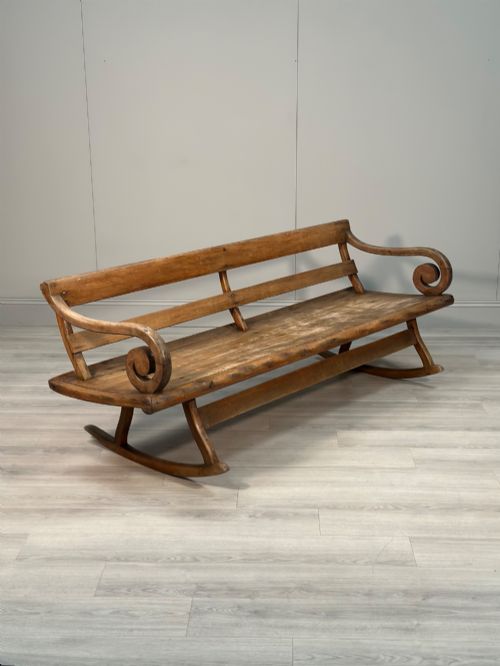
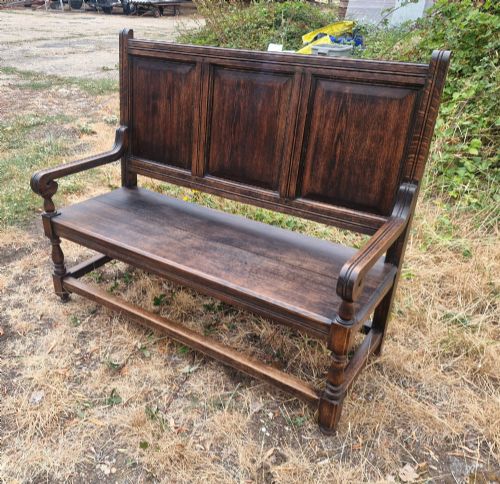
The pieces on this page span the nineteenth century into the early twentieth century, taking the form of pine or oak benches, chapel pews, and settle benches. These items carry the straightforward utility of ecclesiastical and tavern furniture into everyday domestic use.
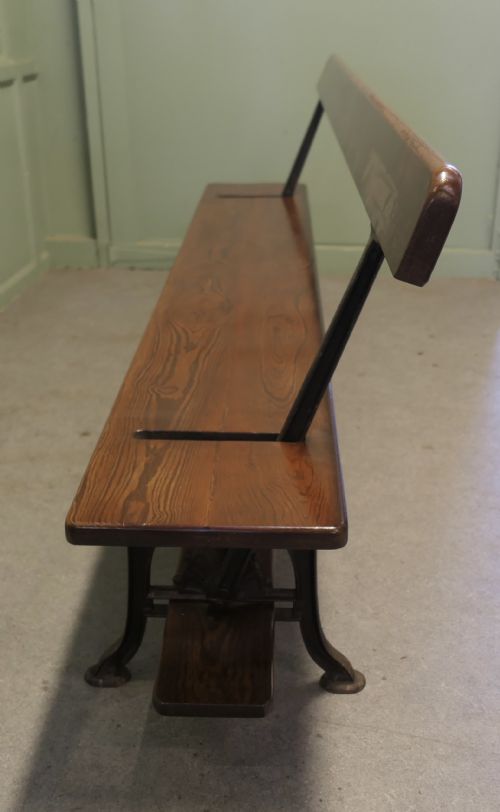
Alongside standard straight-backed pews, the selection includes curved Gothic designs, flip-over chapel benches, and painted examples from European workshops. Each piece offers a long, linear seating solution rooted in nineteenth-century and Edwardian craftsmanship.
Materials and construction
Makers relied primarily on pine, pitch pine and oak, utilising the natural strength of these timbers to support long spans without central legs. Boards were selected for durability, occasionally finished with paint or left with a warm honey brown patina.
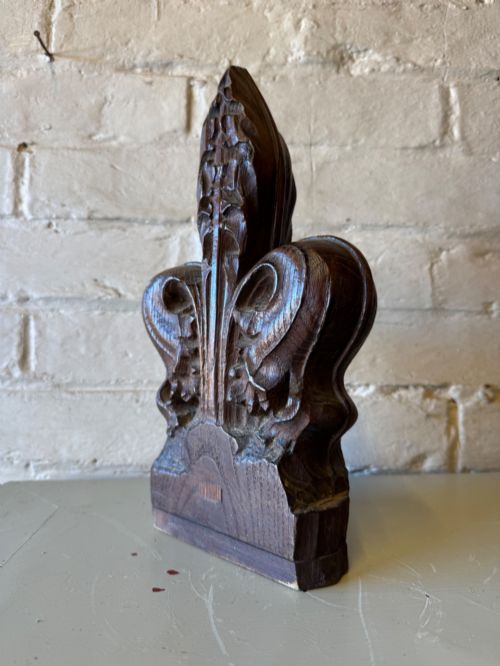
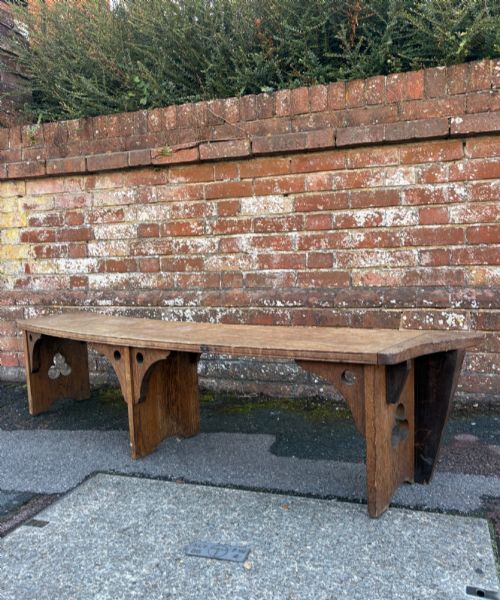
Construction techniques prioritized functional longevity, employing panelled backs, trefoil carved supports, and sturdy framing to withstand heavy daily use in churches, chapels and taverns. Details such as poppy head finials and brass pew end rails added modest ornamentation to structural joins.
Vintage Church Pew Retail Price Guide 2026
Typical asking prices for vintage church pew among the pieces listed under this phrase on Sellingantiques today, from the lower quarter to the upper quarter. They describe what is for sale here now, not the wider market.
One cheerful Victorian pine bench arrives bearing the authentic painted mark for the chapel at Llanfair, ready for its next congregation.
Judging quality and character
Quality rests in the integrity of the timber and the honesty of the surface wear, where centuries of handling have softened sharp edges and deepened the grain. Original paint finishes or untreated patinas command attention for retaining their authentic historical appearance.
Proportion and scale separate standard utility pieces from more ambitious architectural examples, such as those featuring Gothic Revival tracery or marked provenance. The balance between the backrest rake and the seat depth dictates how successfully the bench transitions into modern living spaces.
The Vintage Church Pew Glossary
- Settle
- A wooden bench with a high back, solid arms, and often a enclosed base to block draughts. These pieces provide substantial seating and frequently double as hallway storage.
- Pitch pine
- A resinous North American pine noted for its distinctive grain pattern and exceptional durability. It was frequently utilised for heavy-use ecclesiastical seating.
- Poppy head
- An ornamental carved finial topping the end of a pew bench, typically shaped in a stylised leaf or bud motif. This detail is commonly found on earlier oak examples.
- Trefoil
- A three-lobed decorative ornament resembling clover leaves, frequently pierced through the wooden supports of Gothic Revival furniture. It marks pieces influenced by architectural design.
- Patina
- The surface sheen and colour developed by timber over years of handling, polish and exposure to light. A desirable patina shows genuine age rather than artificial distress.
Vintage Church Pew: Frequently Asked Questions
How do I style a church pew at home?
Place a long wooden bench against a dining table or along a wide hallway wall to anchor the room with linear proportions. Add simple linen cushions to soften the seat while keeping the timber back visible.
Allow the natural wood grain or original painted finish to contrast with plain walls. The restrained silhouette works well in both rustic farmhouse settings and more minimal contemporary spaces.
Are these benches comfortable for daily dining?
Most ecclesiastical benches feature upright wooden backs and solid seats designed for upright posture during services rather than lounging. Adding loose seat pads can significantly increase comfort for prolonged sitting around a dining table.
Consider the seat height and depth relative to your table before positioning the bench permanently. Many examples offer deep seats that accommodate cushions easily.
How do I clean and protect vintage timber?
Dust the surfaces regularly with a dry cloth and occasionally feed dry pine or oak with a traditional beeswax polish. Avoid modern liquid cleaners that can strip away aged patinas or damage historic paintwork.
Keep wooden pews away from direct heat sources and strong sunlight to prevent the timber from warping or splitting. Stable indoor humidity helps preserve the original structure.
Can these pews be shortened to fit smaller rooms?
Altering the length of a solid timber bench requires careful woodworking skills to maintain the structural integrity of the ends and seat frame. Many collectors prefer to source pieces whose original dimensions already match the intended space.
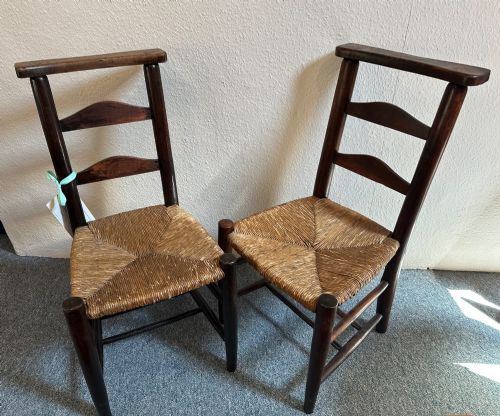
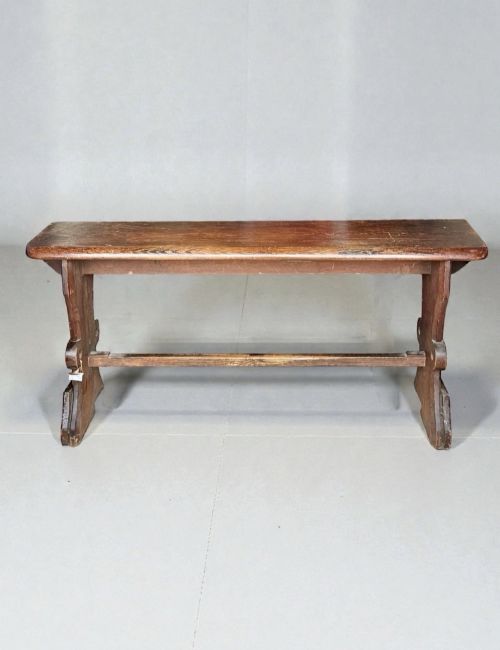
Shorter variants, such as hall benches and side chairs, are readily available for more compact interiors without requiring modification.